Basic sighthound harness
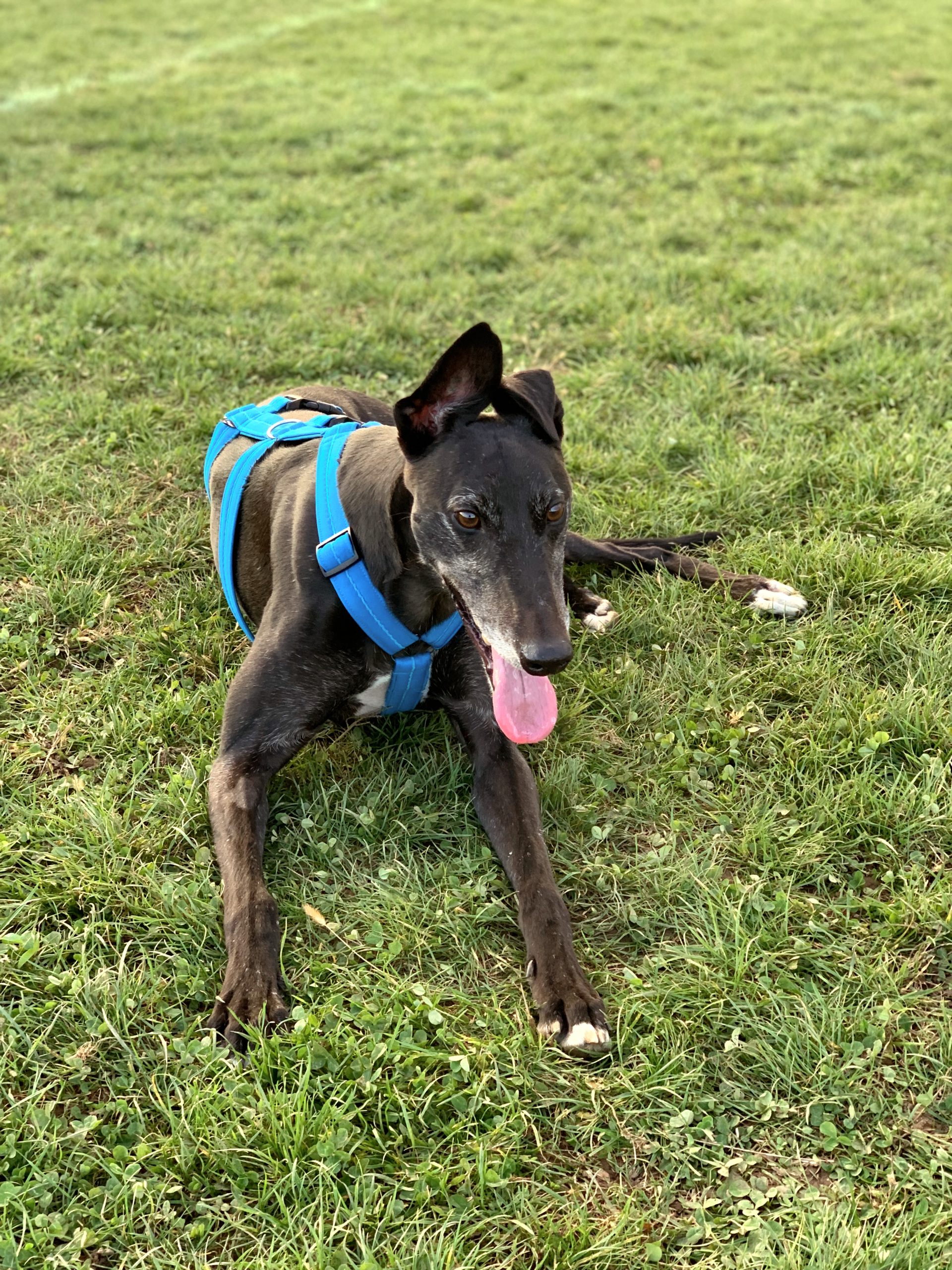
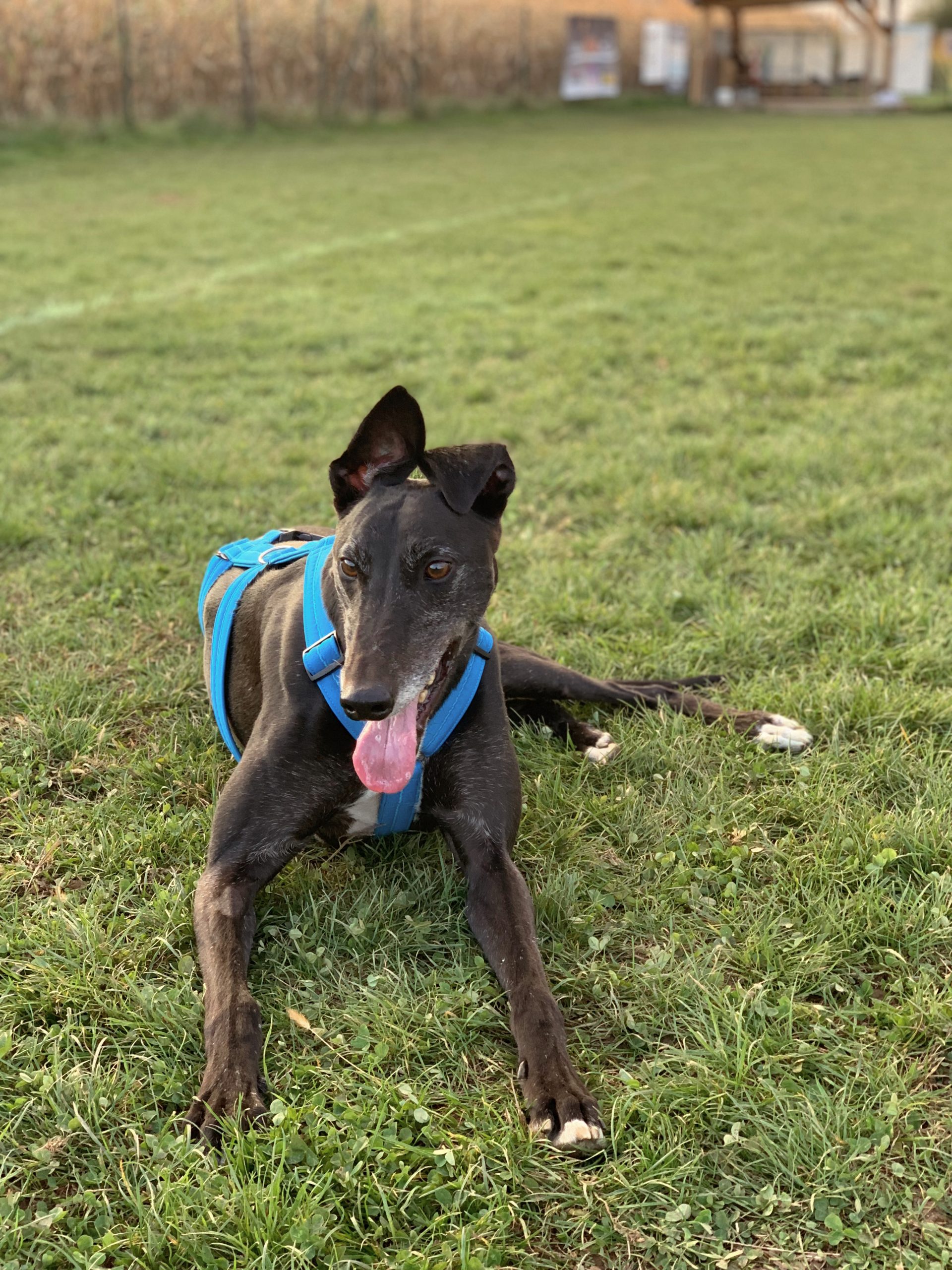
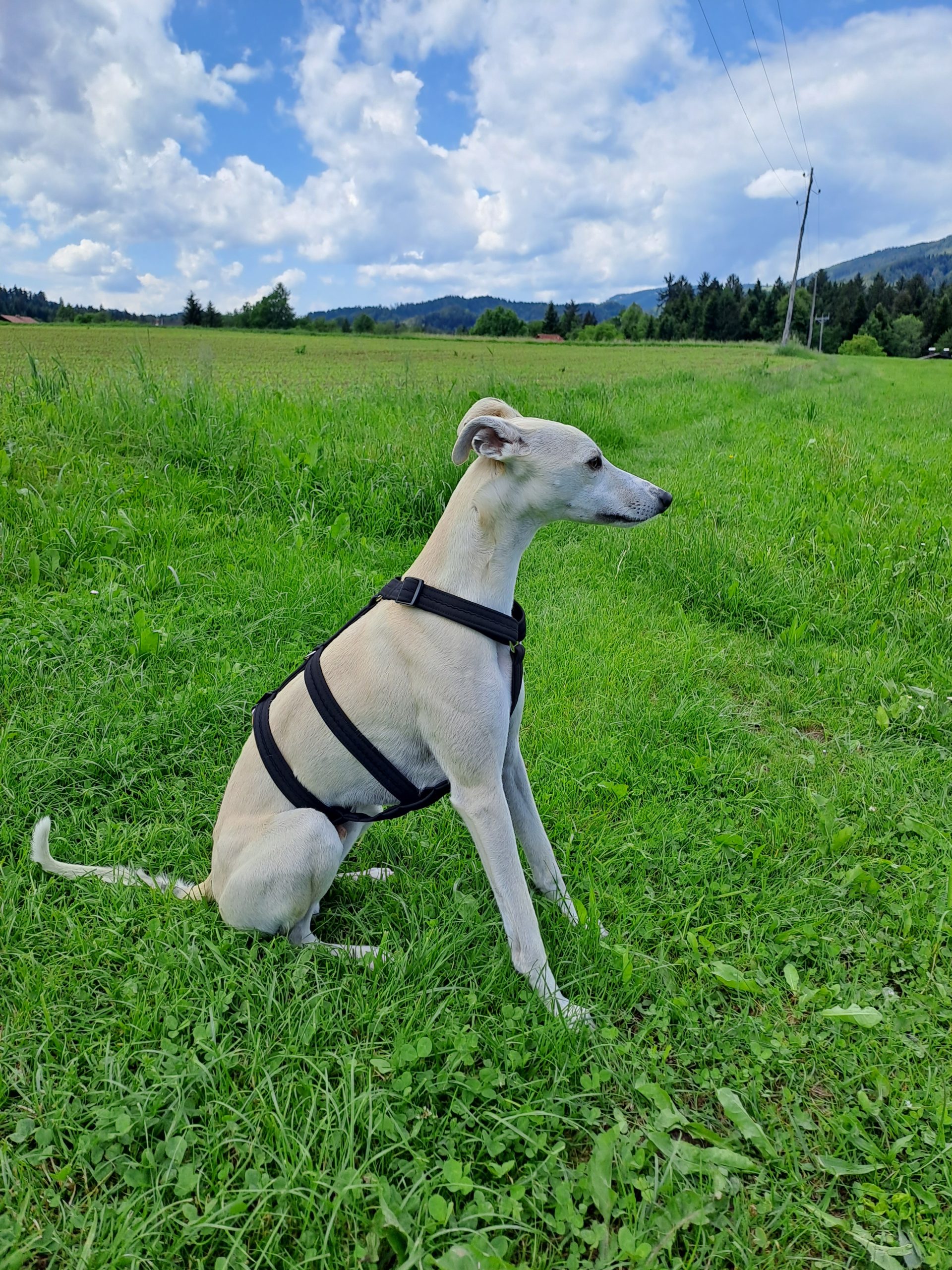
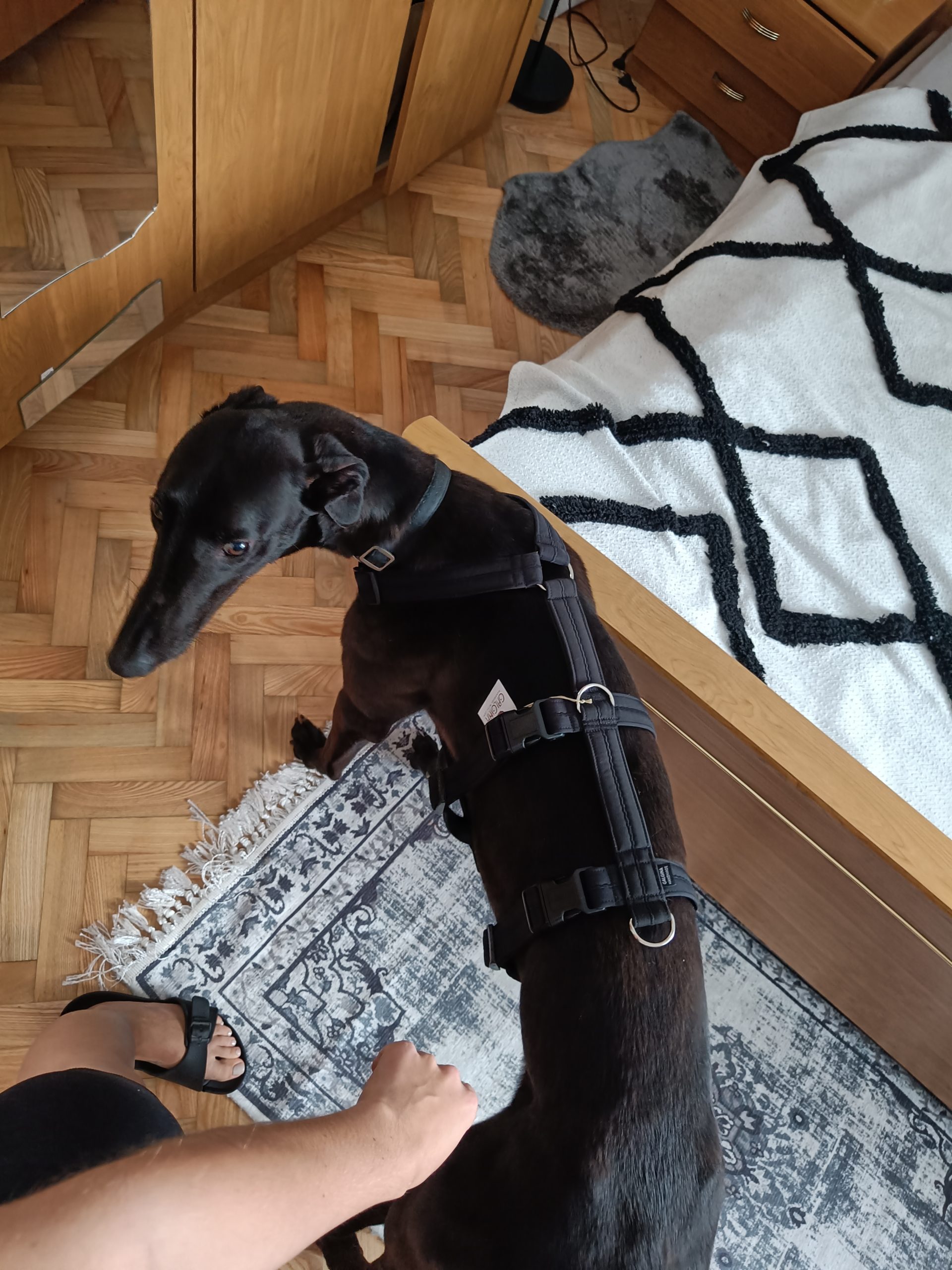
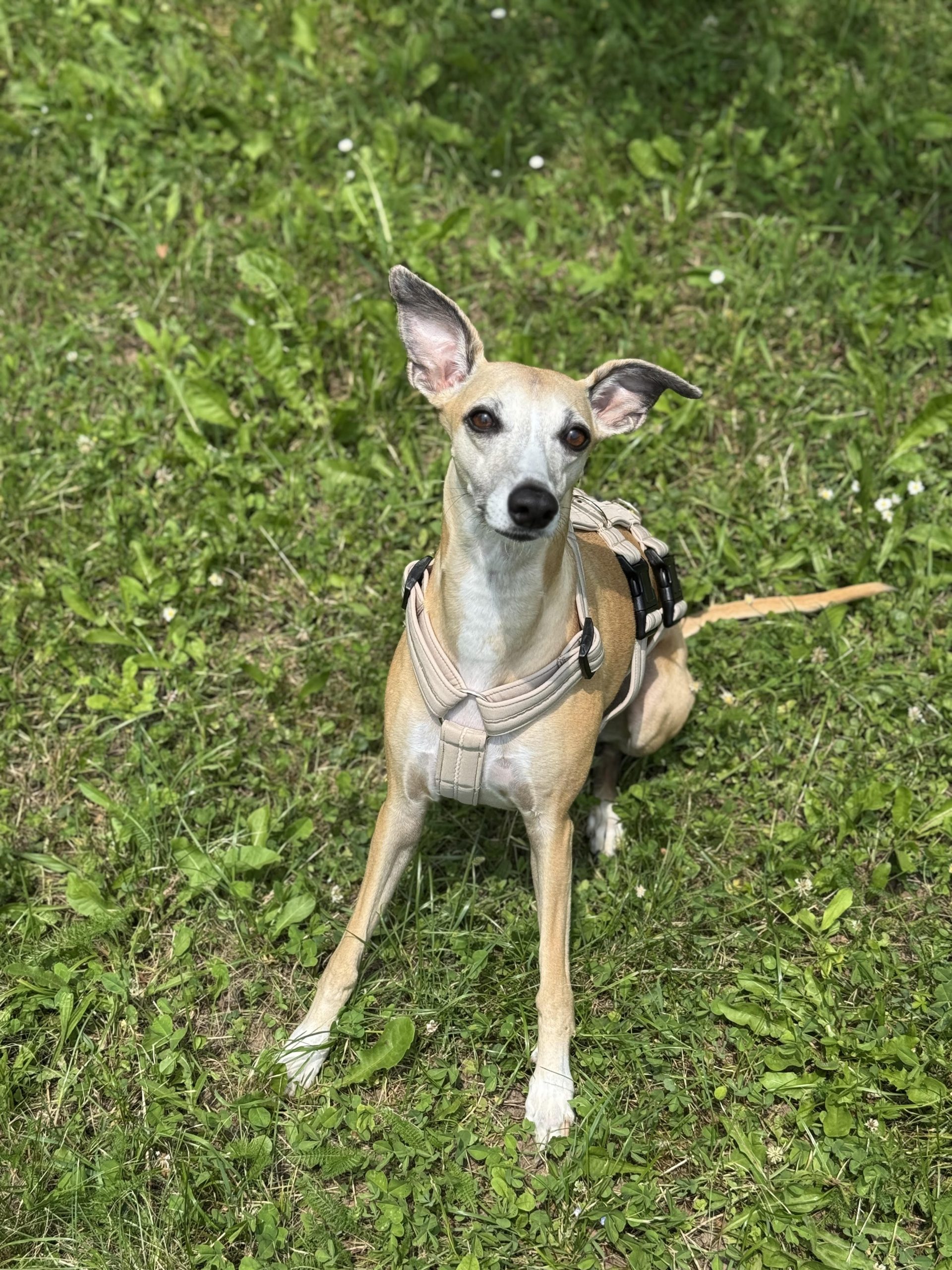

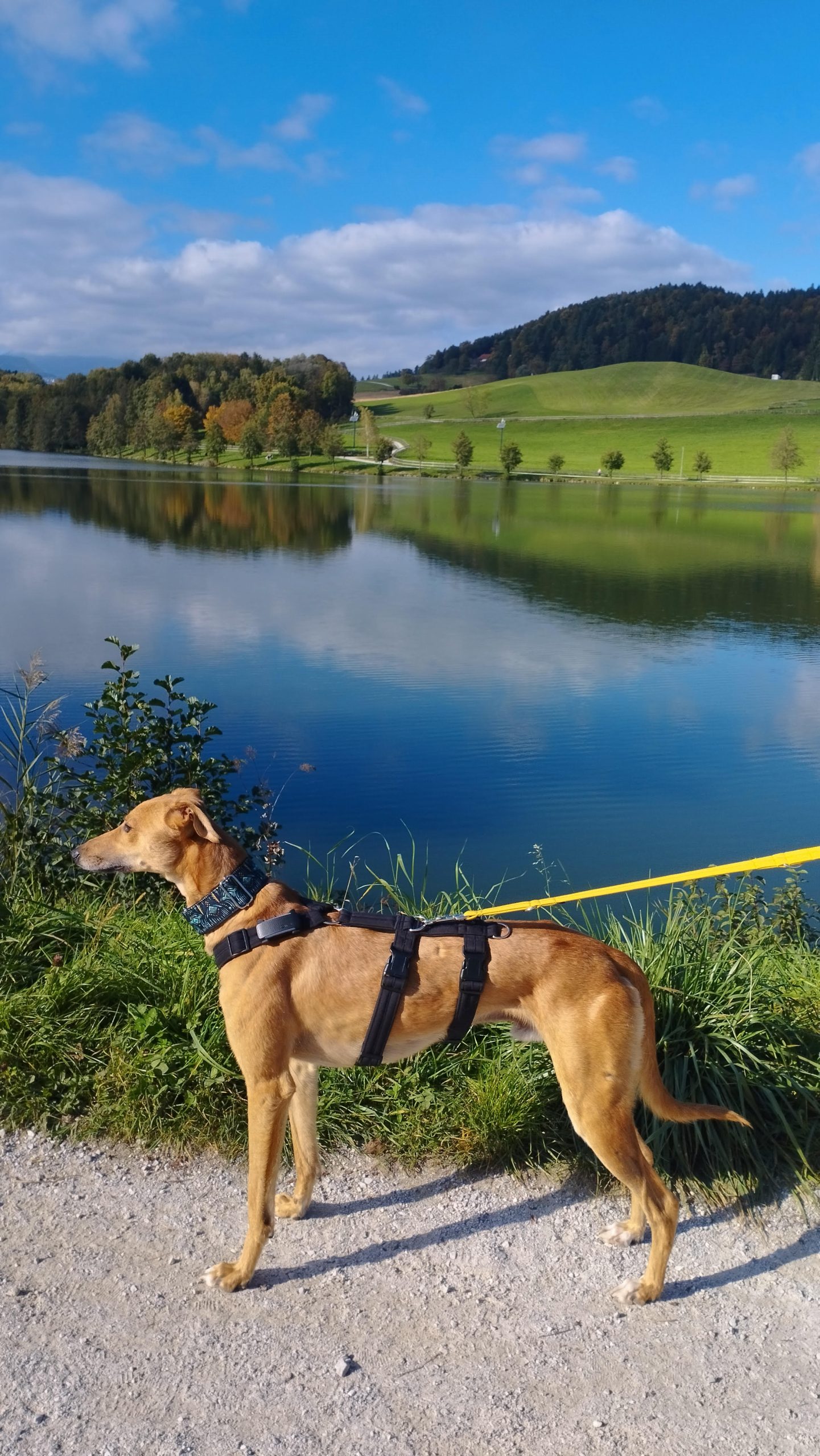
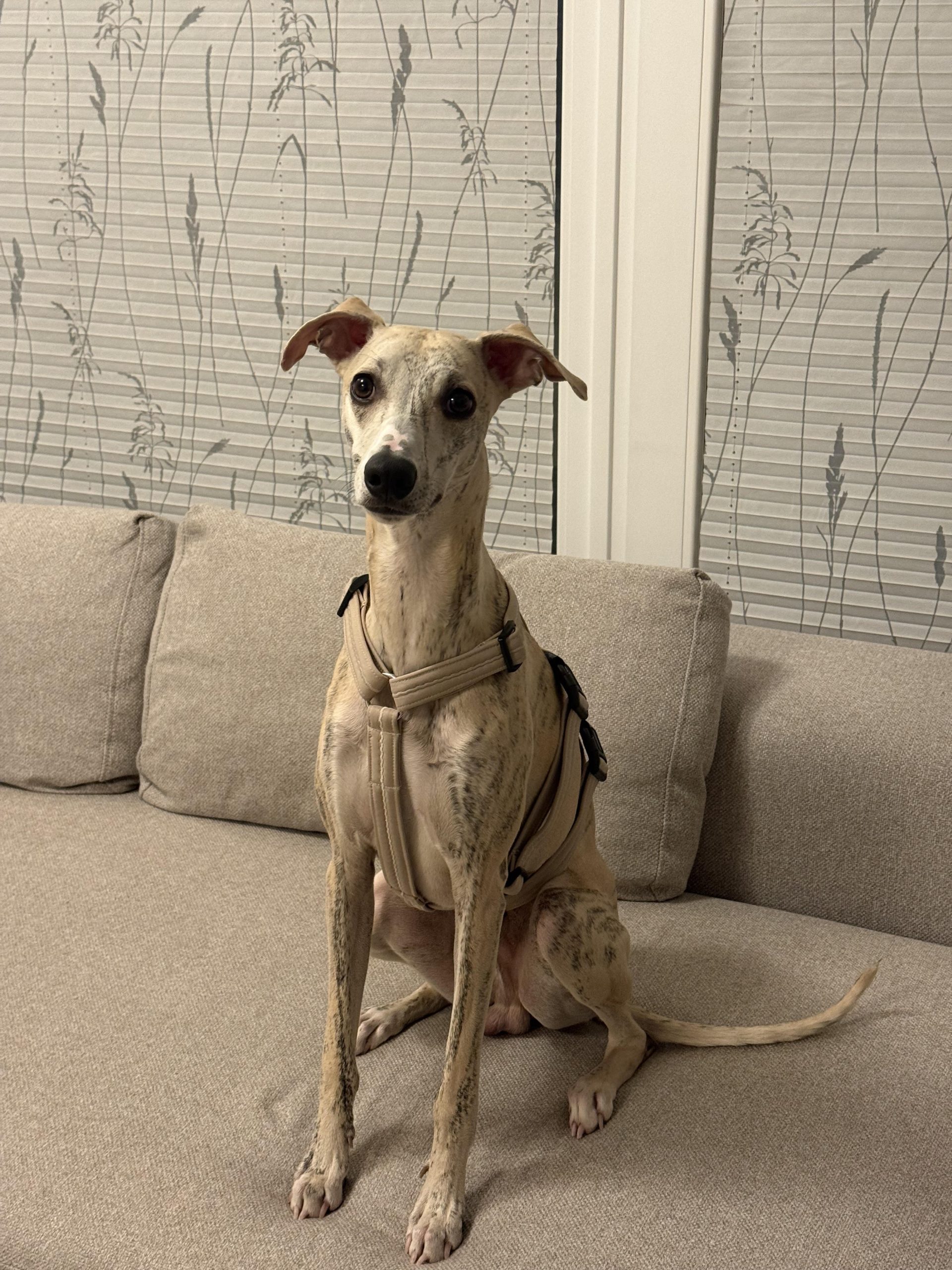
Details:
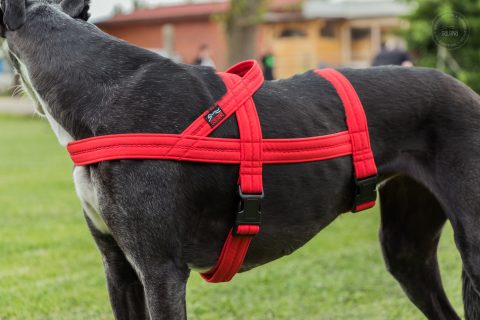
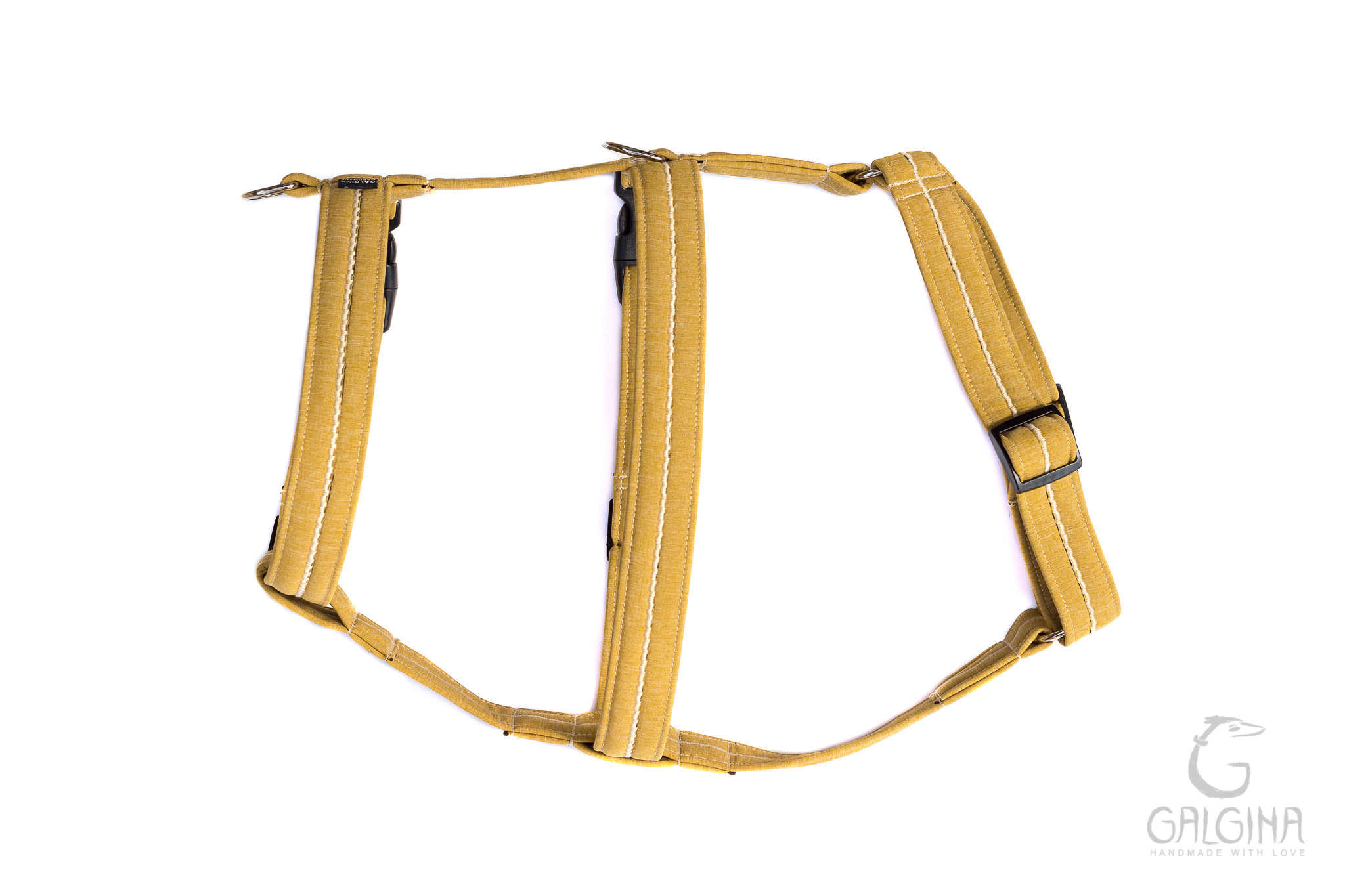
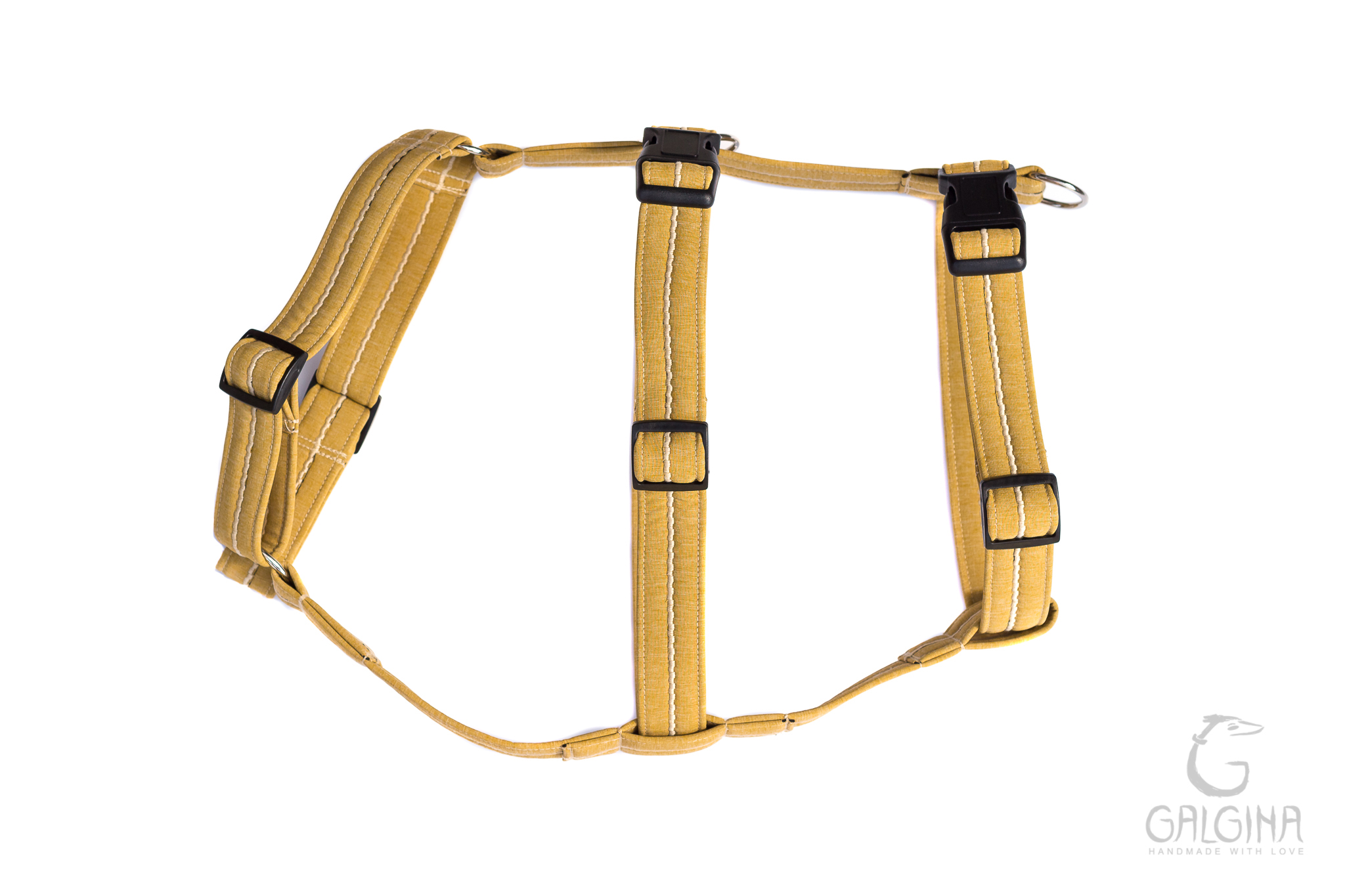
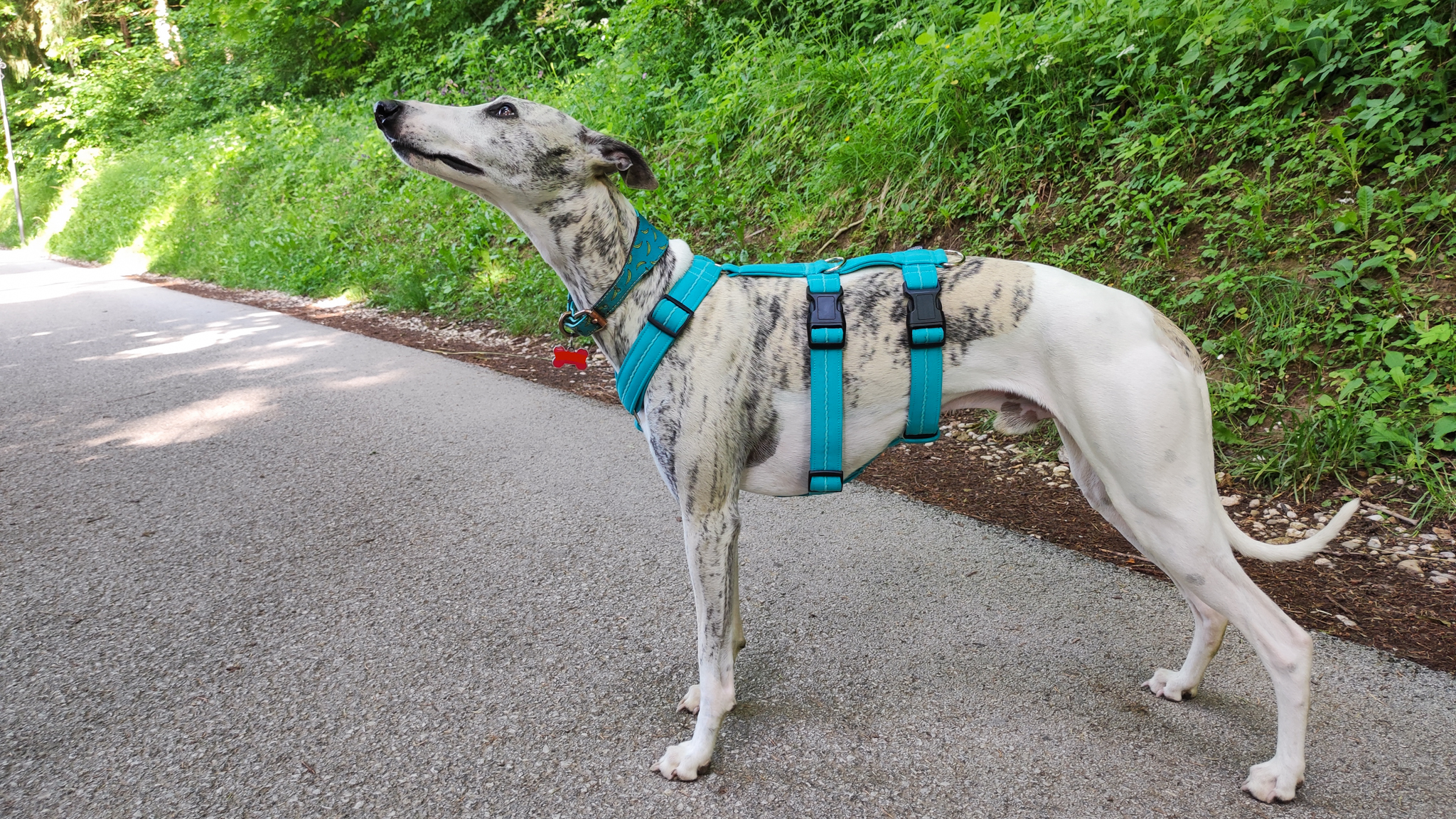
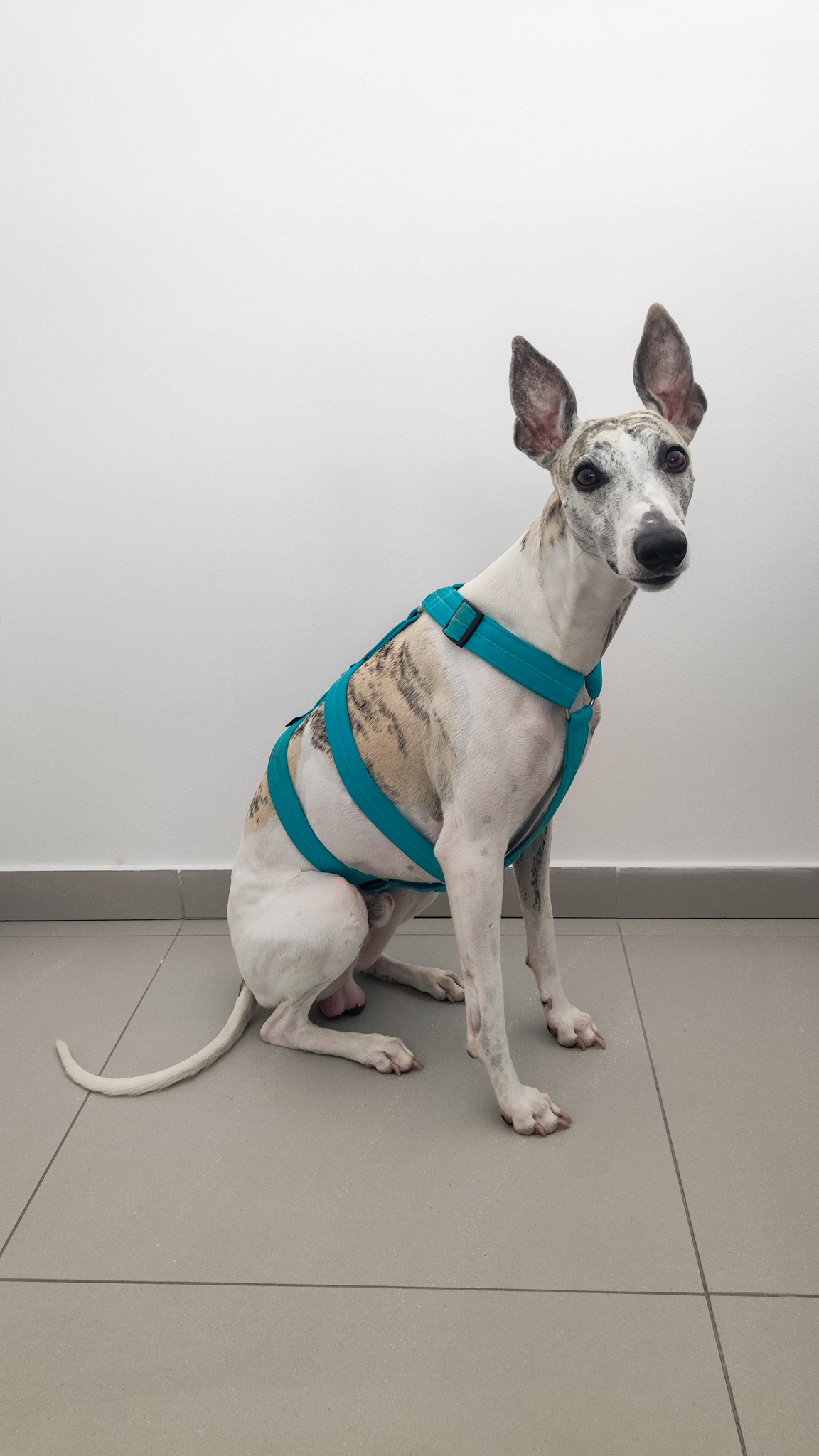
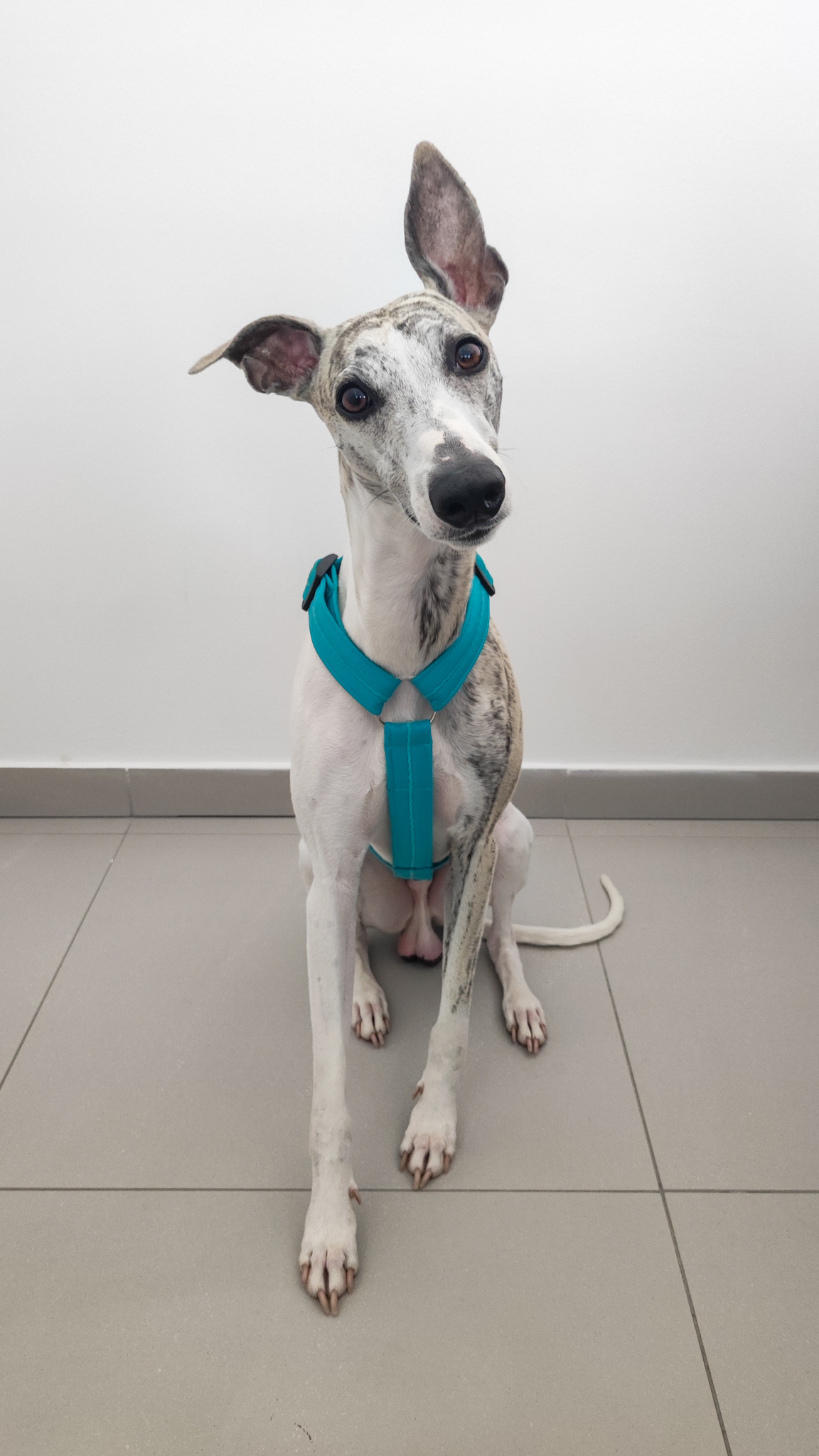
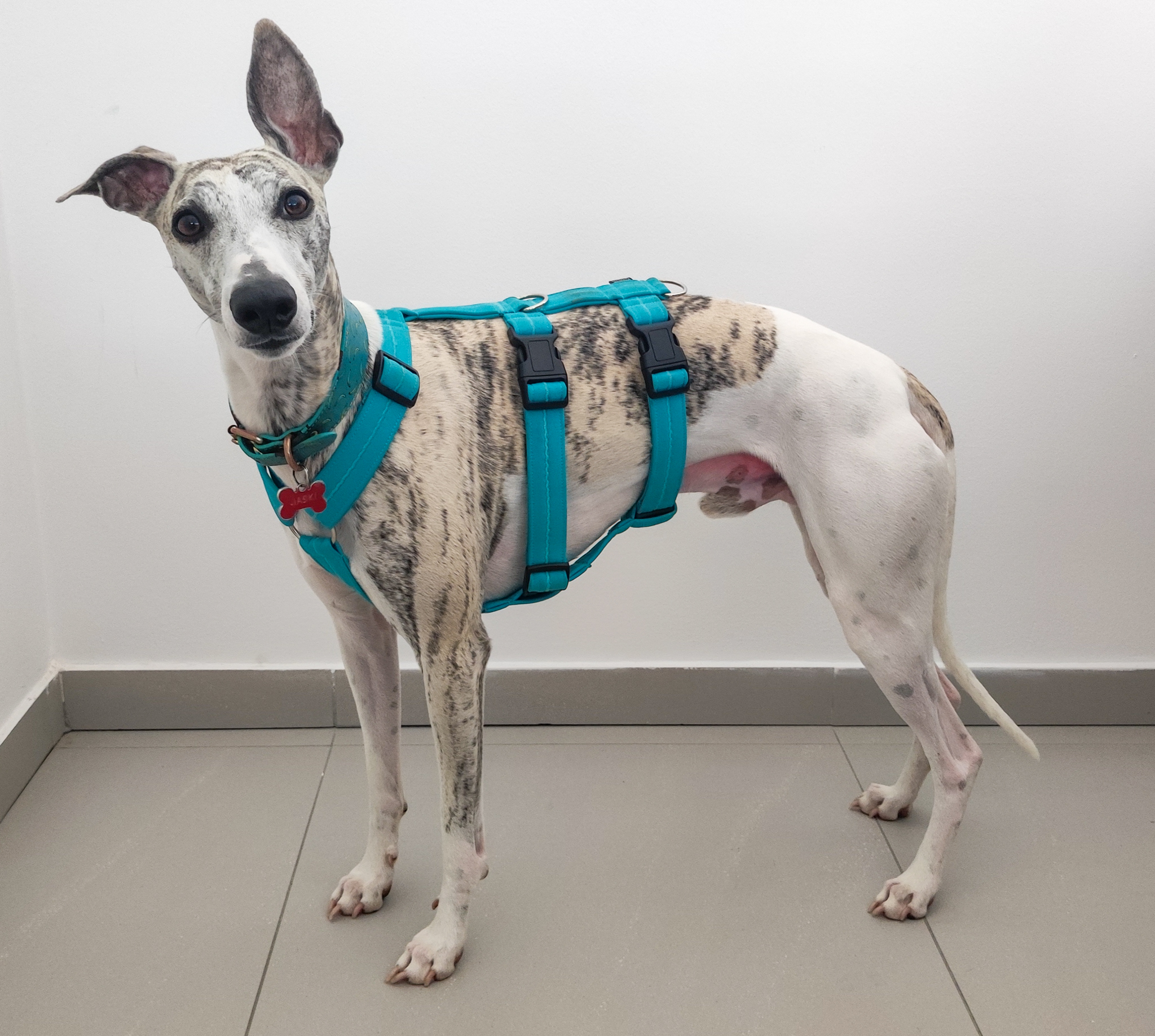
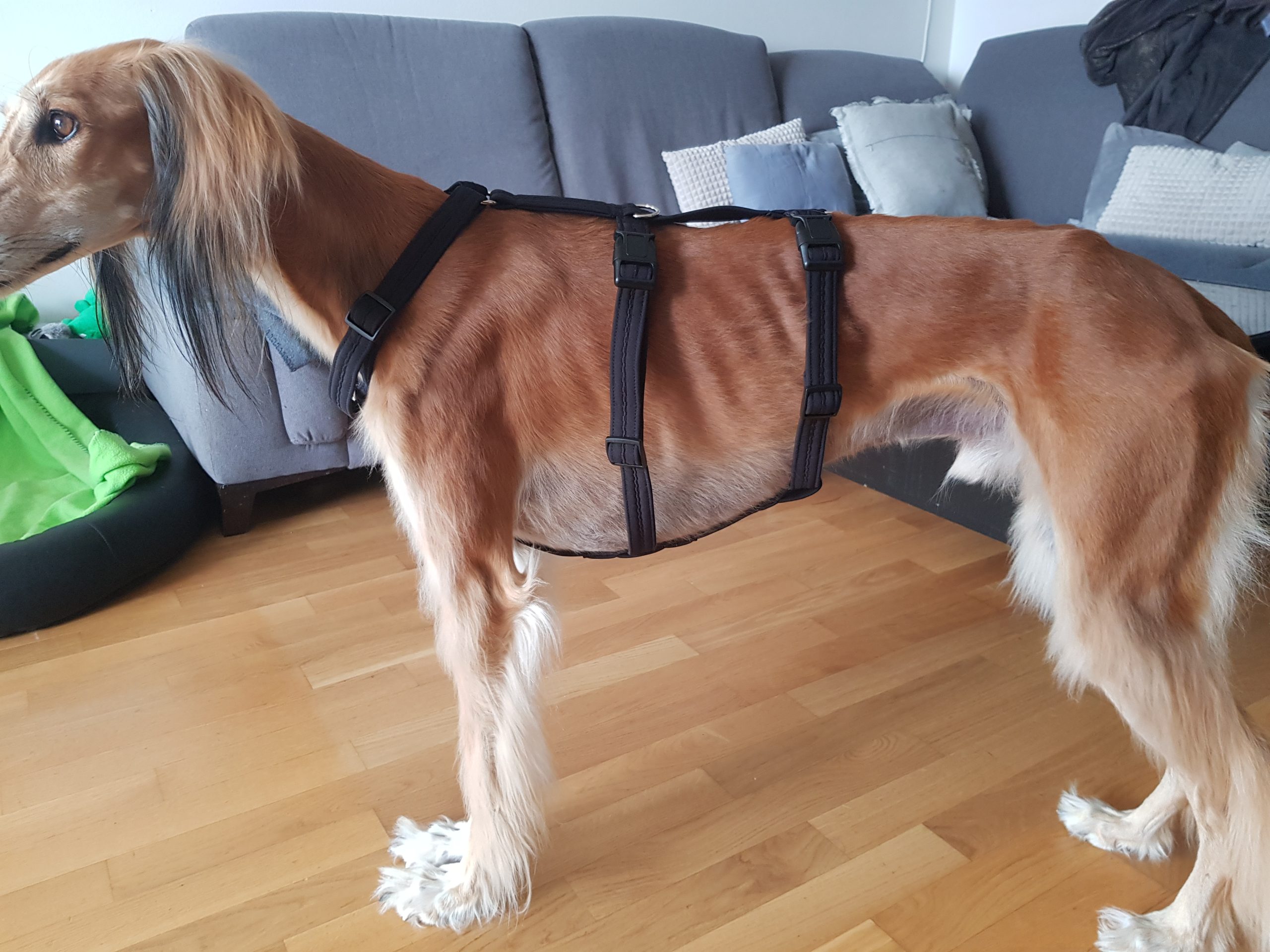
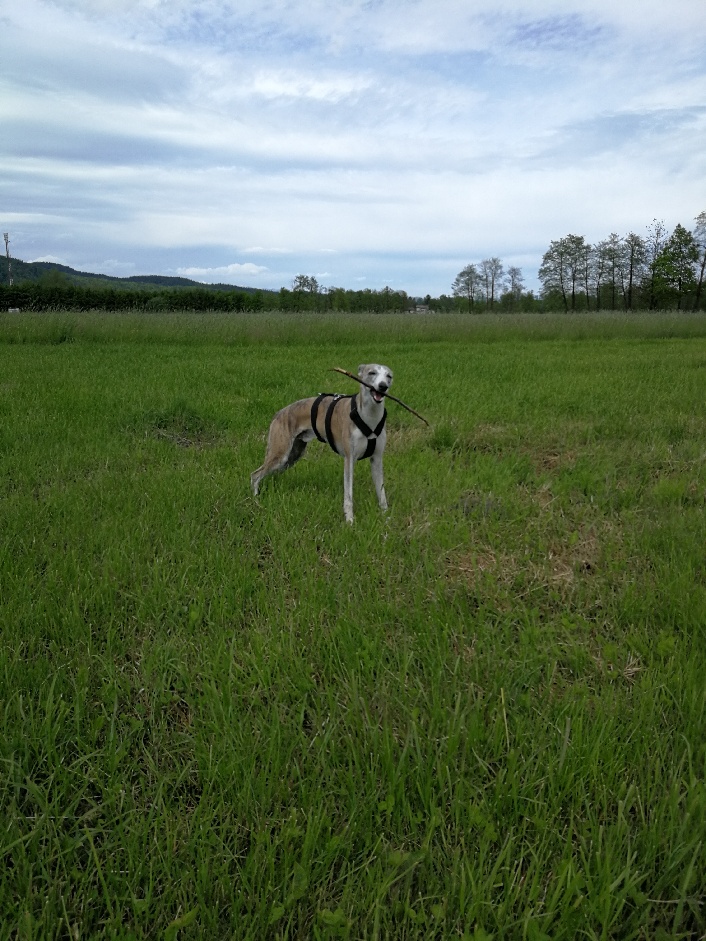
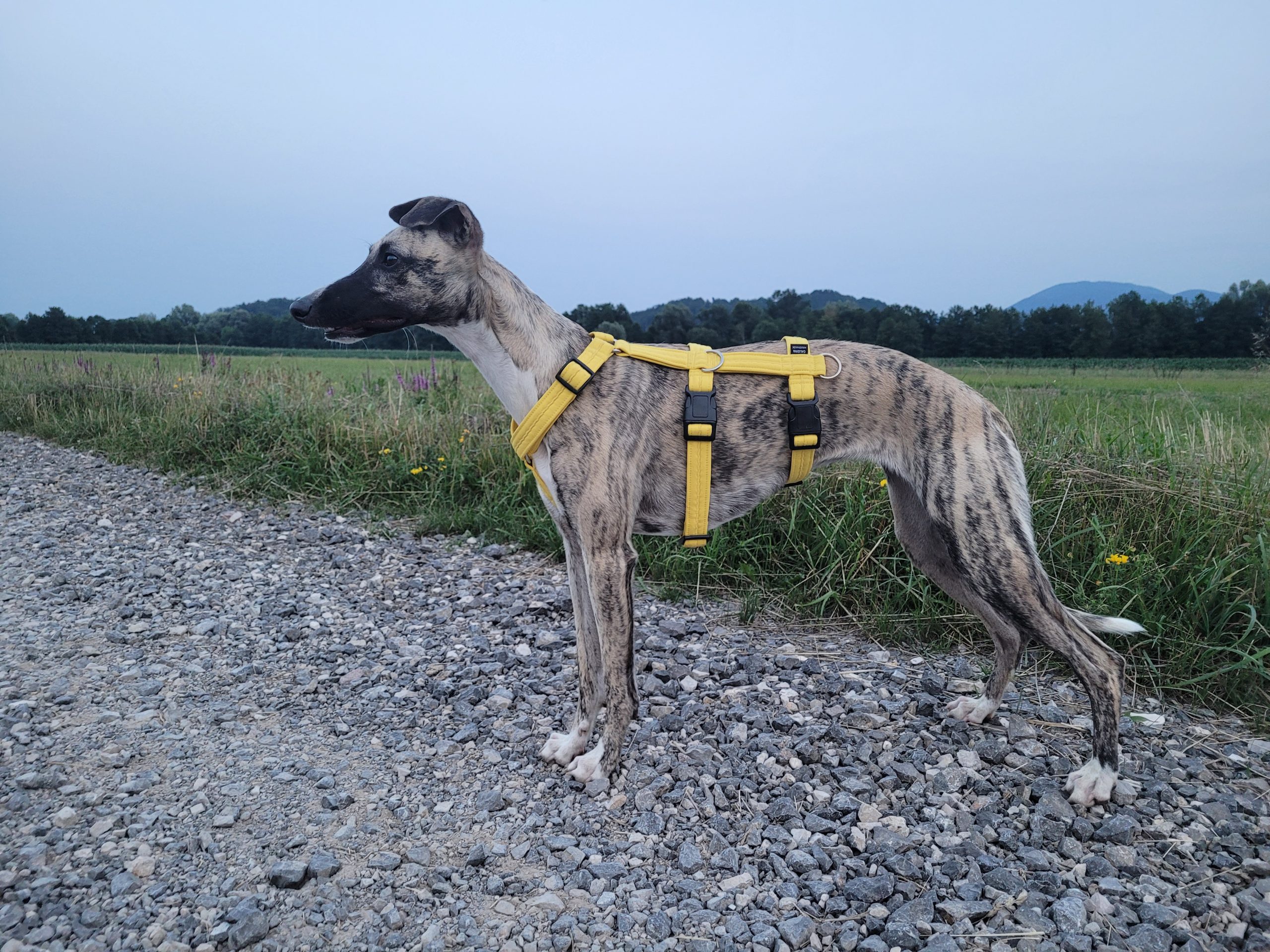
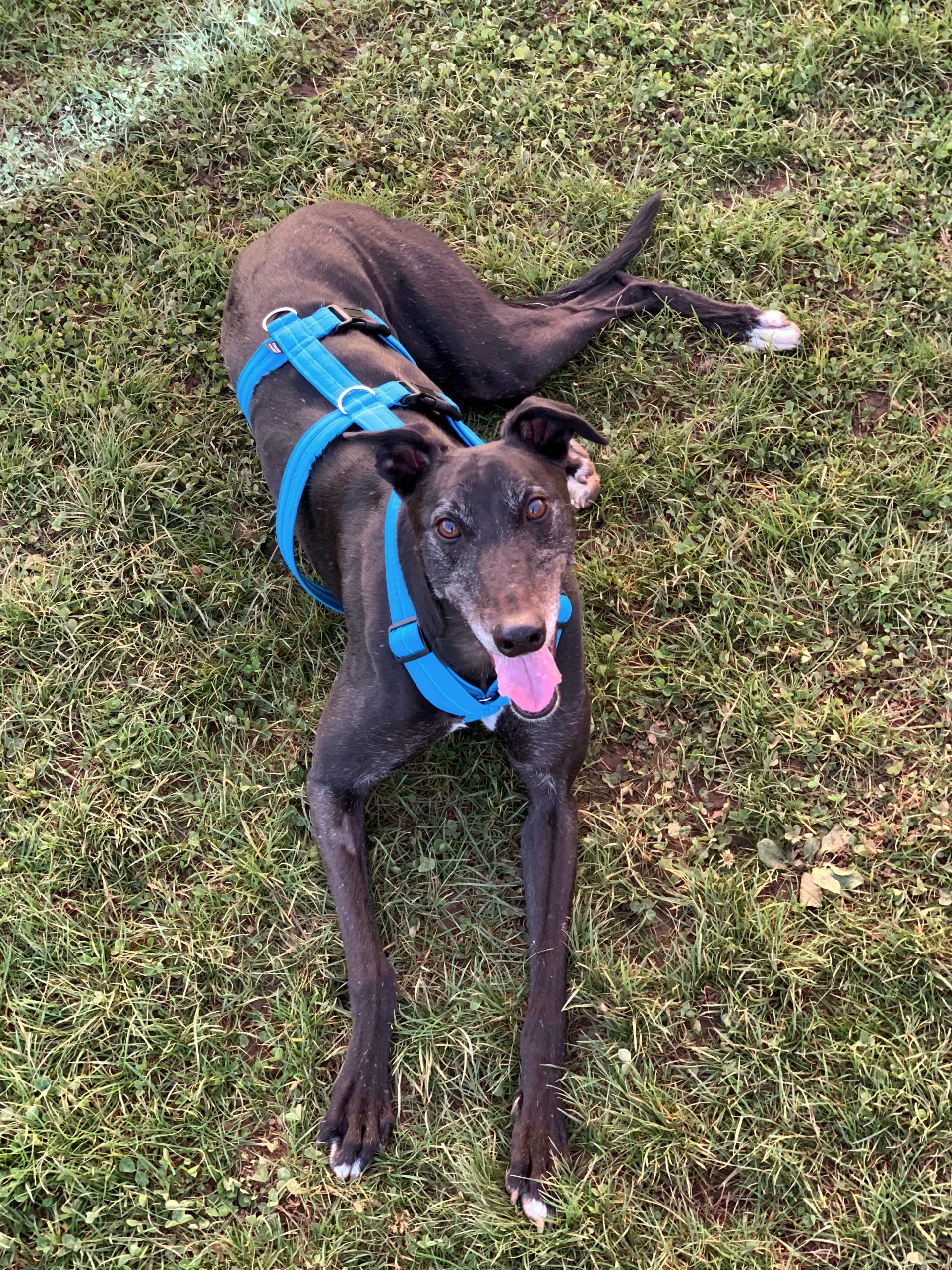
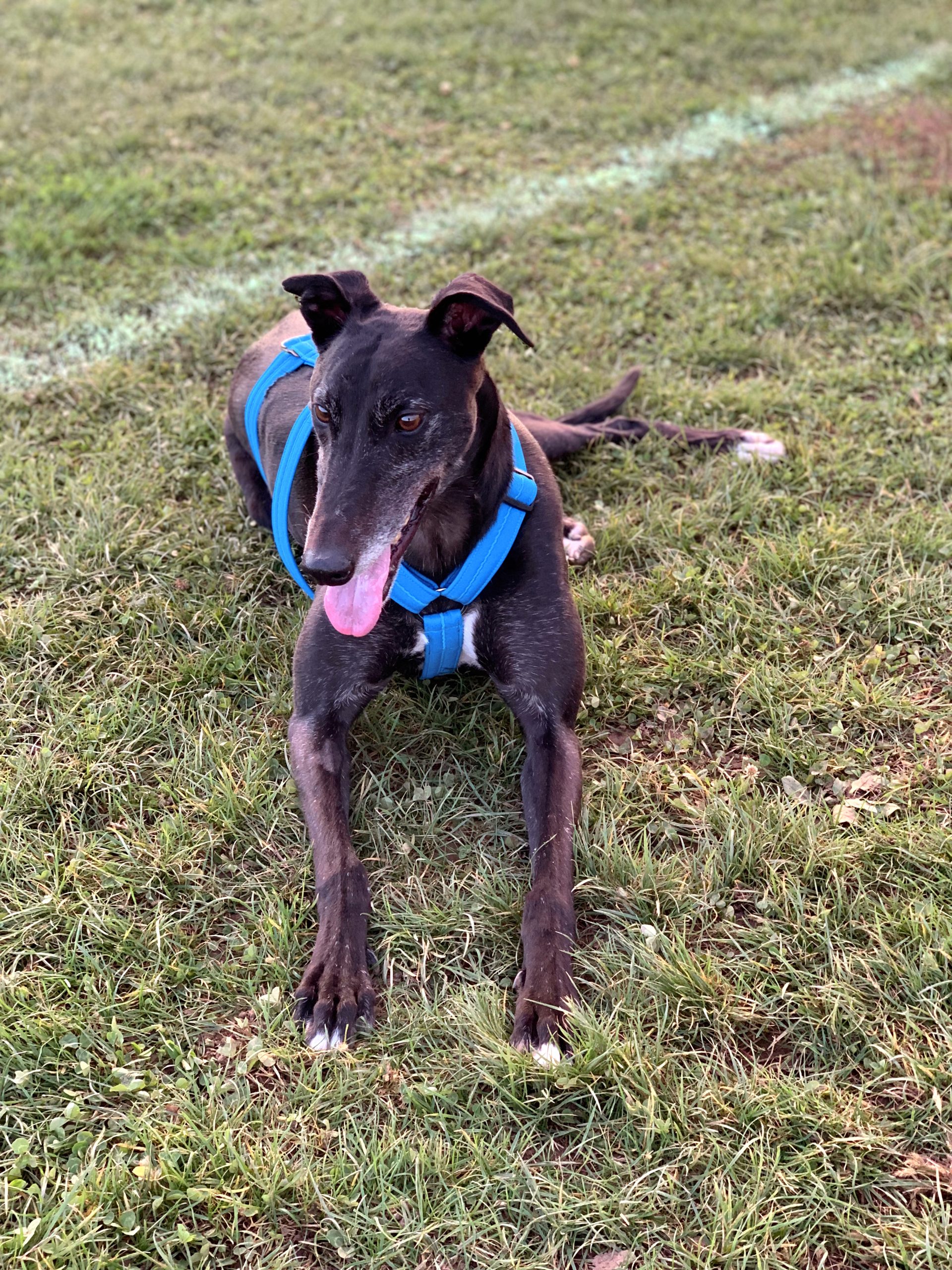
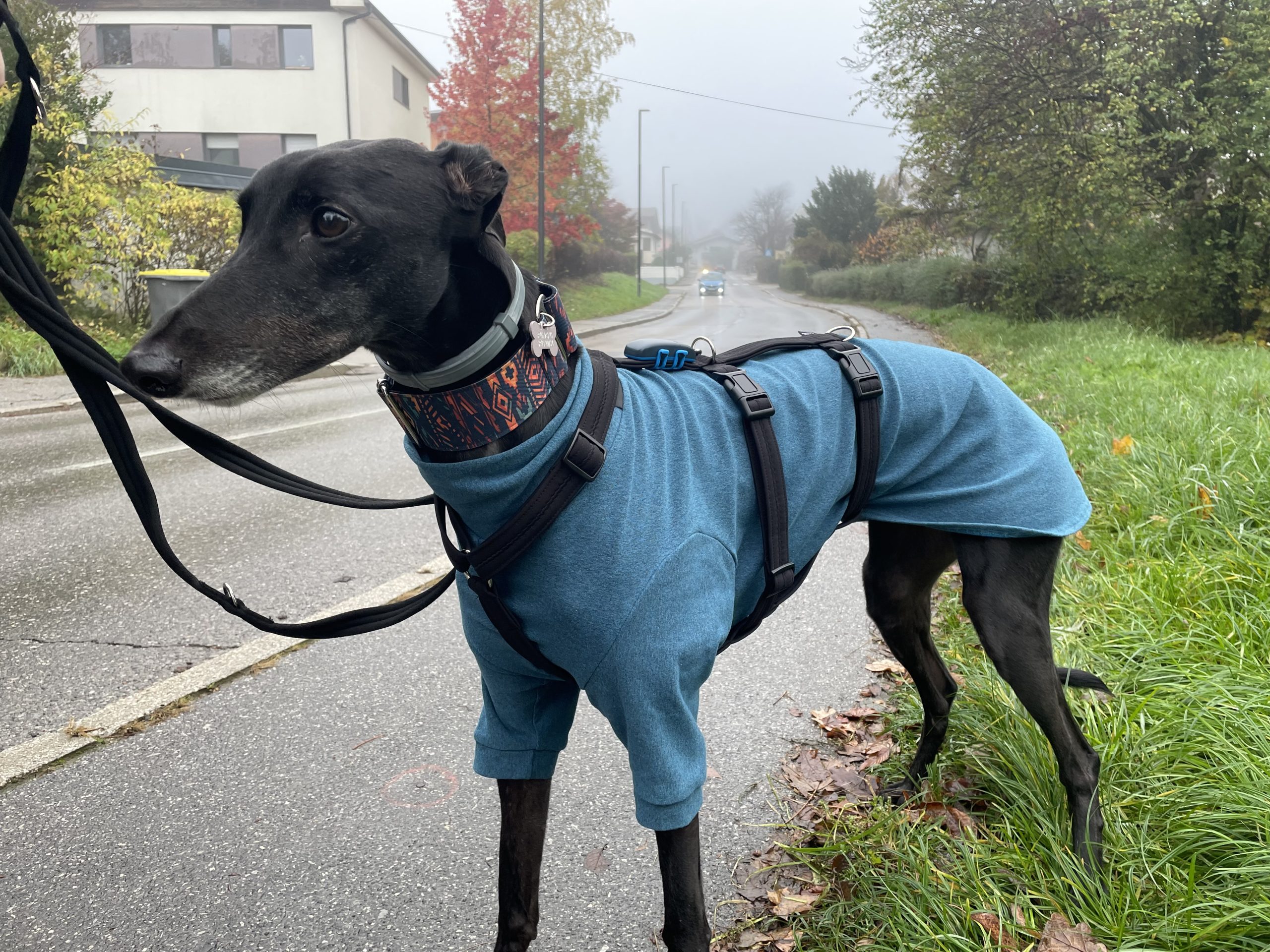
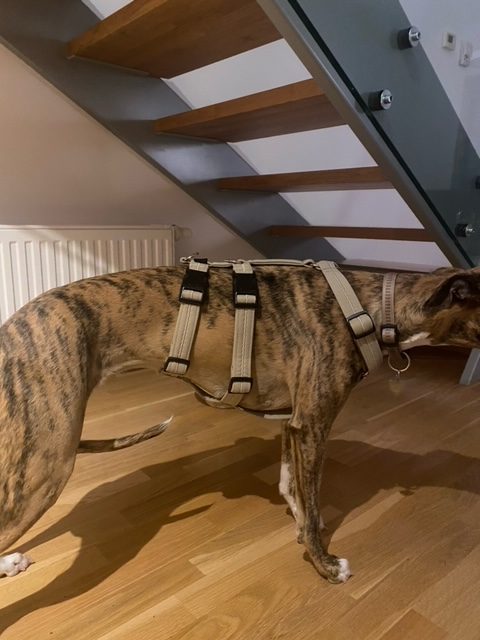
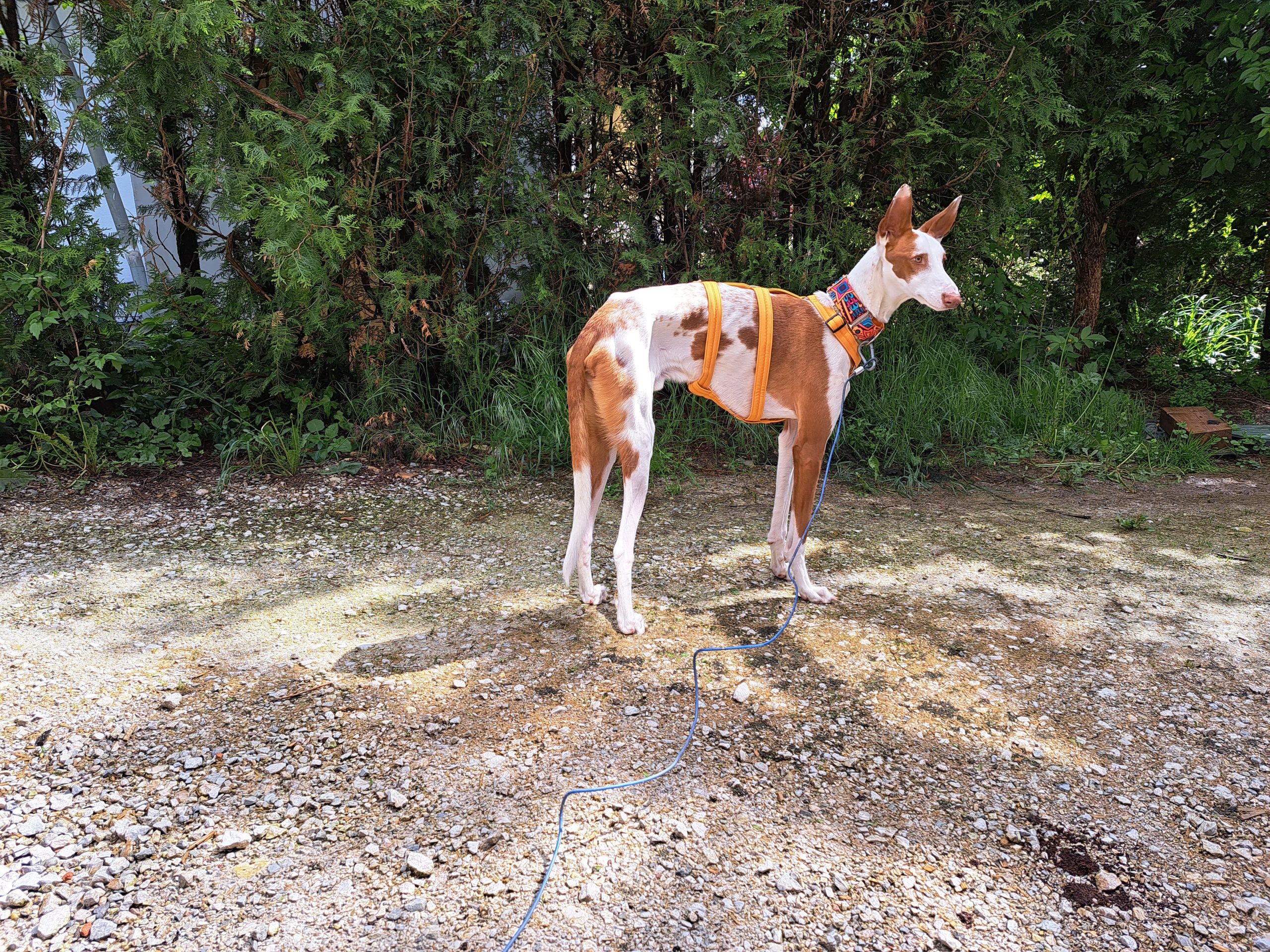
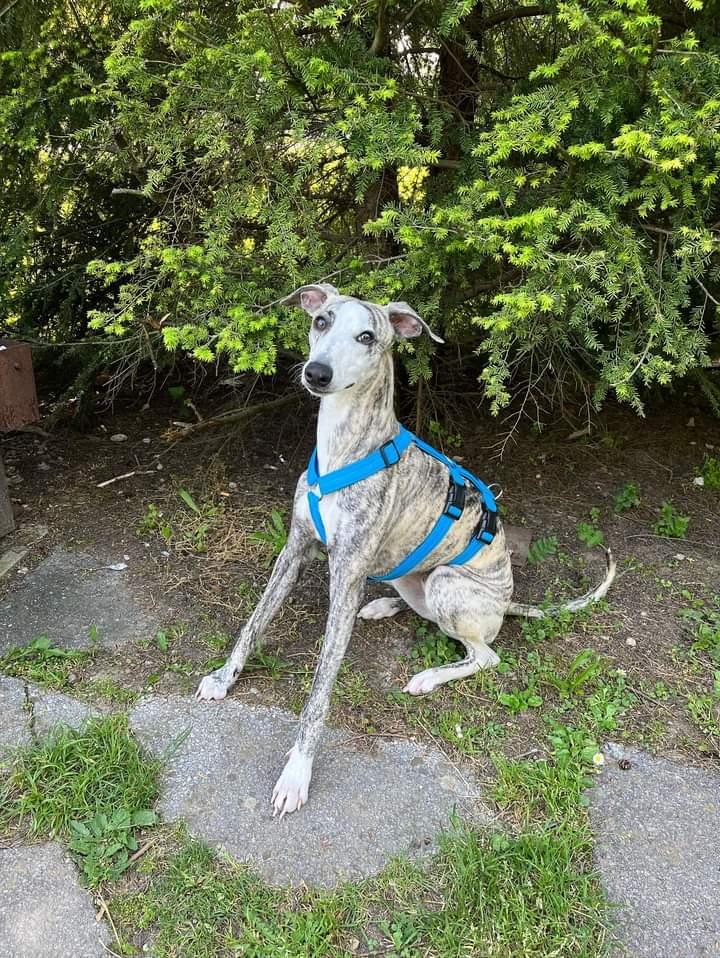
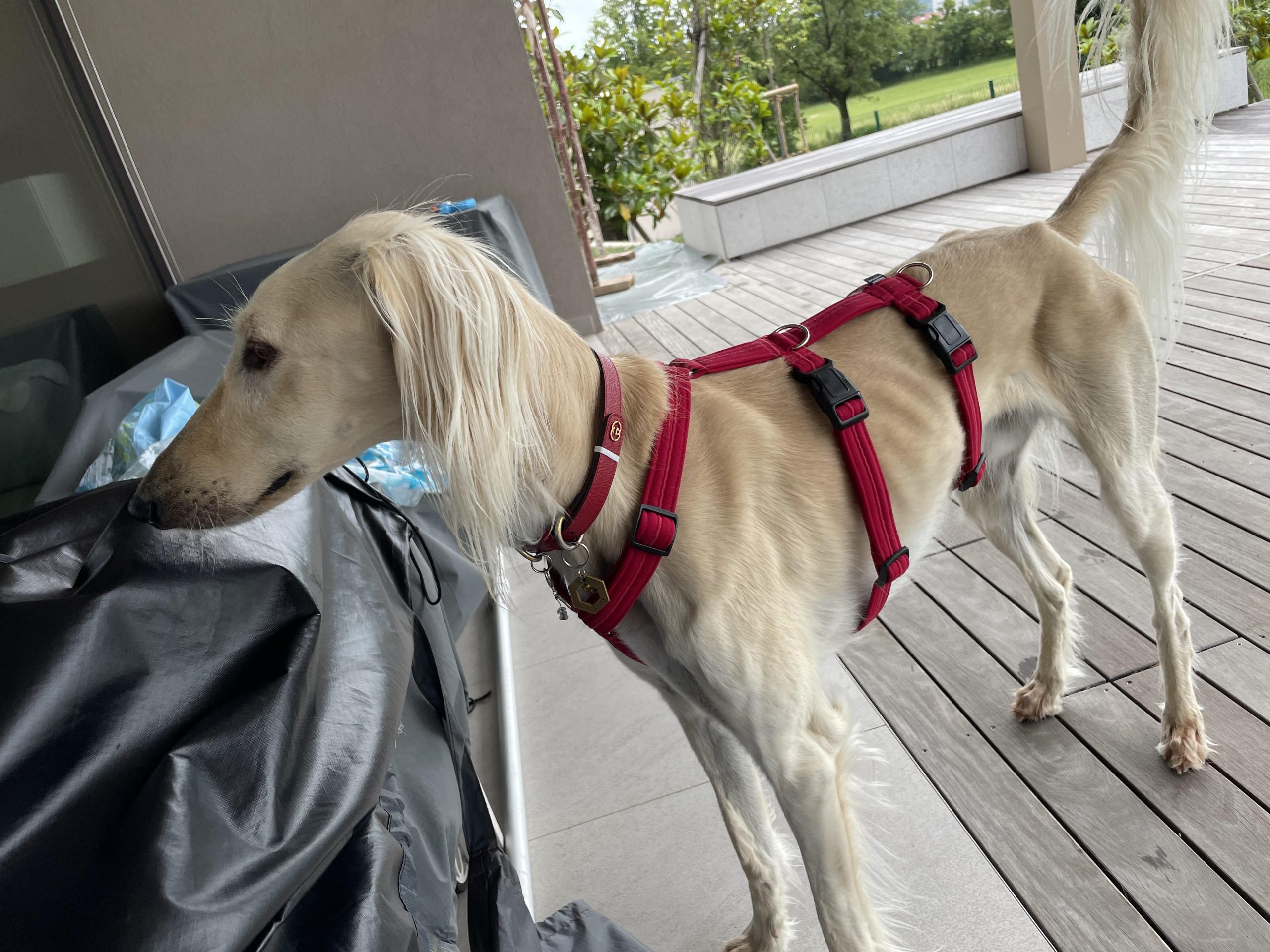
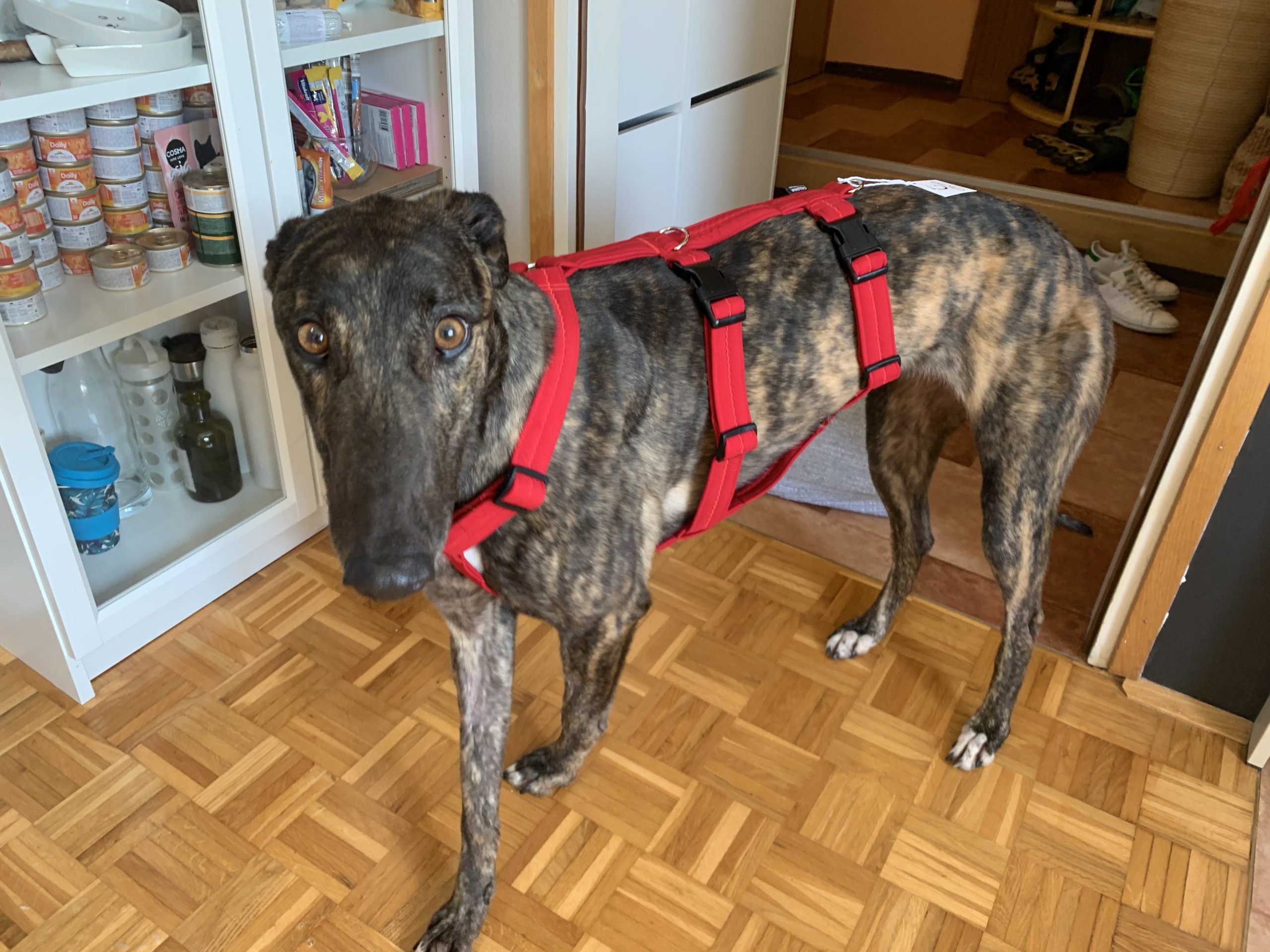
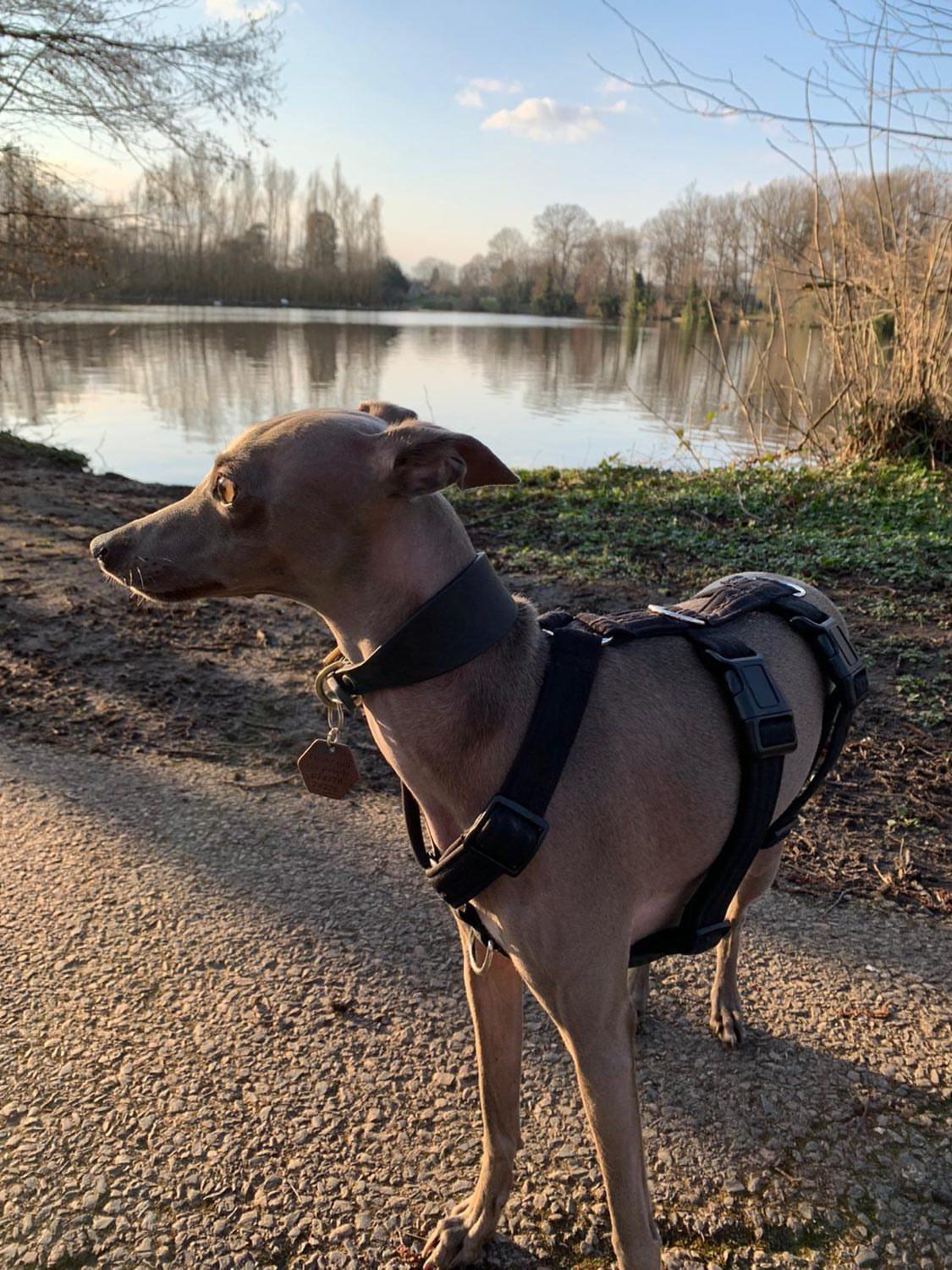
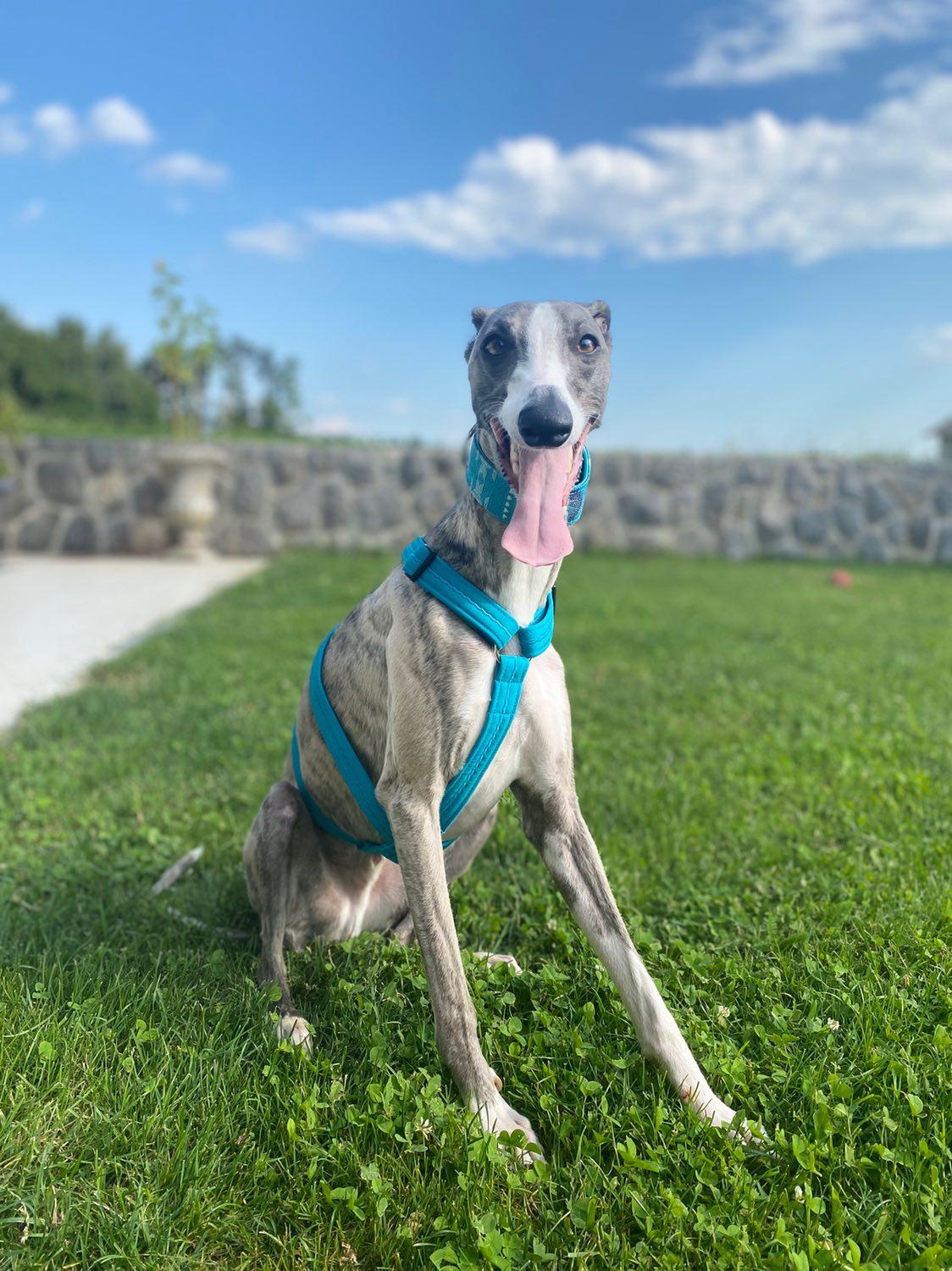
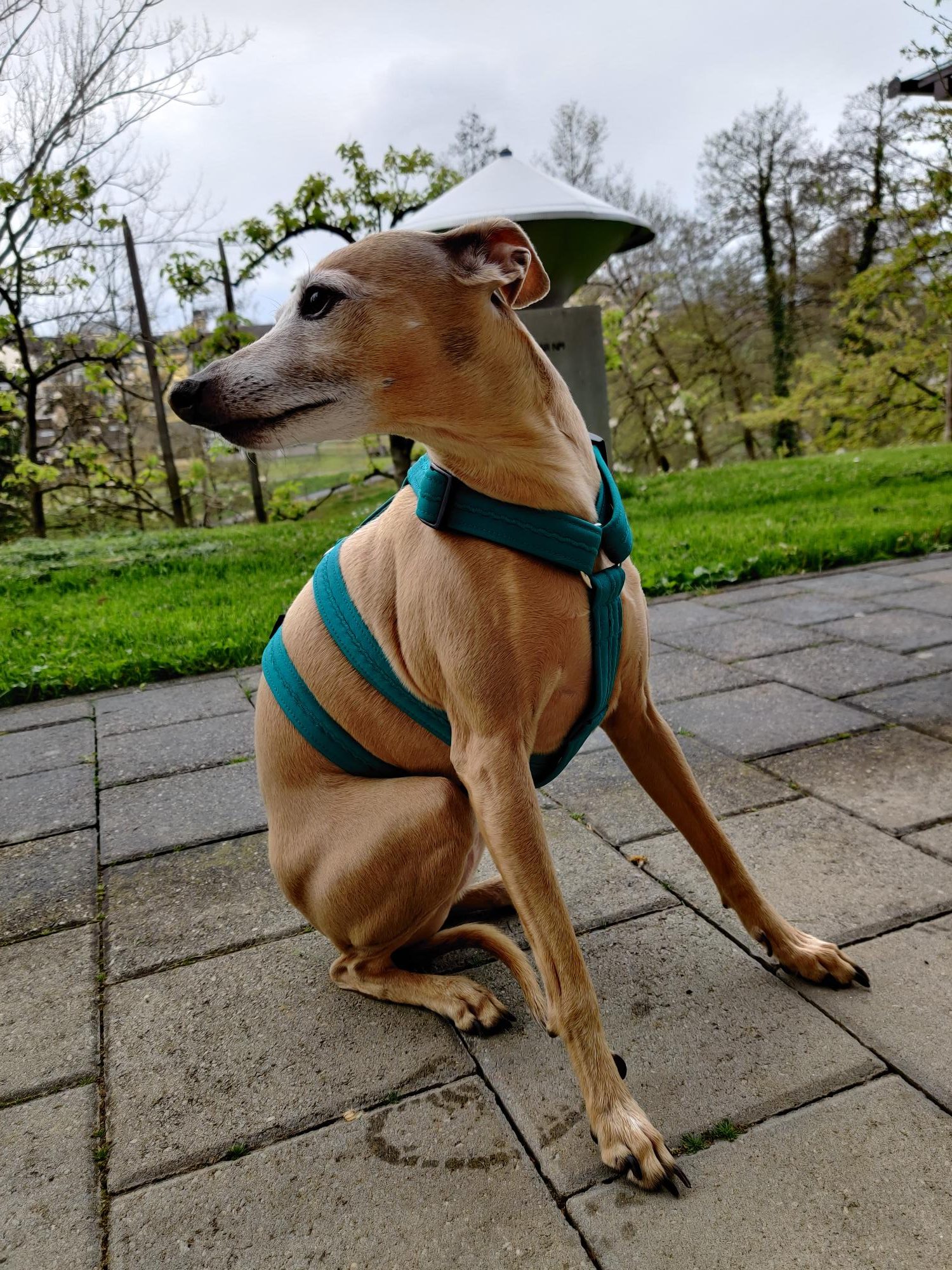
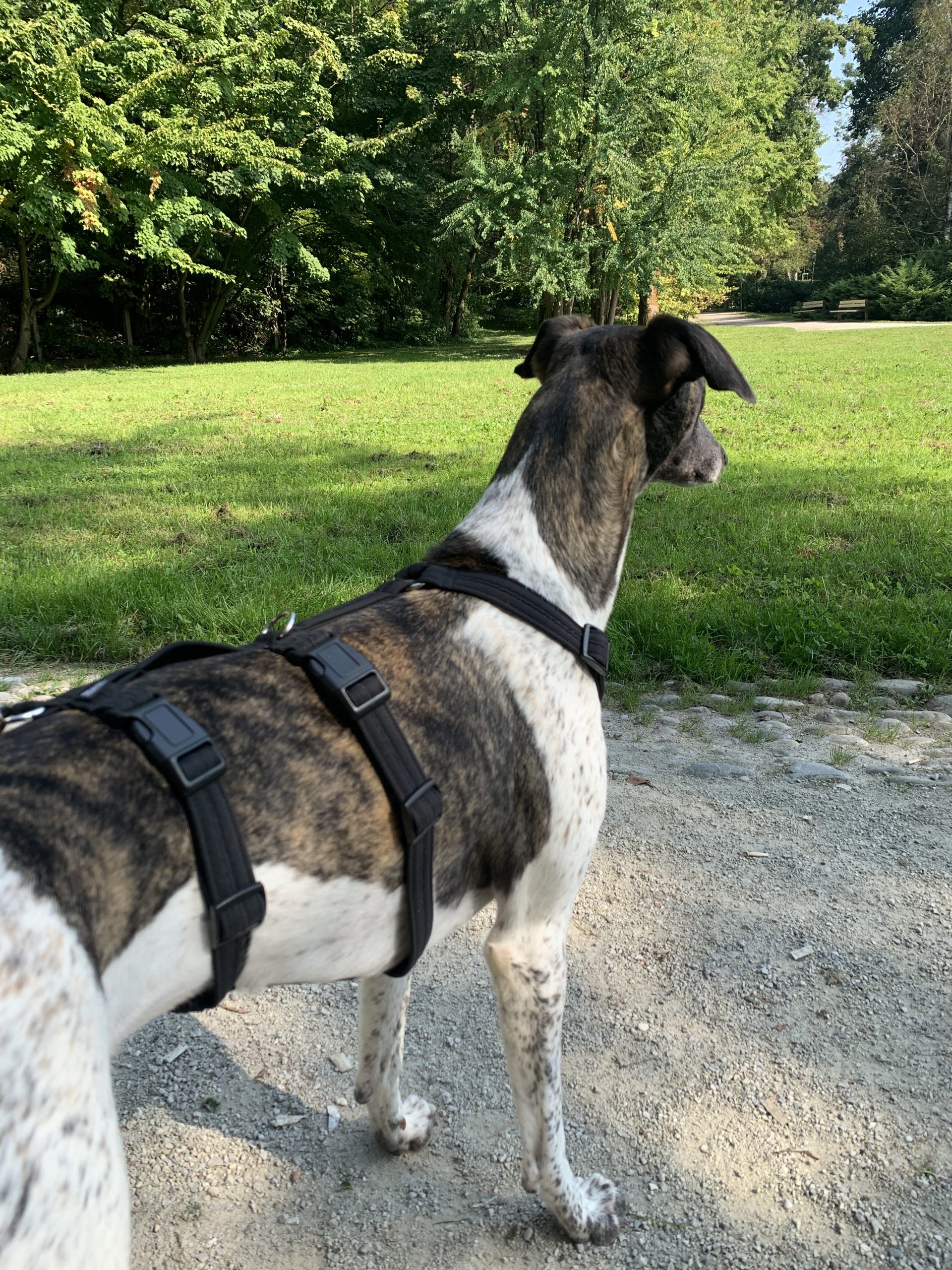
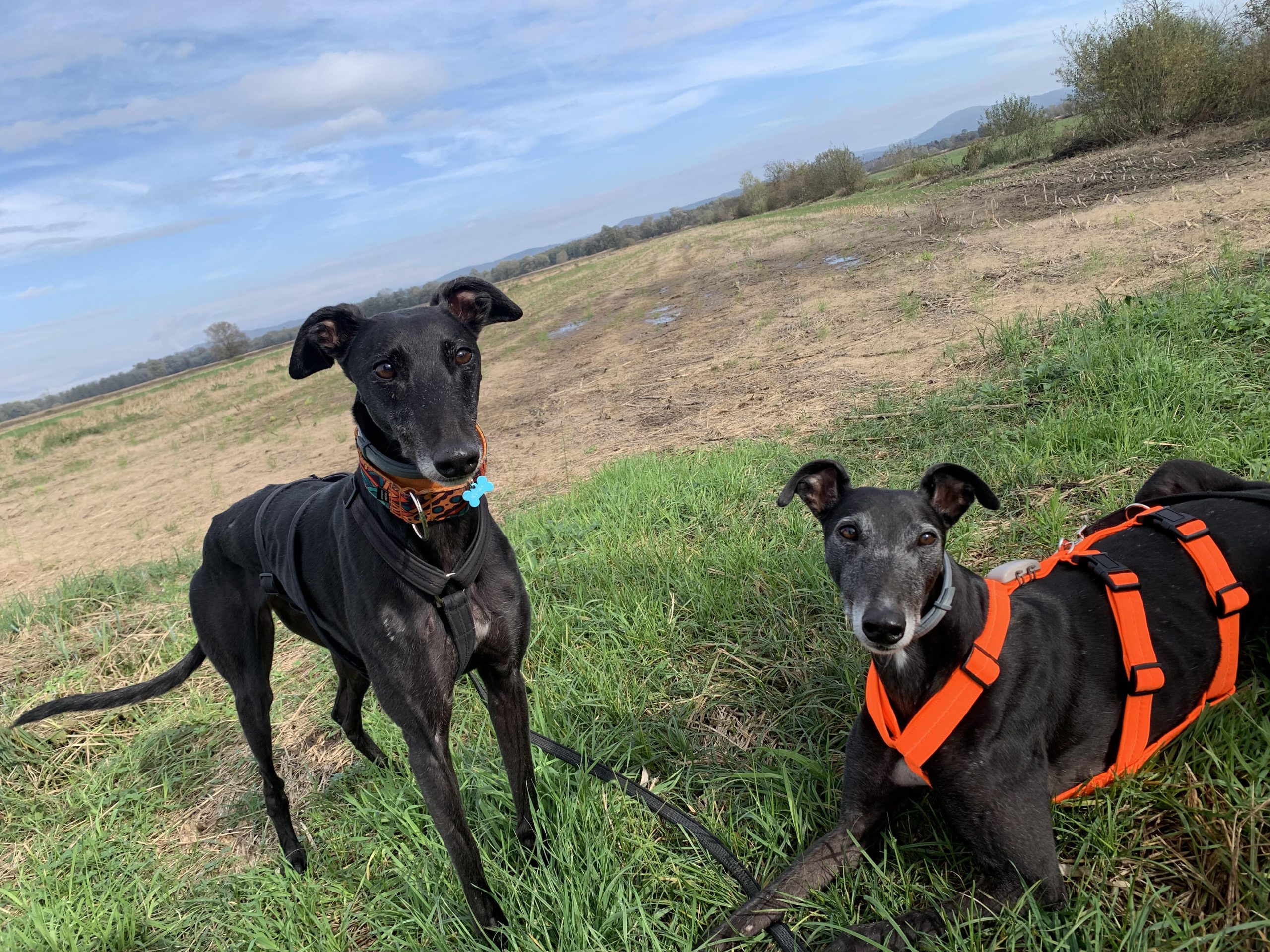
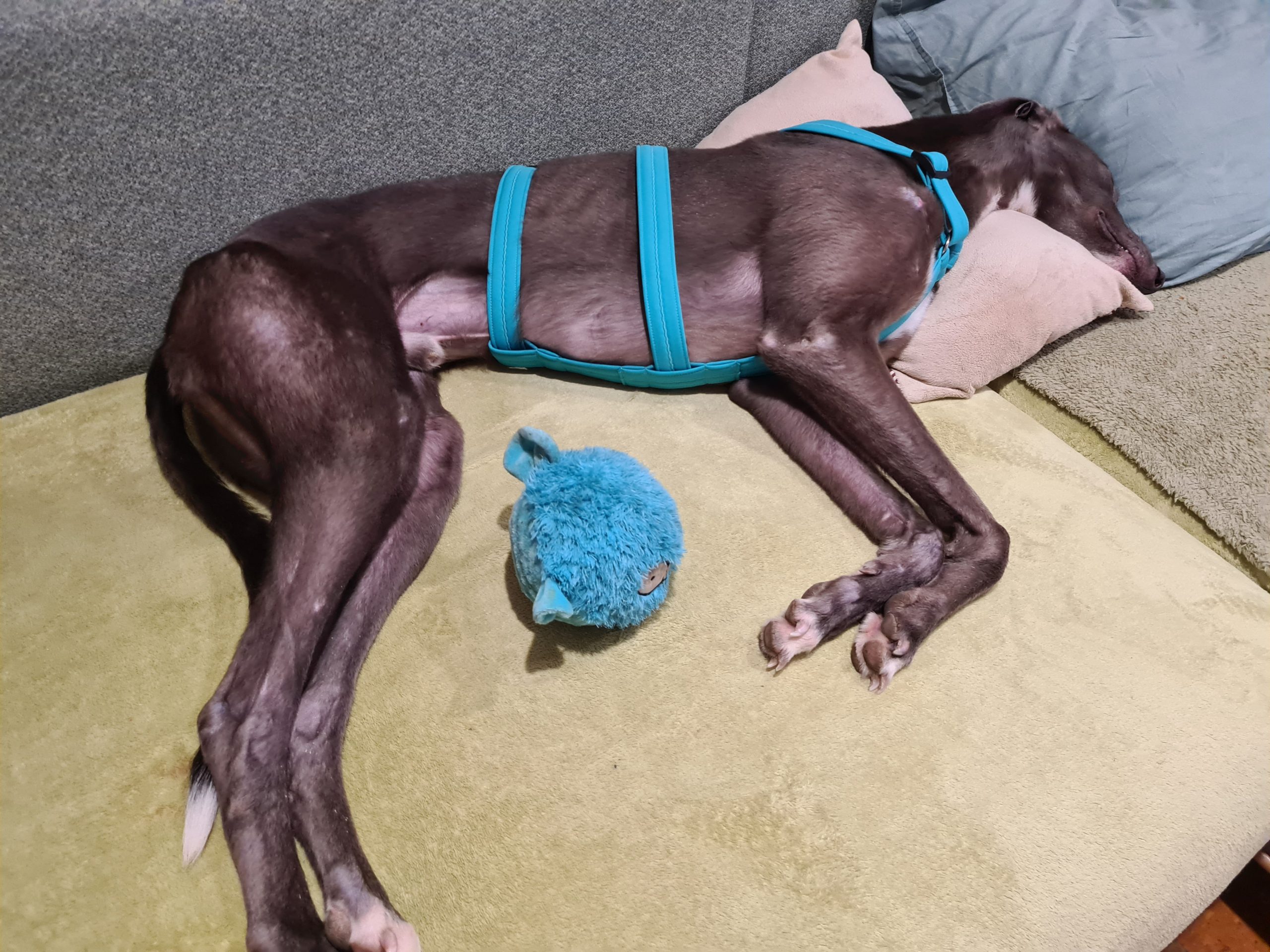
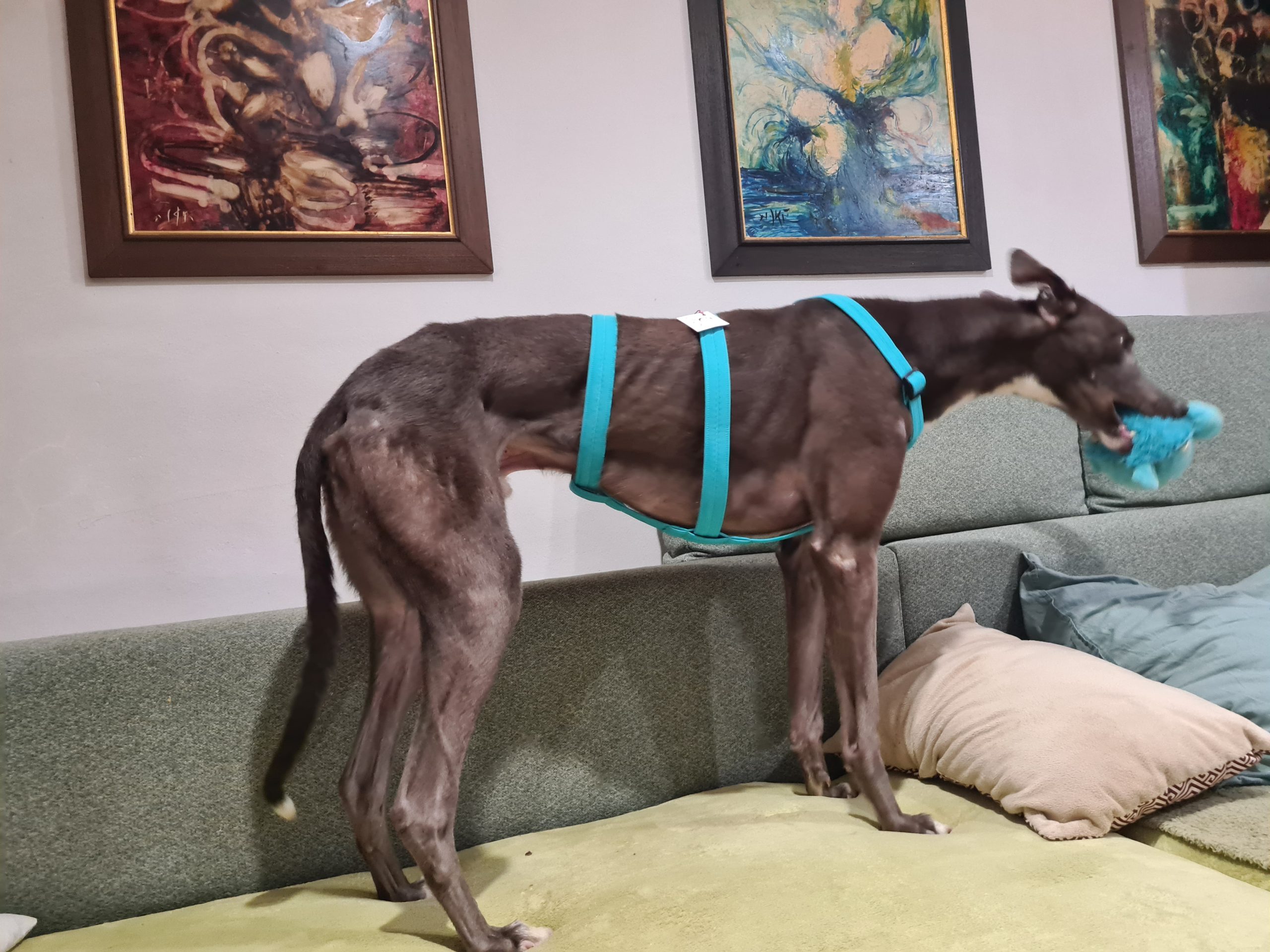
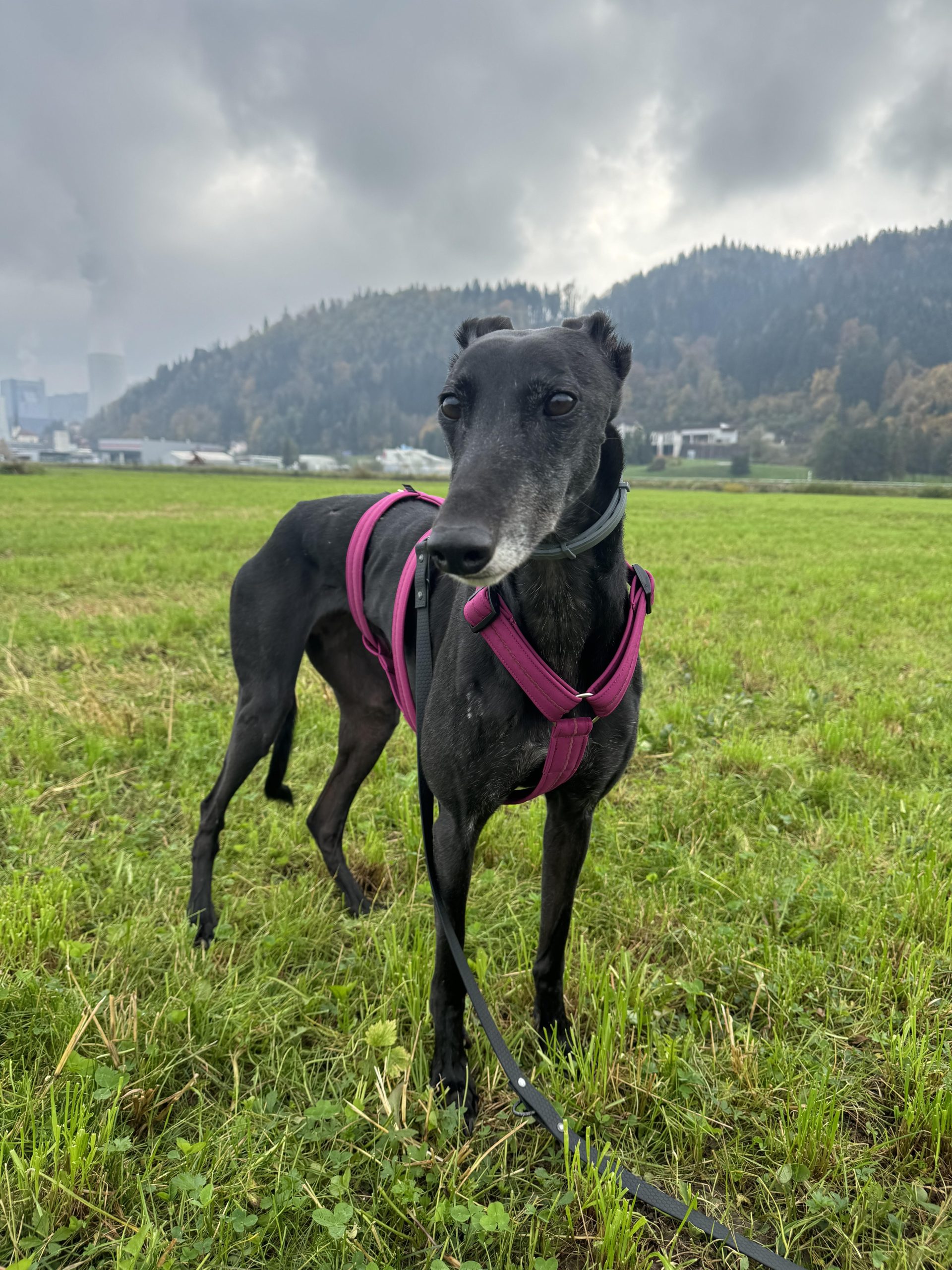
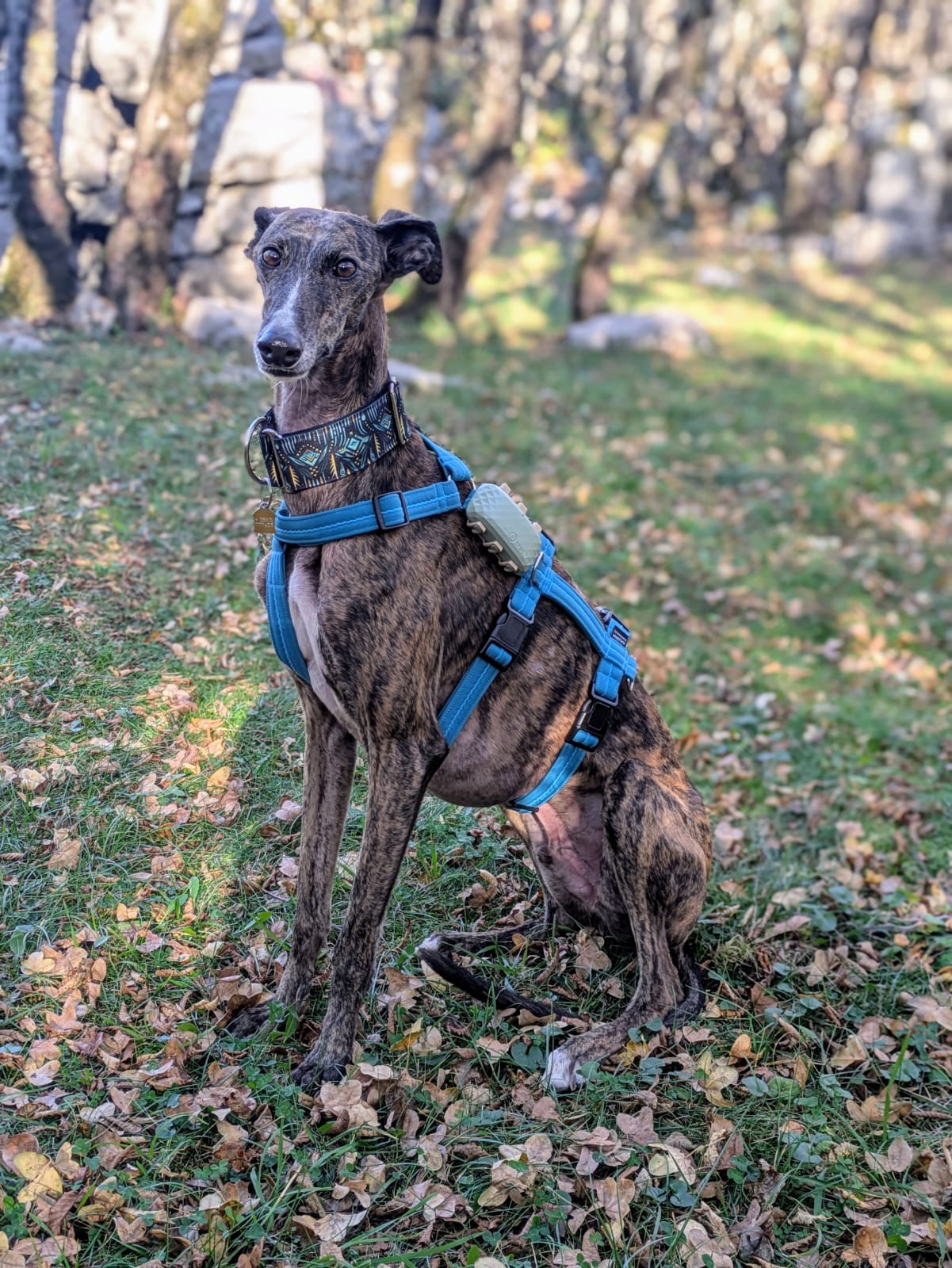
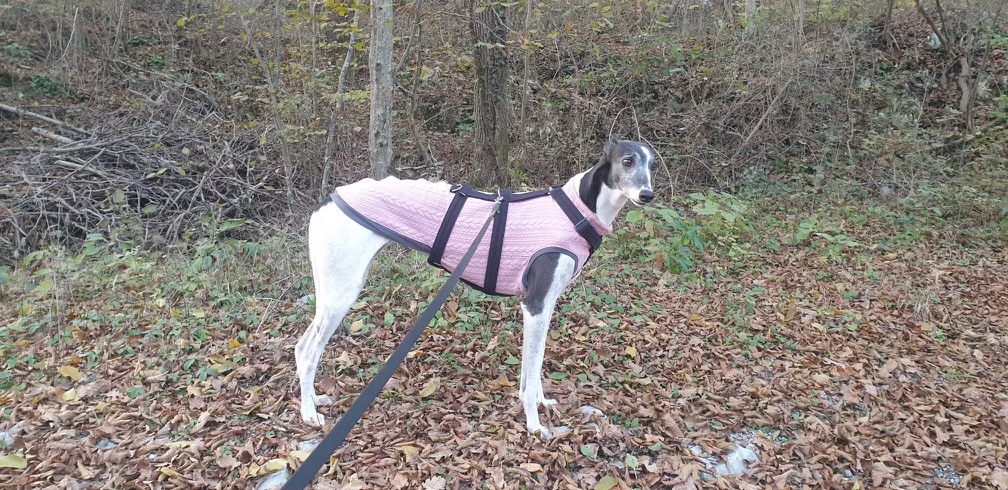
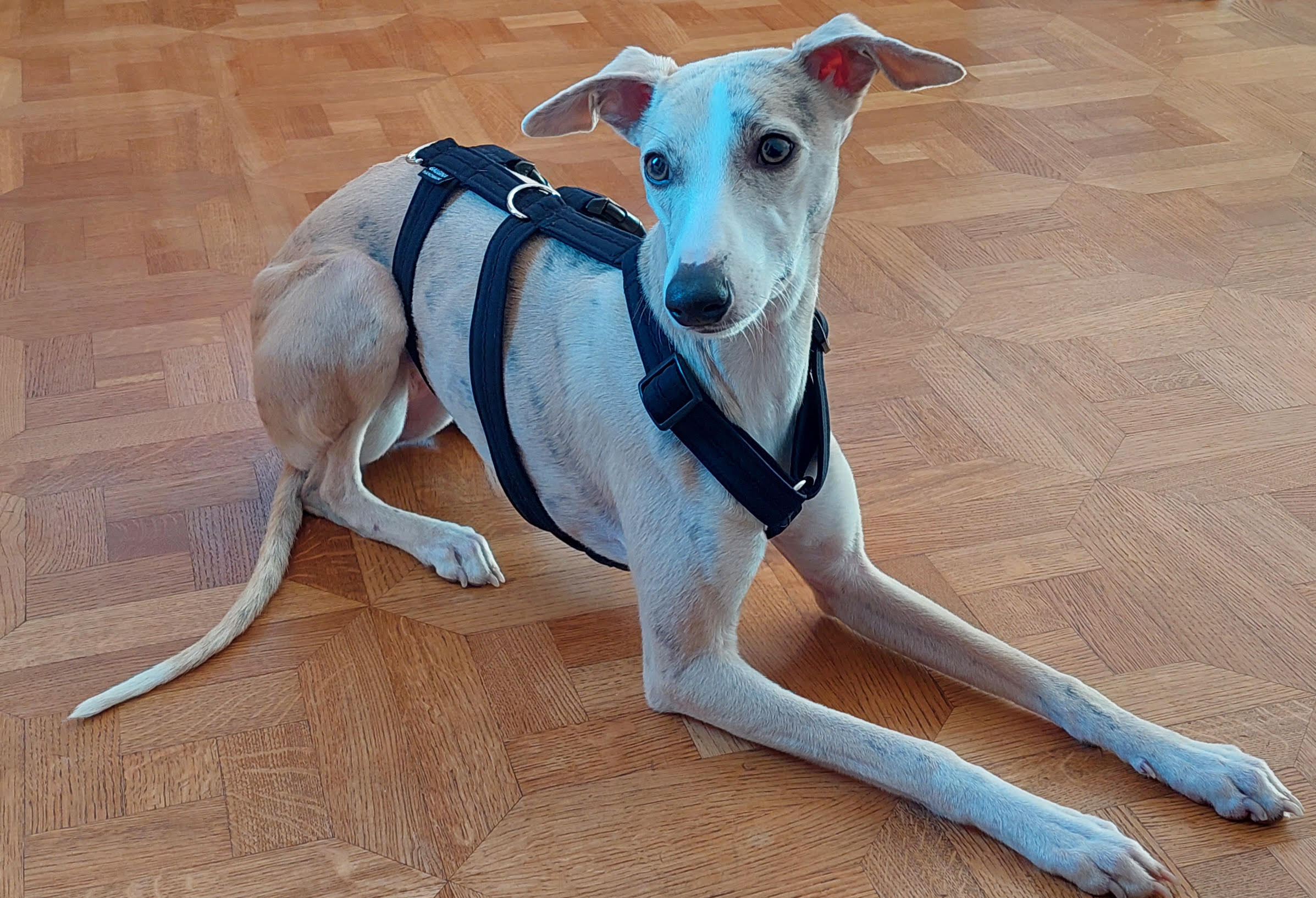
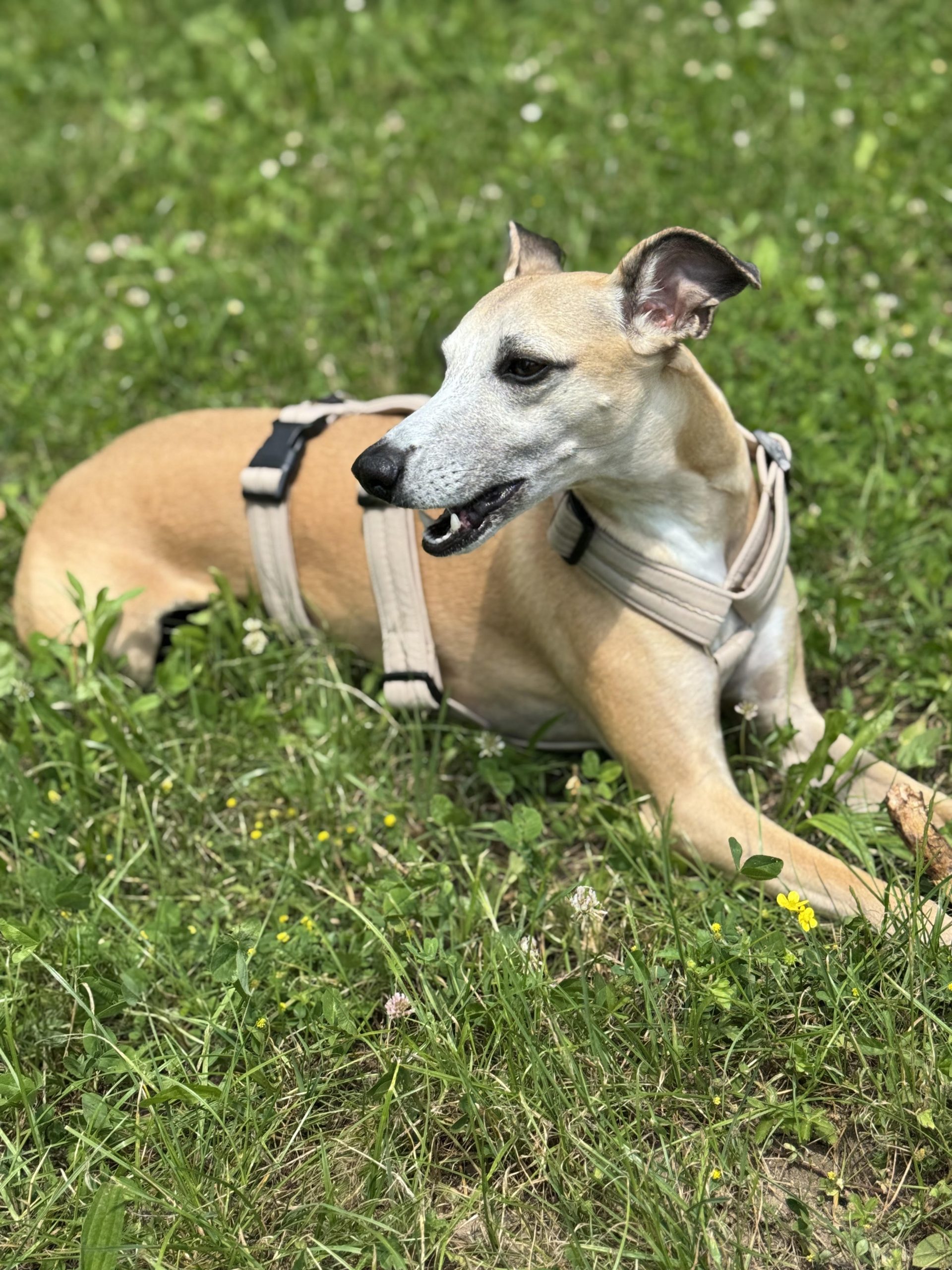
The Basic harness is a walking harness specifically designed for sighthounds – dogs with slim bodies and a pronounced deep chest. The extended rear section and an additional safety strap around the narrowest part of the chest help prevent the dog from slipping out of the harness.
The harness is designed with straps that completely avoid the shoulder joints and armpits, allowing unrestricted movement and preventing chafing. These are all key features of dog-friendly equipment, which is why this harness model is also considered one of the most recommended options by professionals.
Materials
The harness is made from strong nylon webbing that is, in a specific way, encased in softshell fabric. This construction ensures maximum comfort while keeping the straps compact, softly padded, and finished with rounded edges that do not dig into the dog’s body.
Softshell is easy to maintain, making the harness machine washable. When wet, it does not retain much water and dries quickly. One drawback of softshell is its UV instability, meaning that colours may fade slightly over time.
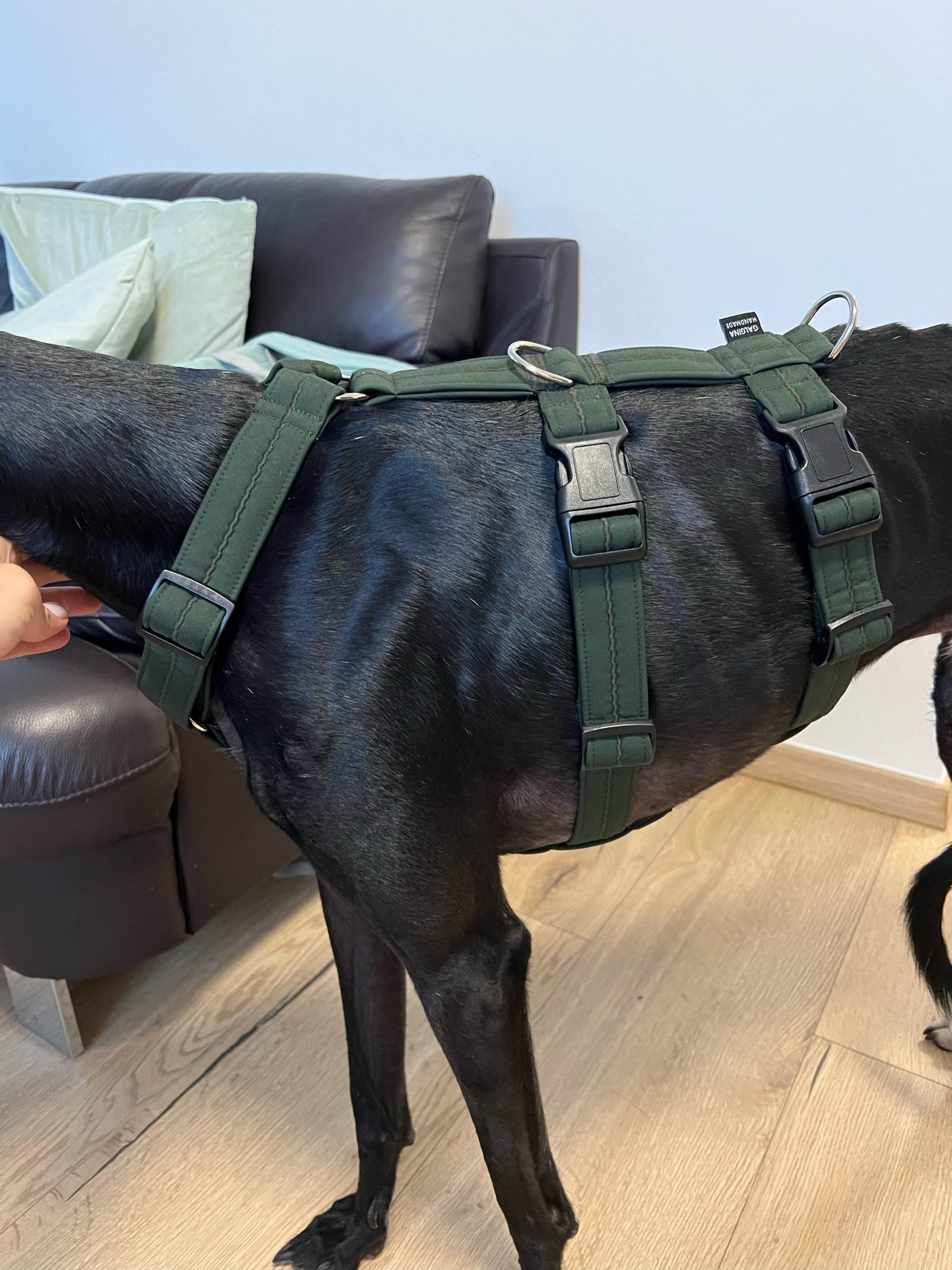
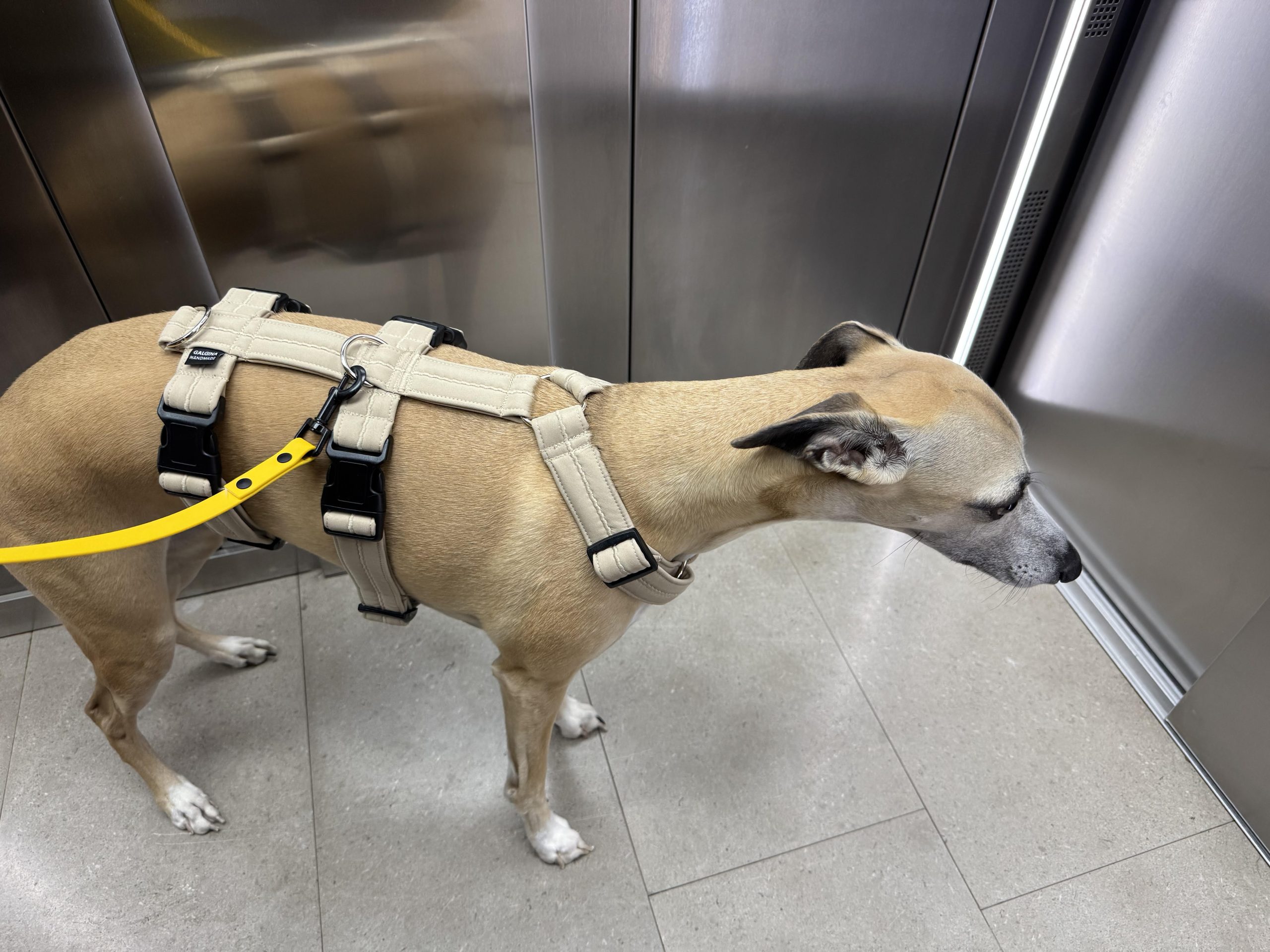
The back strap is equipped with two welded D-rings for leash attachment. The rings located at the withers and chest are not intended for leash attachment, as doing so would pull the harness out of its optimal position. All metal components are welded and silver-coloured (nickel-plated). By arrangement, matte black hardware without nickel can also be used.
Buckles and strap adjusters are made of black acetal plastic.
Straps
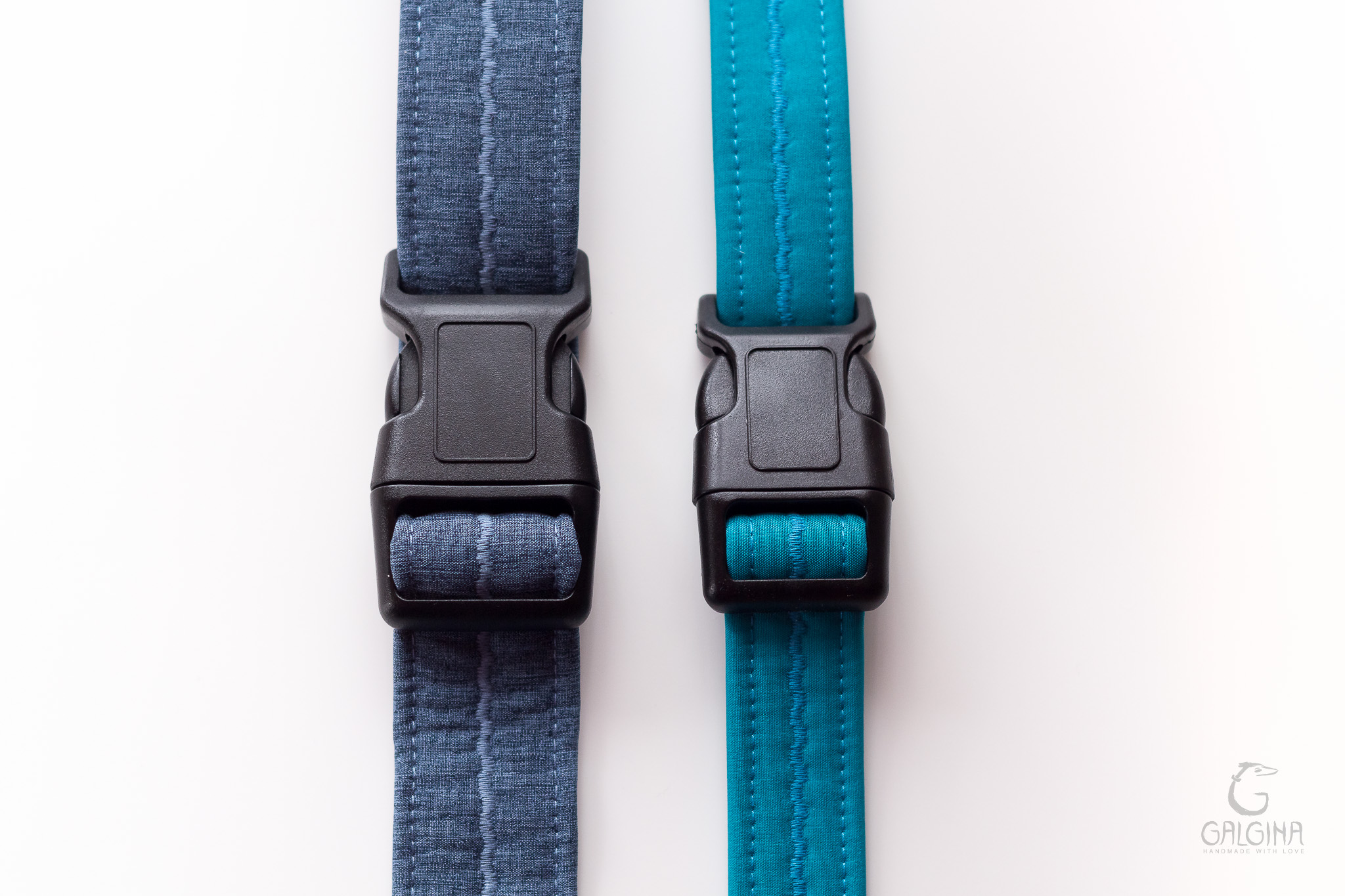
The Basic harness is available with two different strap widths:
- narrow straps – 2,5 cm
Harnesses with narrower straps have a more minimalist appearance, with smaller rings, D-rings, and buckles. This option is best suited for smaller to medium-sized sighthound breeds, or for guardians who prefer a lighter, less robust harness.
- wide straps – 3,3 cm
Harnesses with wider straps are more substantial, featuring larger and more robust rings, D-rings, and buckles. This option is best suited for larger sighthound breeds or for those who prefer a sturdier harness.
Fastening and size adjustment
On the Basic harness, both the neck straps and the chest straps are adjustable in length. The neck straps should rest above the shoulder blades, while the chest straps should fit snugly around the chest, allowing space for 3–4 fingers underneath. This ensures unrestricted chest movement and prevents the harness from slipping off.
- single-sided fastening (standard, default option)
With this fastening option, the harness has two buckles, both positioned on the left side of the dog’s body. First, slip the harness over the dog’s head, then lift the front right leg and guide it through the opening. Align the two straps with buckles under the belly and pull them up towards the dog’s back. Fasten the strap behind the front legs first, followed by the safety strap around the narrowest part of the chest.
Due to the length of the harness and the specific anatomy of sighthounds, the harness may tilt slightly to one side of the spine. If you feel this might bother your dog, the double-sided fastening option may be a better choice.
- double-sided fastening (by arrangement, additional charge applies)
With this option, two additional buckles are added to the right side of the dog’s body. This makes the harness symmetrical, more balanced, and more stable during movement. When putting it on, there is no need to lift the front leg, making this option especially suitable for sighthounds that dislike or struggle with having their legs handled.
Slip the harness over the head, guide it between the front legs towards the belly, align the straps, and fasten the buckles on both sides. Double-sided fastening is possible for most sizes; the only exception is the very smallest harnesses, where this option is unfortunately not feasible. Harnesses with double-sided fastening are slightly more robust and heavier than those with single-sided fastening.
Available colors:








* Colors marked with an asterisk are in stock in small quantities (usually for one 2,5 cm wide harness for a whippet or one leash).
Size and measurements
Each Basic harness is individually made to measure for your sighthound, so please take careful measurements before placing your order. Harnesses can be made for sighthounds weighing a minimum of 8–10 kg. If you are ordering a harness for a puppy, we recommend a minimum age of 8–9 months, as younger puppies are likely to outgrow the harness.
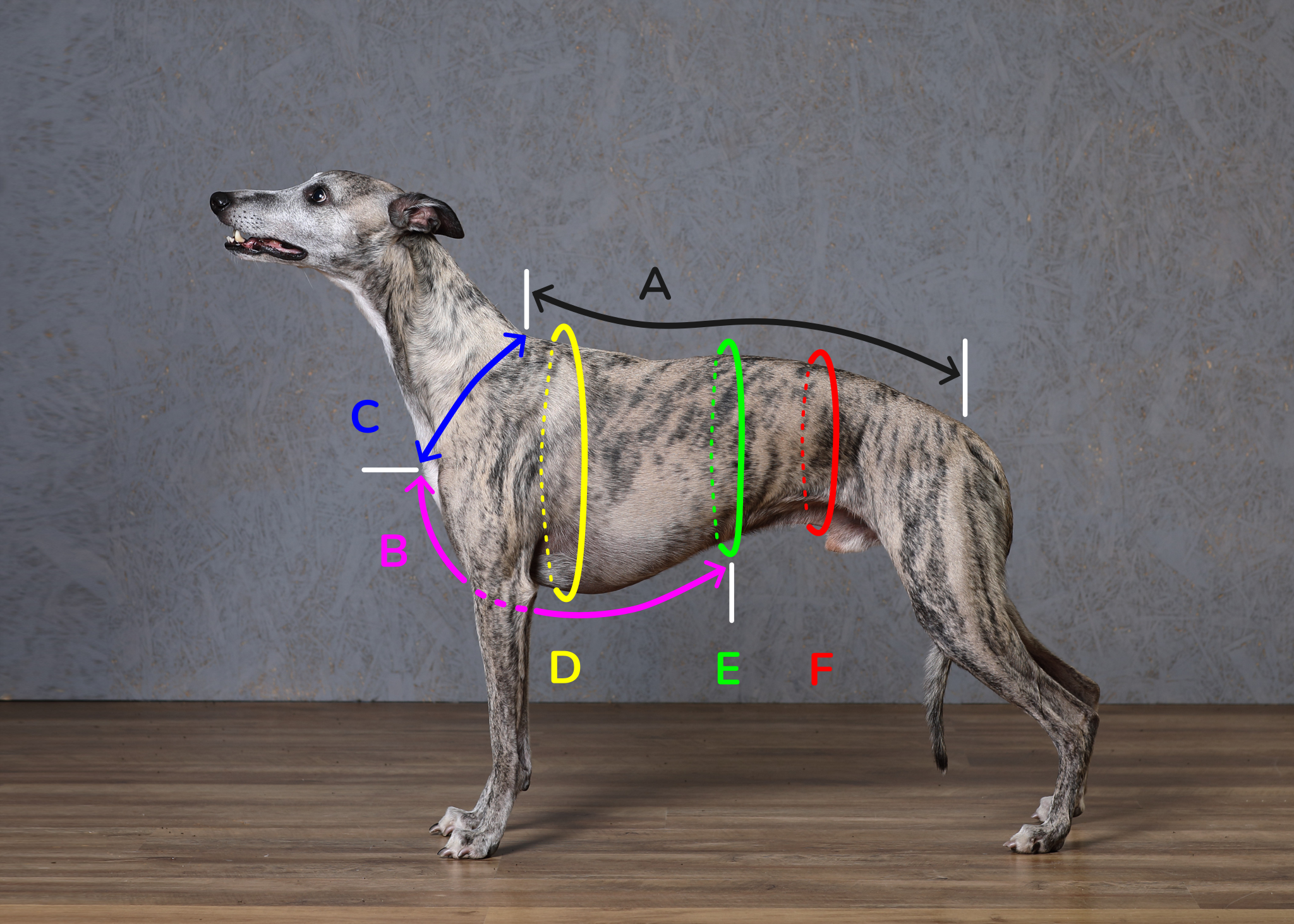
When measuring, the dog should stand on a flat surface in a relaxed, natural posture, evenly weighted on all four legs. If you are unsure about the measurements, it is better to take several measurements and calculate their average.
Measurements needed are:
- A – Back length
Measure the length along the spine from the base of the neck to the base of the tail.
Start measuring at the point where the neck meets the shoulders, just in front of the shoulder blades (feel for them with your fingers). You can also lift your dog’s head slightly and view the dog from the side—the highest point of the angle between the neck and the body marks the starting point. Continue measuring along the spine and stop at the base of the tail. This is the point where the movable tail vertebrae separate from the body; lifting the tail slightly makes this easier to identify.
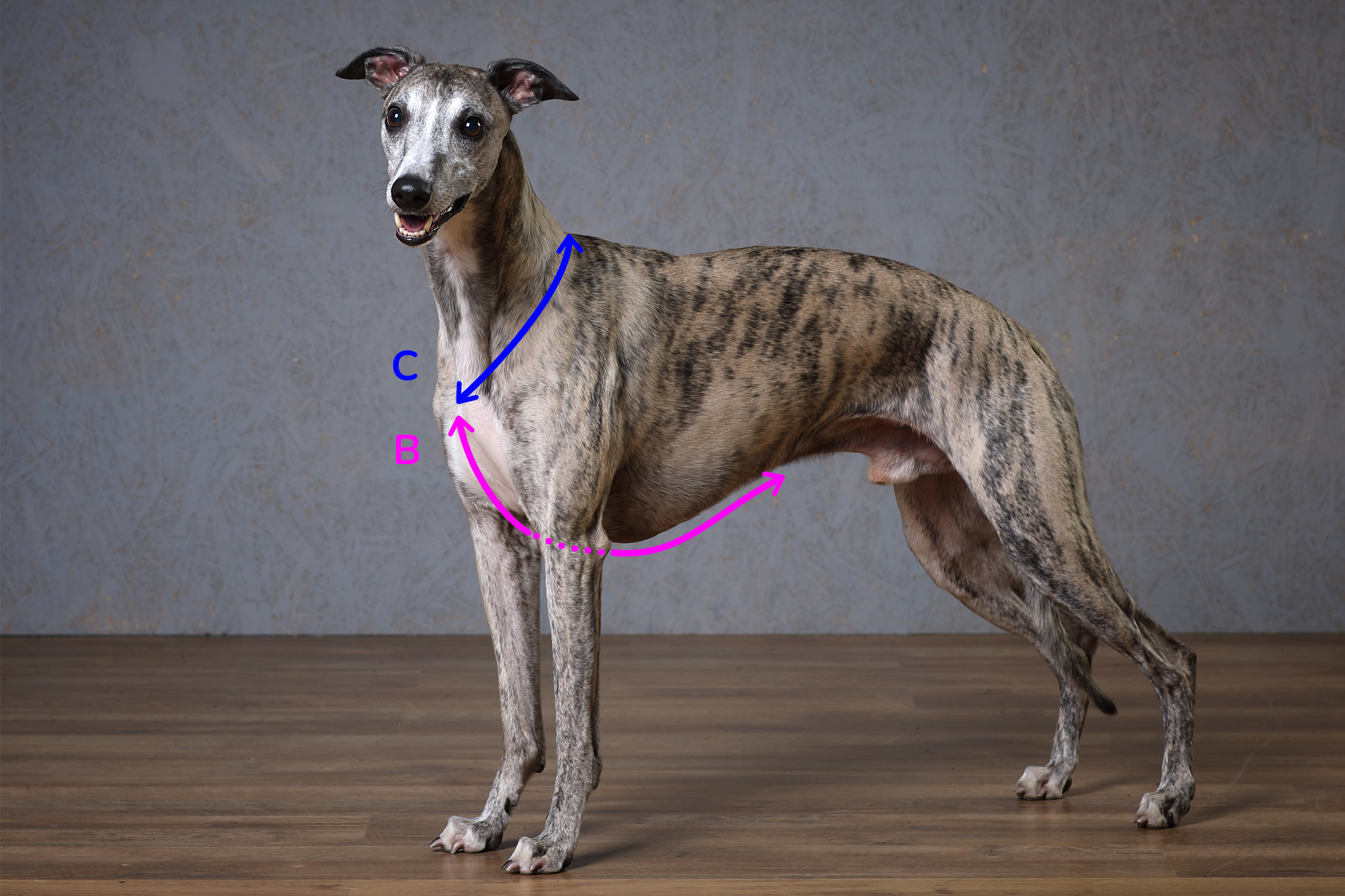
- B – Underbelly length
Measure from the spine at the base of the neck and continue along the side of the neck to the beginning of the sternum. Measure on one side of the body only.
Do not measure across the shoulders/shoulder blades, and do not measure the neck circumference.
- C – Side “neck” length
Measure the length from the spine on the base of the neck, and continue along the neck to the beginning of the sternum bone. Measure on one side of the body only, don’t measure across the shoulders, and don’t measure the neck circumference.
- D – Maximum chest circumference
Measure the chest circumference at the deepest point, just behind the front legs.
- E – Minimum chest circumference
Measure the circumference at the narrowest part of the chest, over the last ribs. Make sure to measure over the ribcage, not at the waist, where the ribs can no longer be felt. The minimum chest circumference is always smaller than the maximum chest circumference but larger than the waist circumference.
- F – Waist circumference
Measure the circumference at the narrowest part of the torso.
Care
Provide regular product maintenance to preserve their cleanliness and safety.
Ordering
Required details for Basic harness order:
- harness type
- width of the straps
- color of the harness
- sighthound breed
- dog’s sex
- measurements: A, B, C, D, E, F
- invoice and delivery information: name, surname, address, postal code, city


YOU MAY ALSO LIKE