Martingale collar
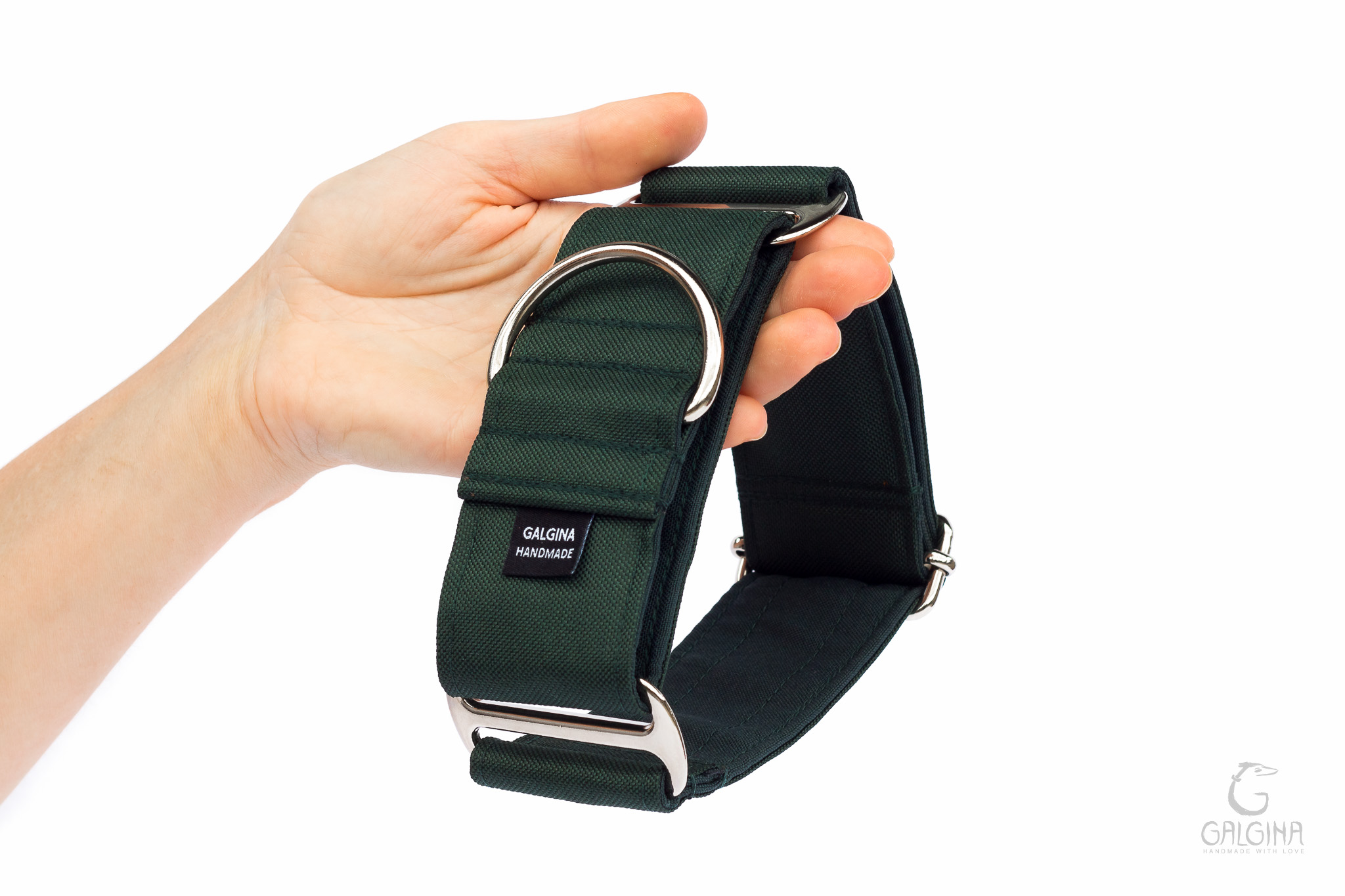
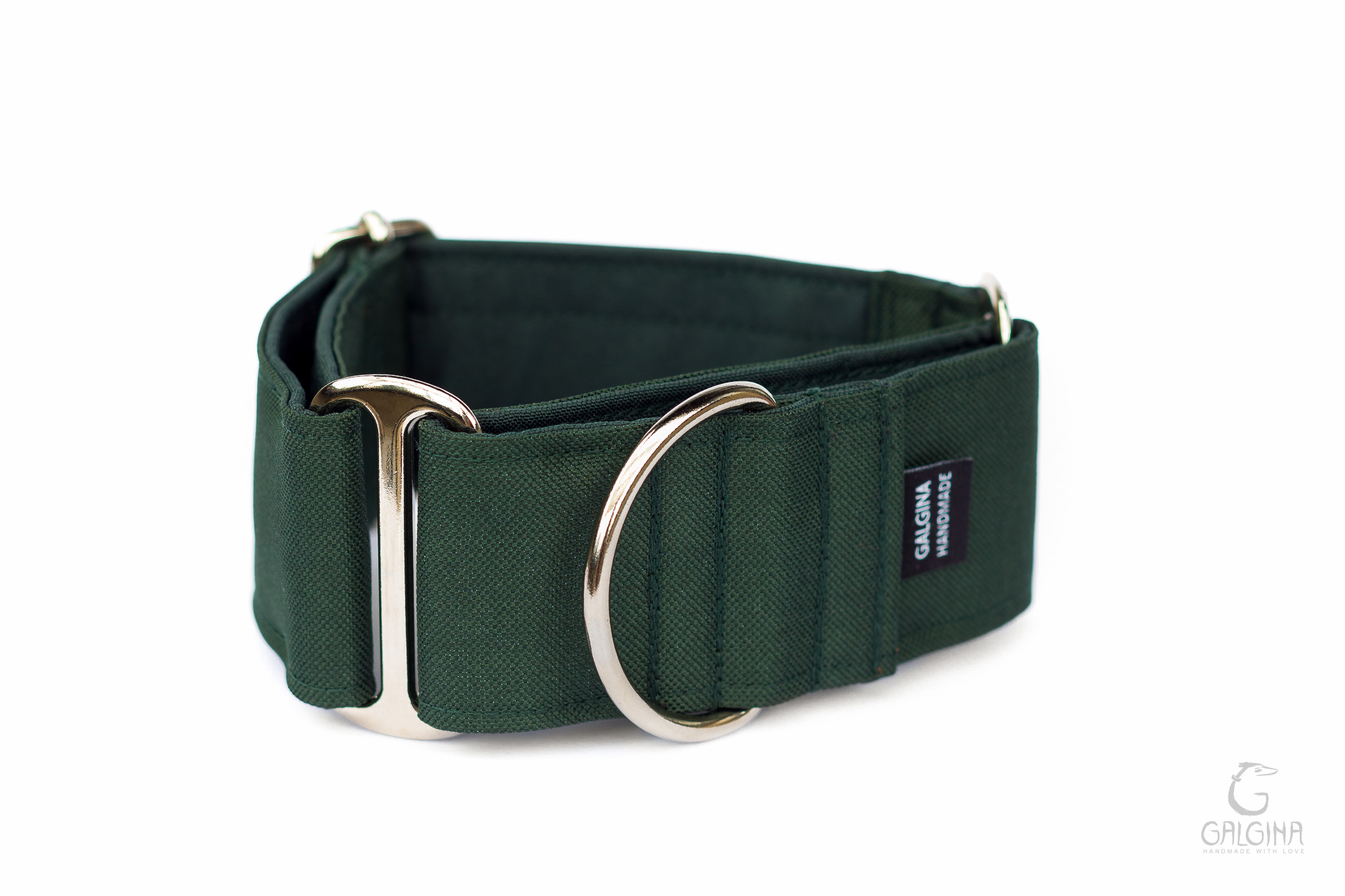
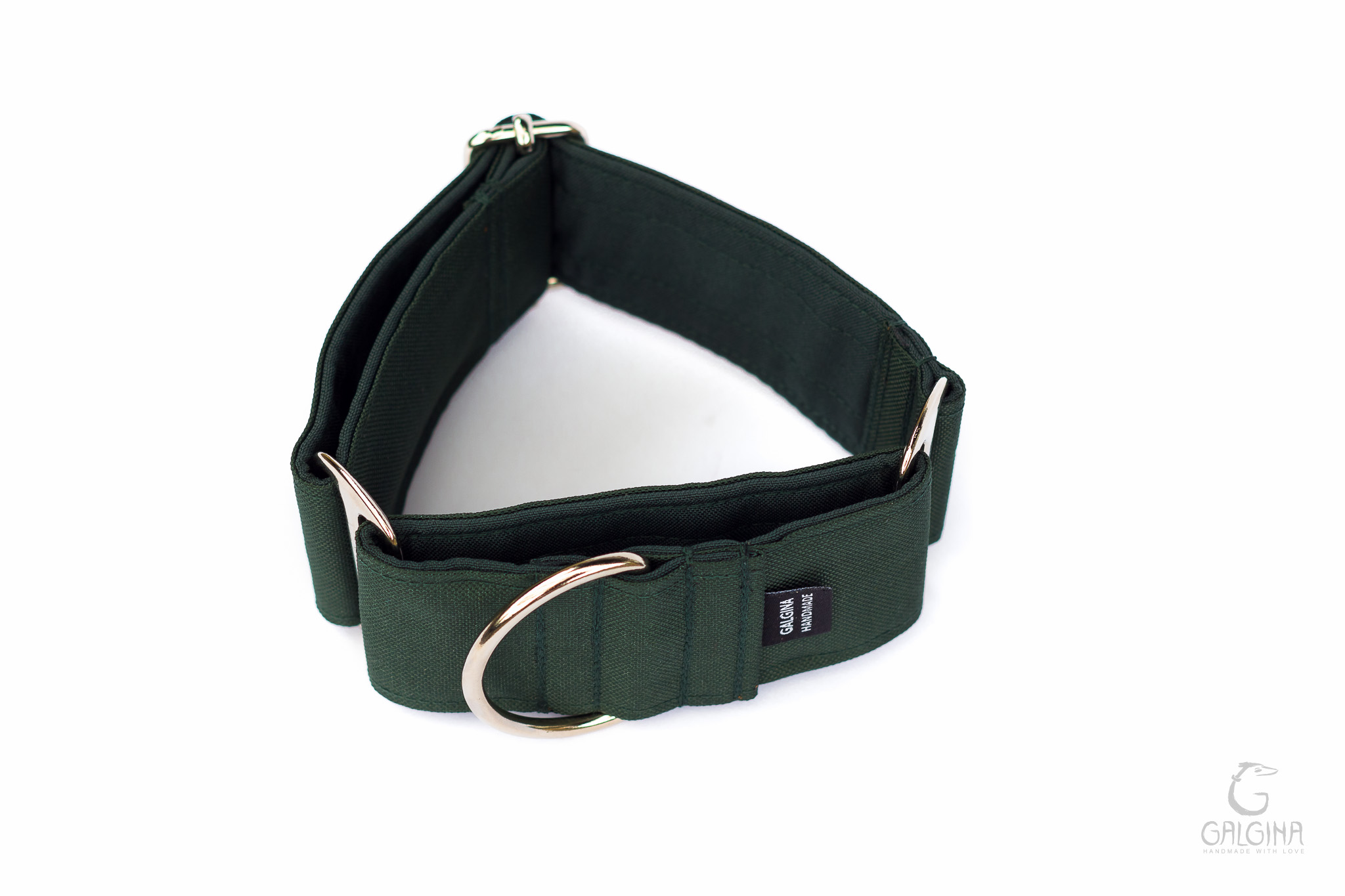
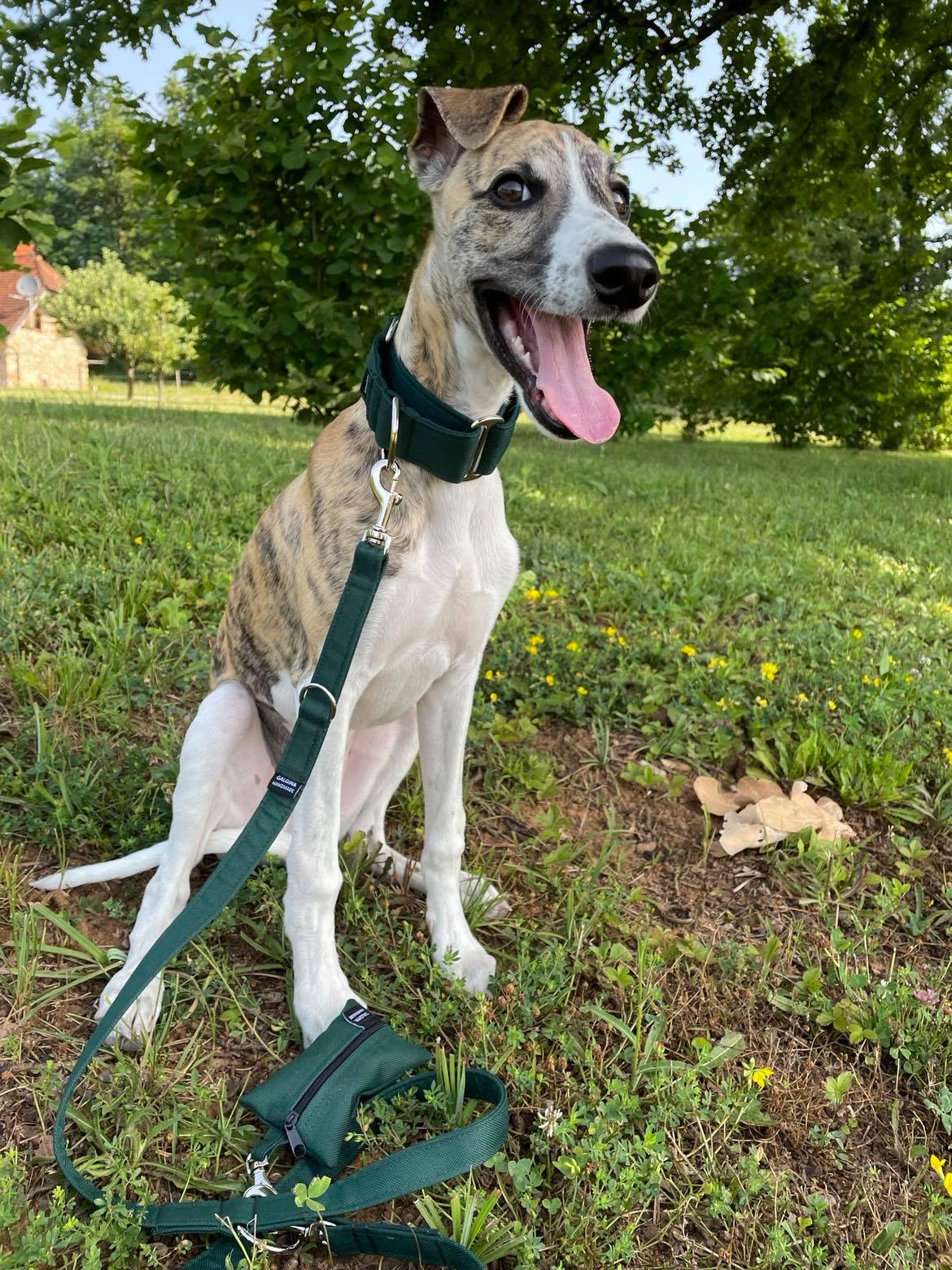
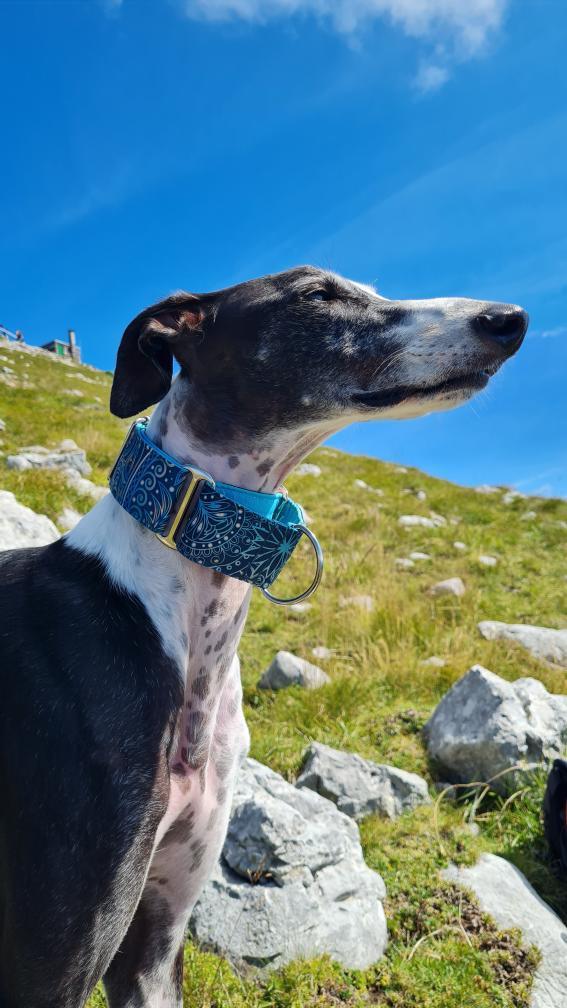
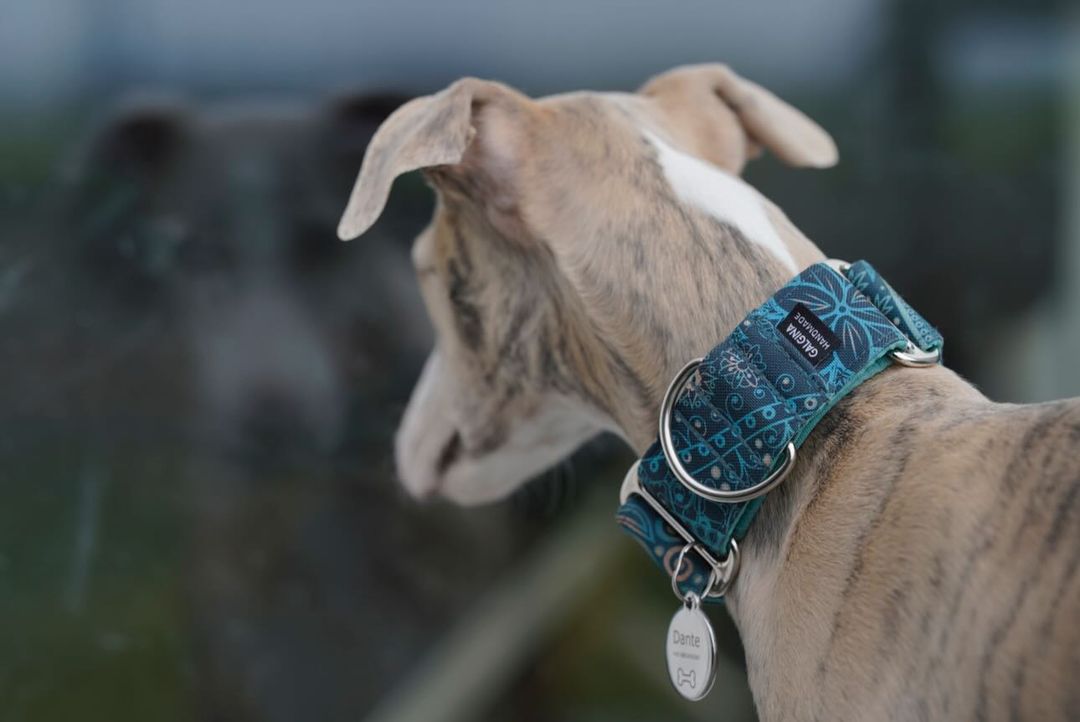
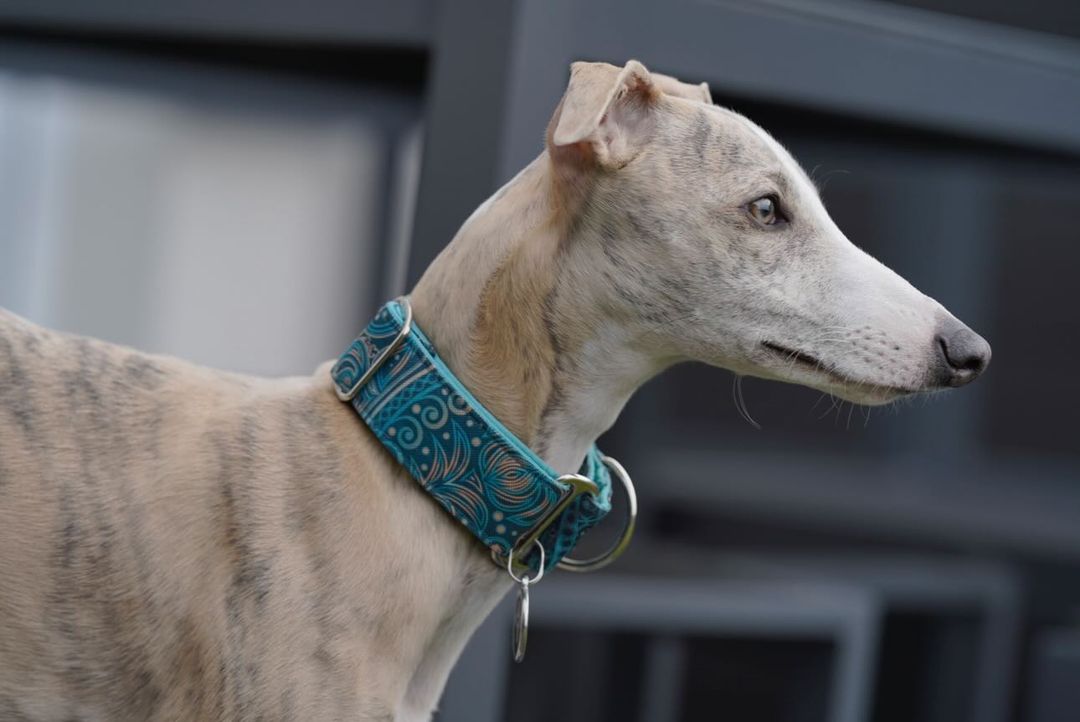
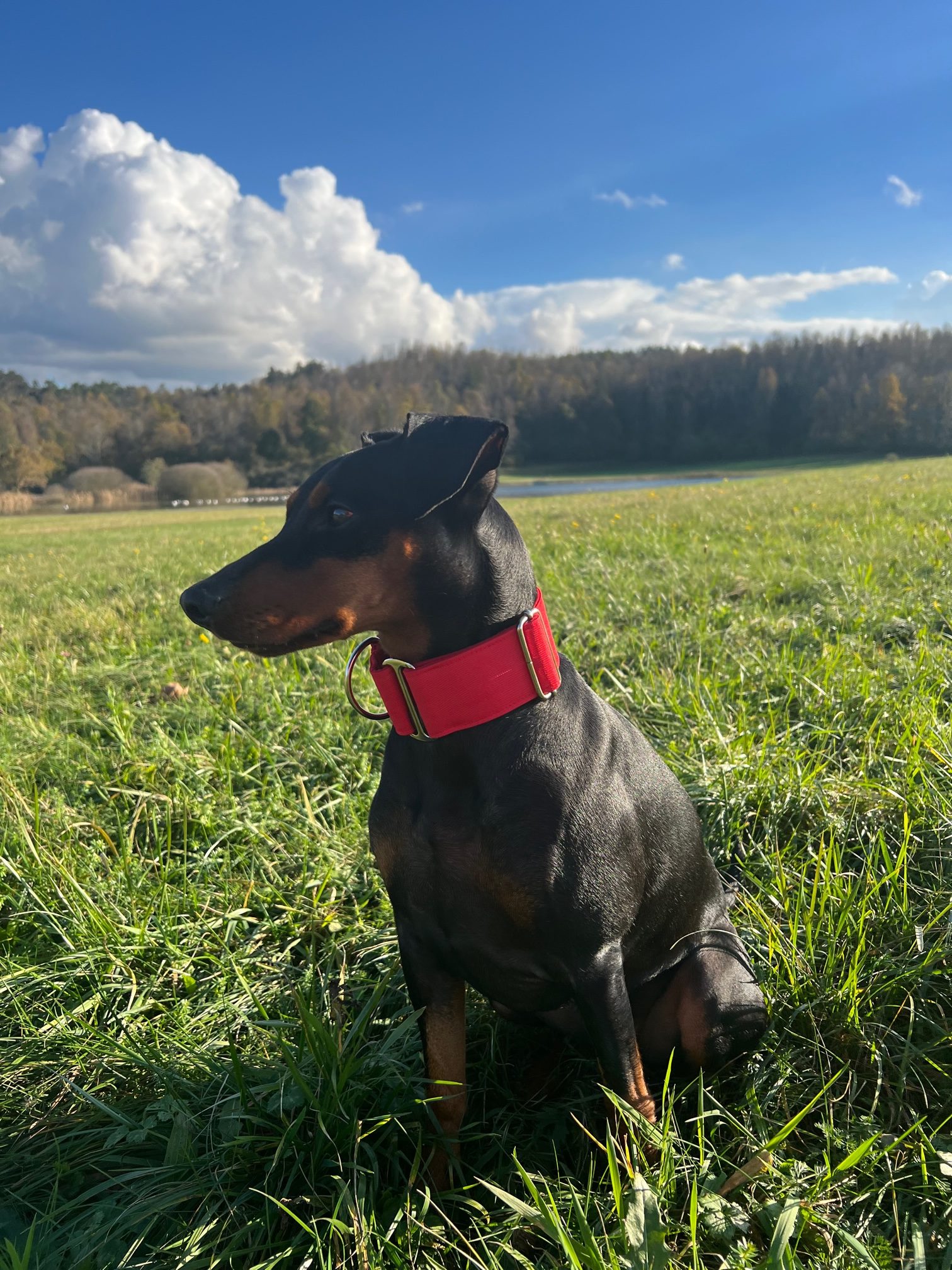
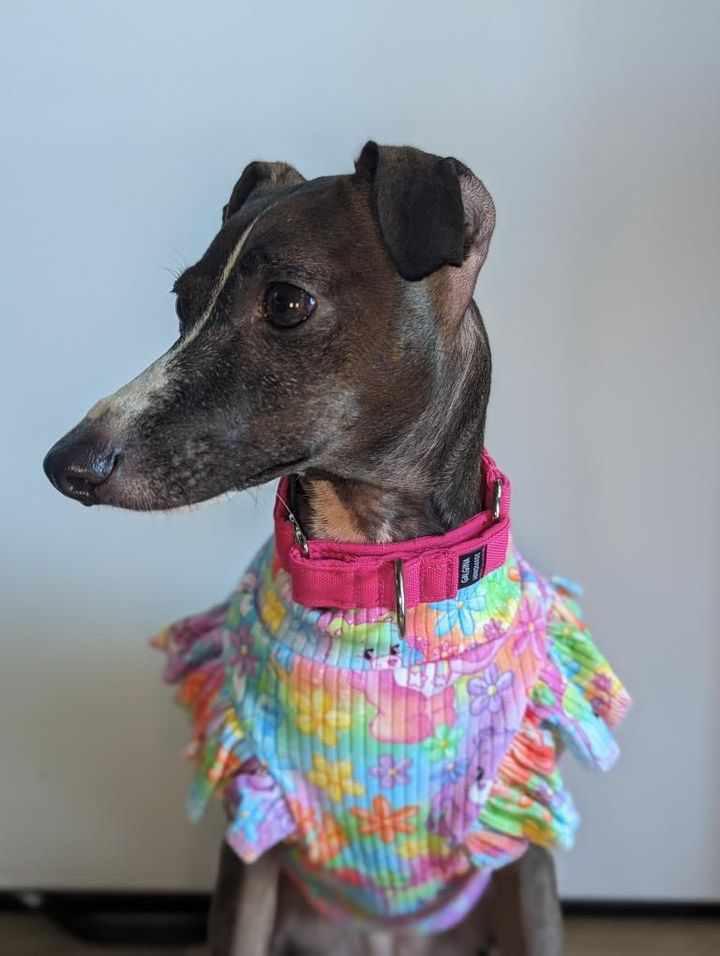
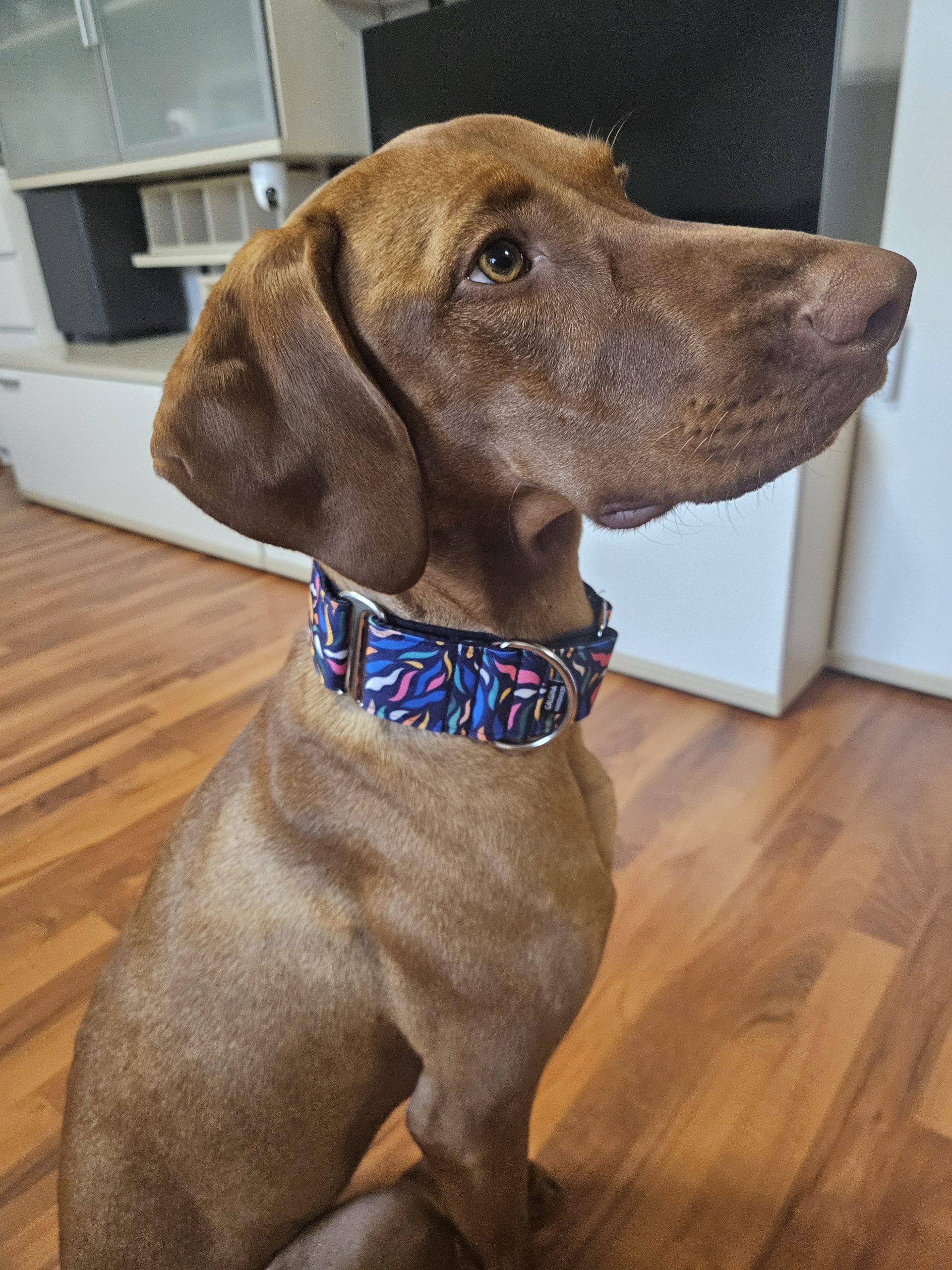
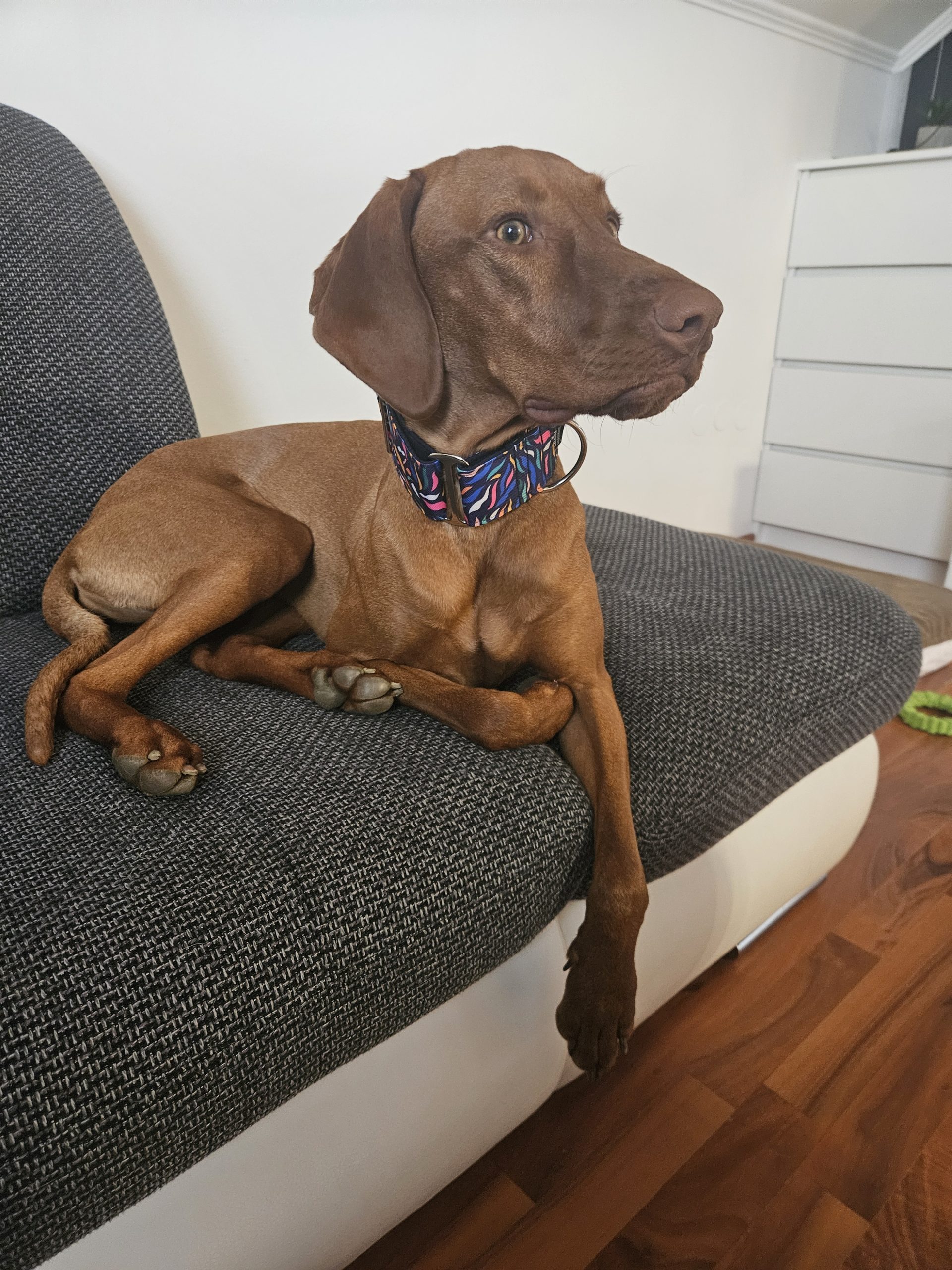
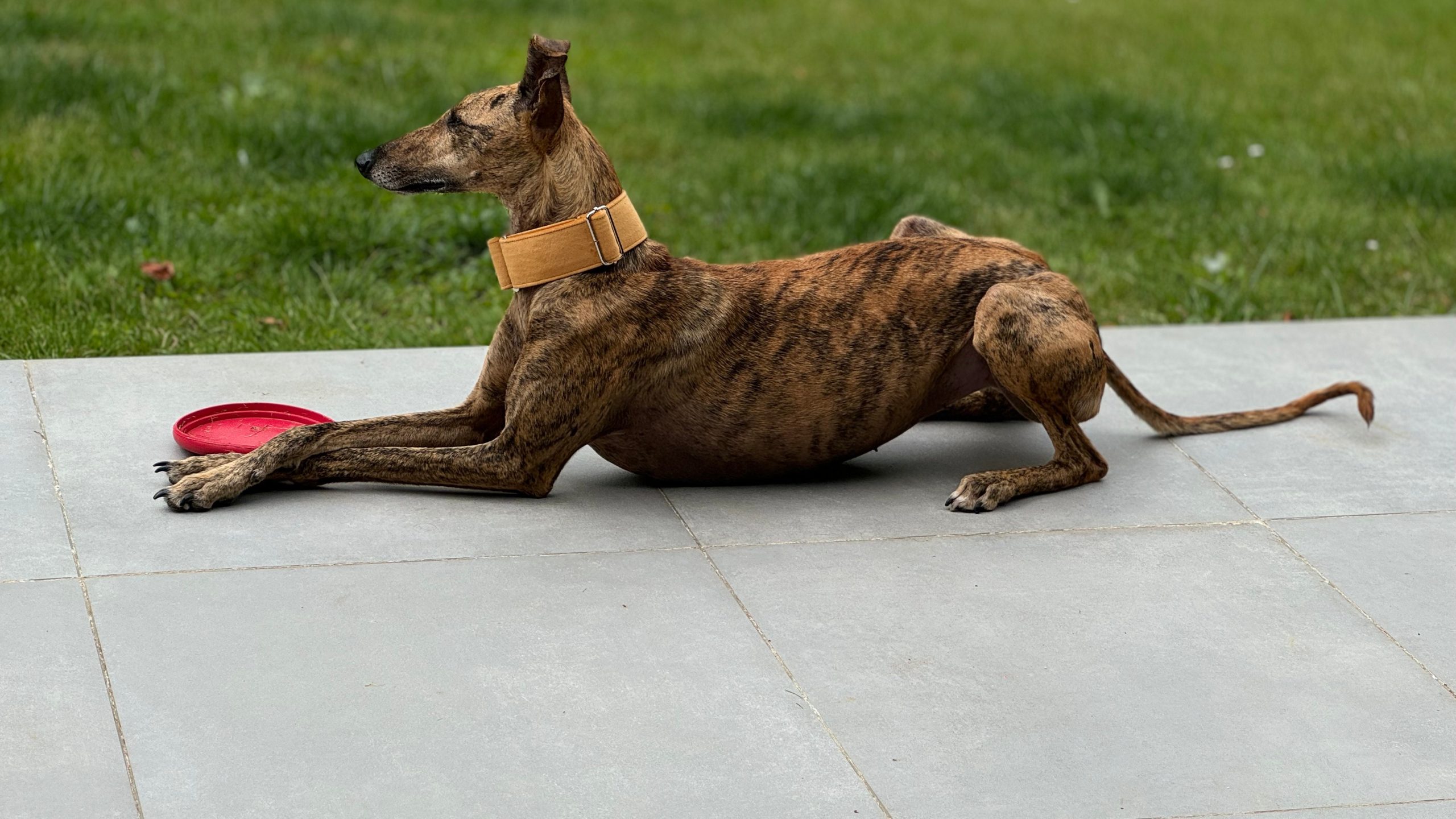
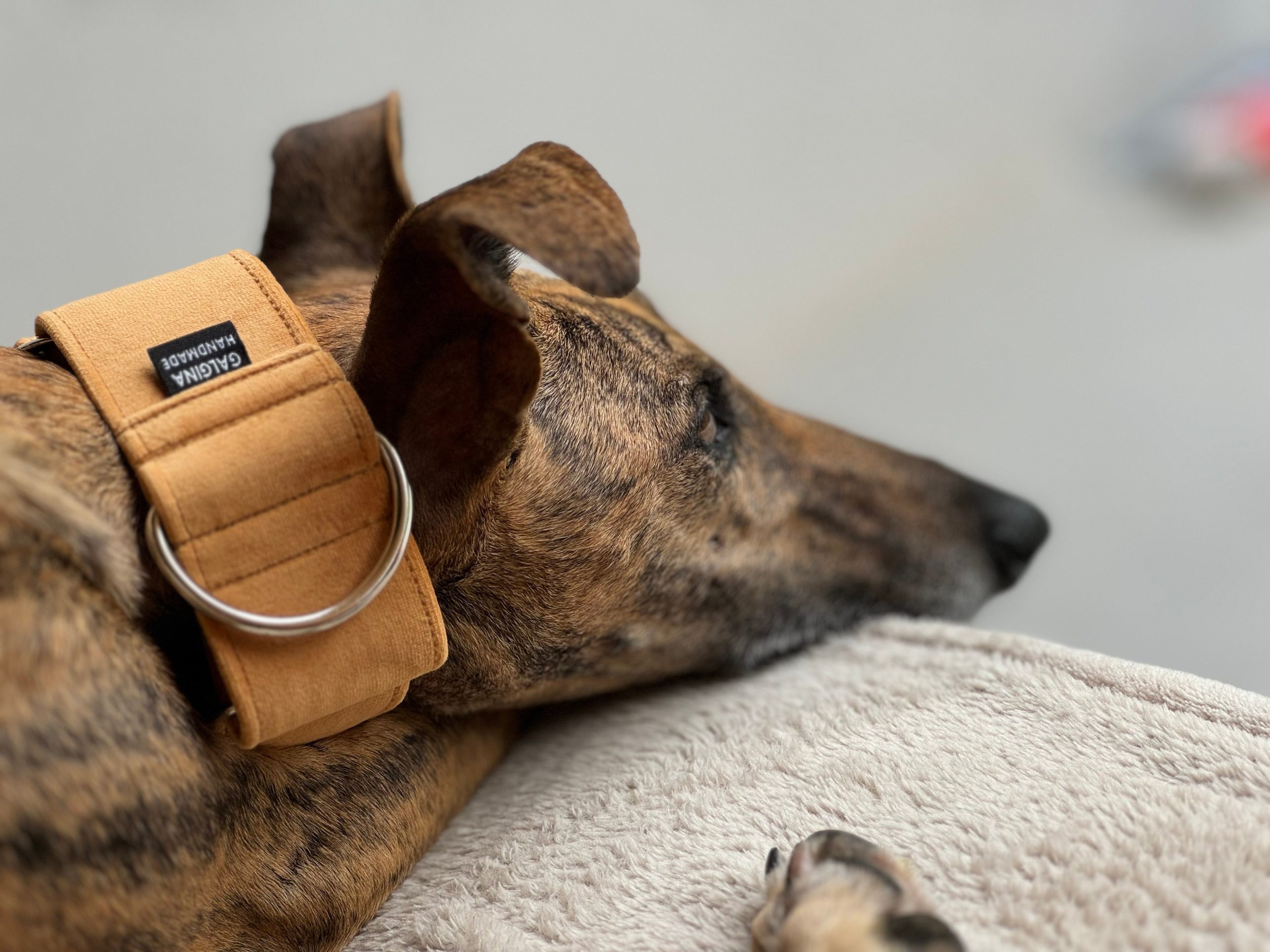
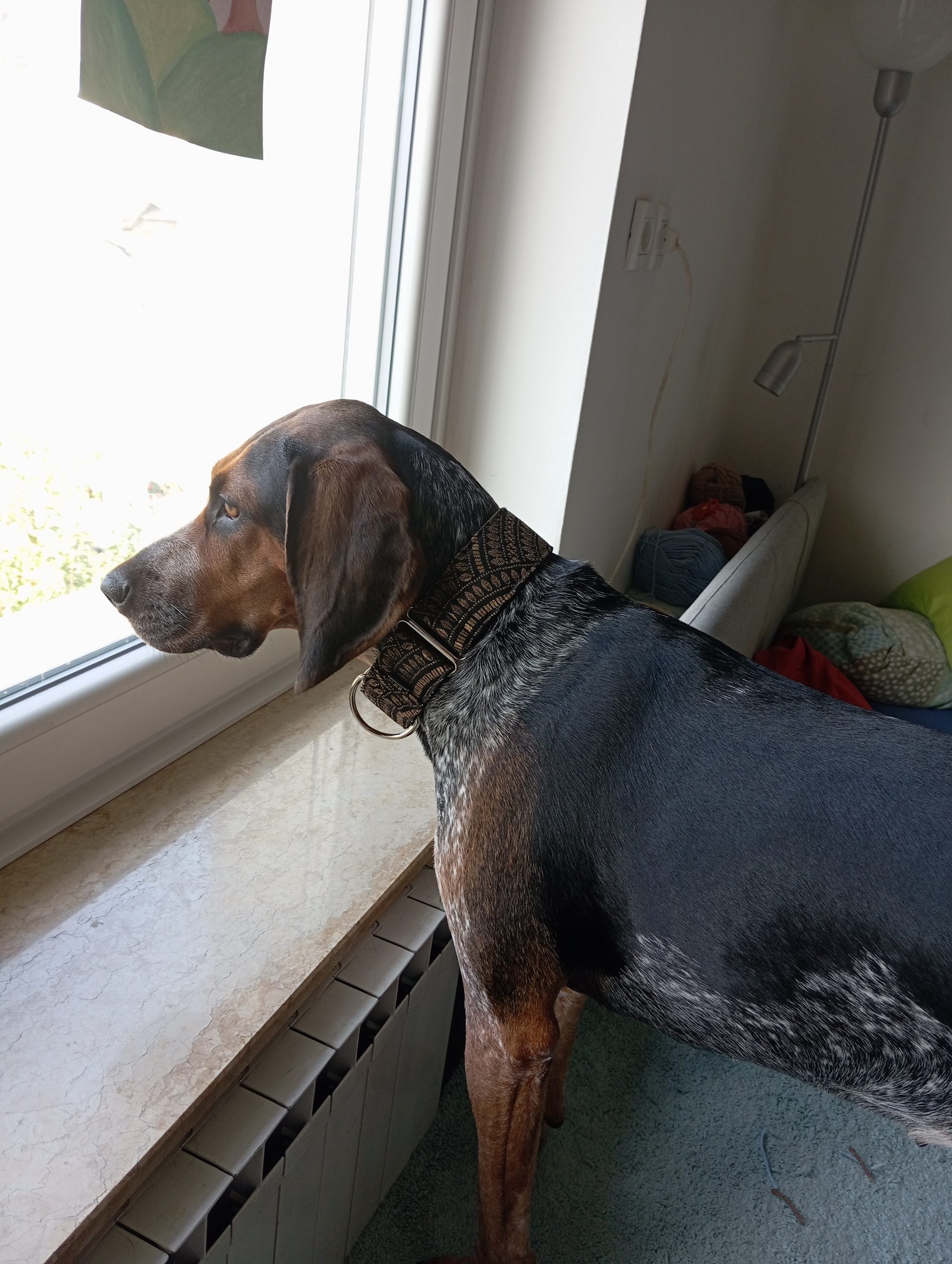
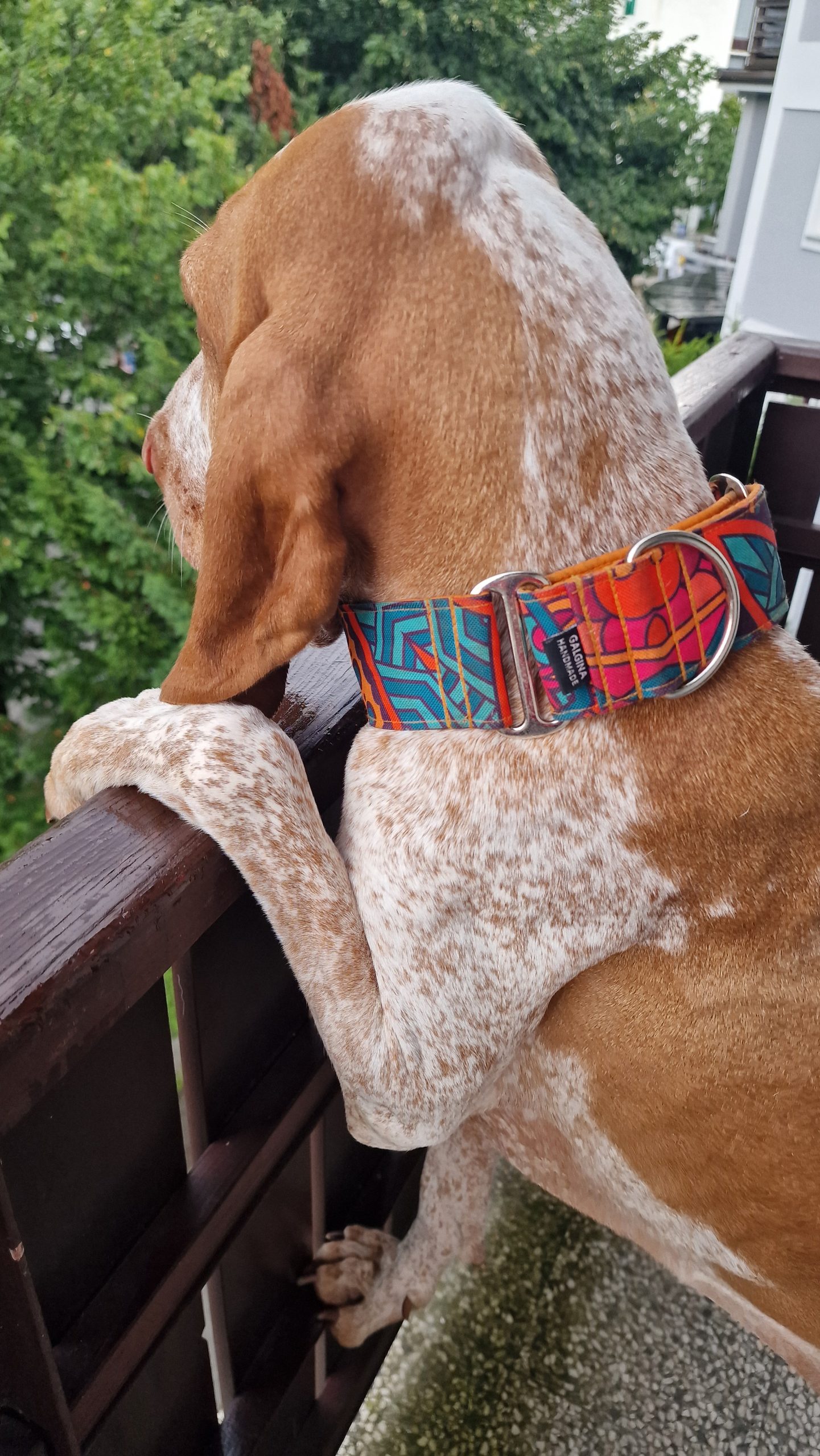
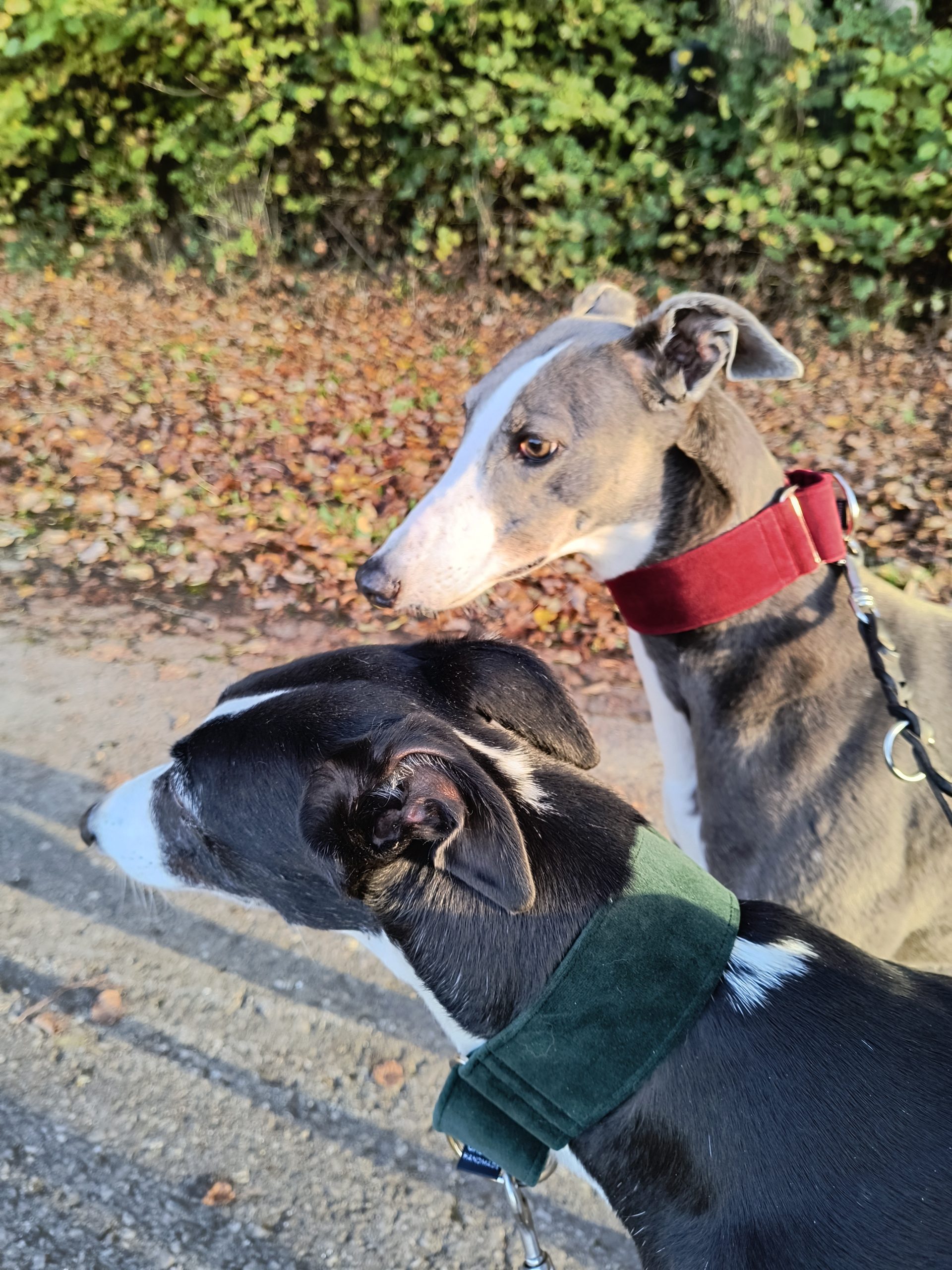
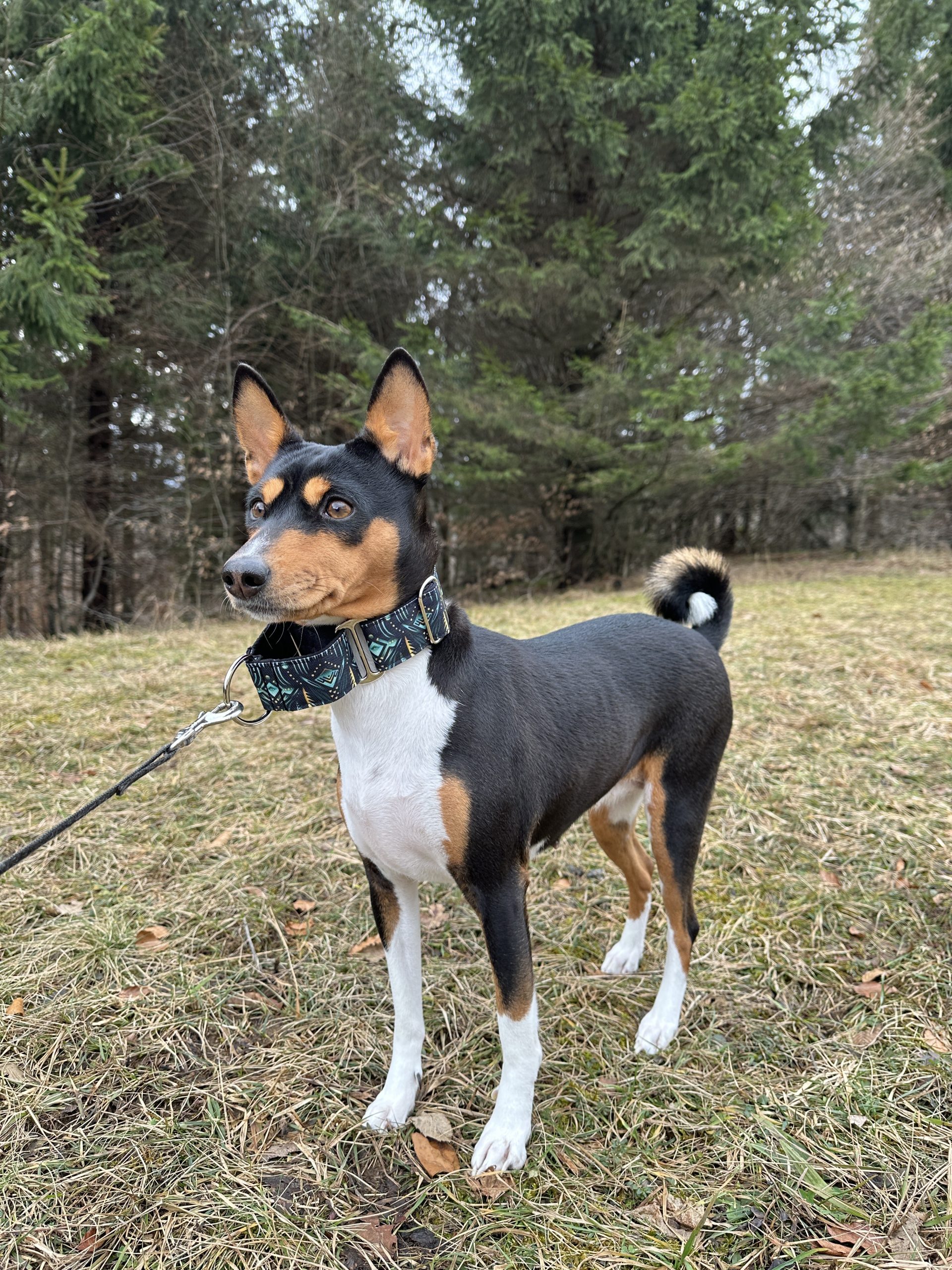
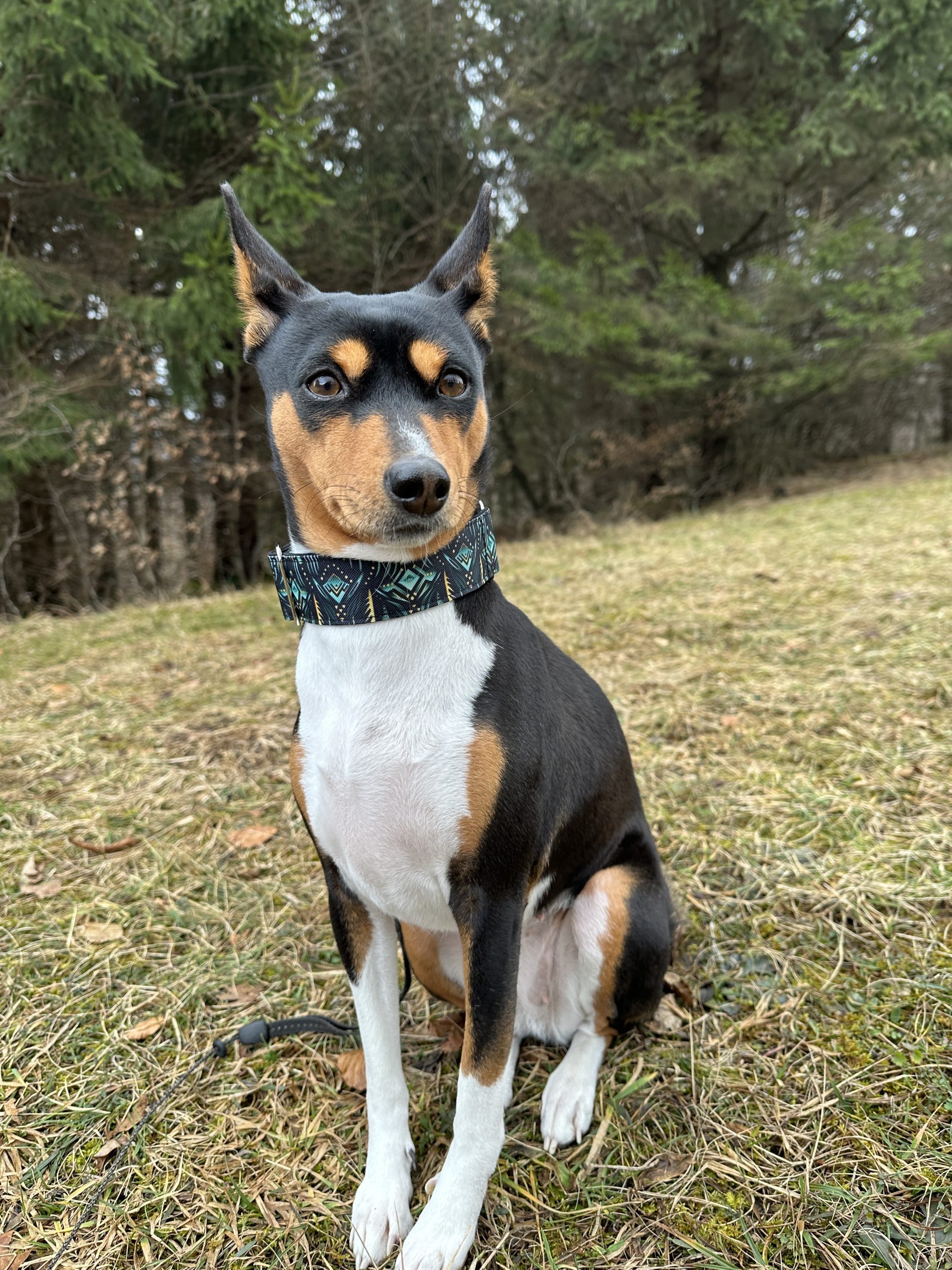
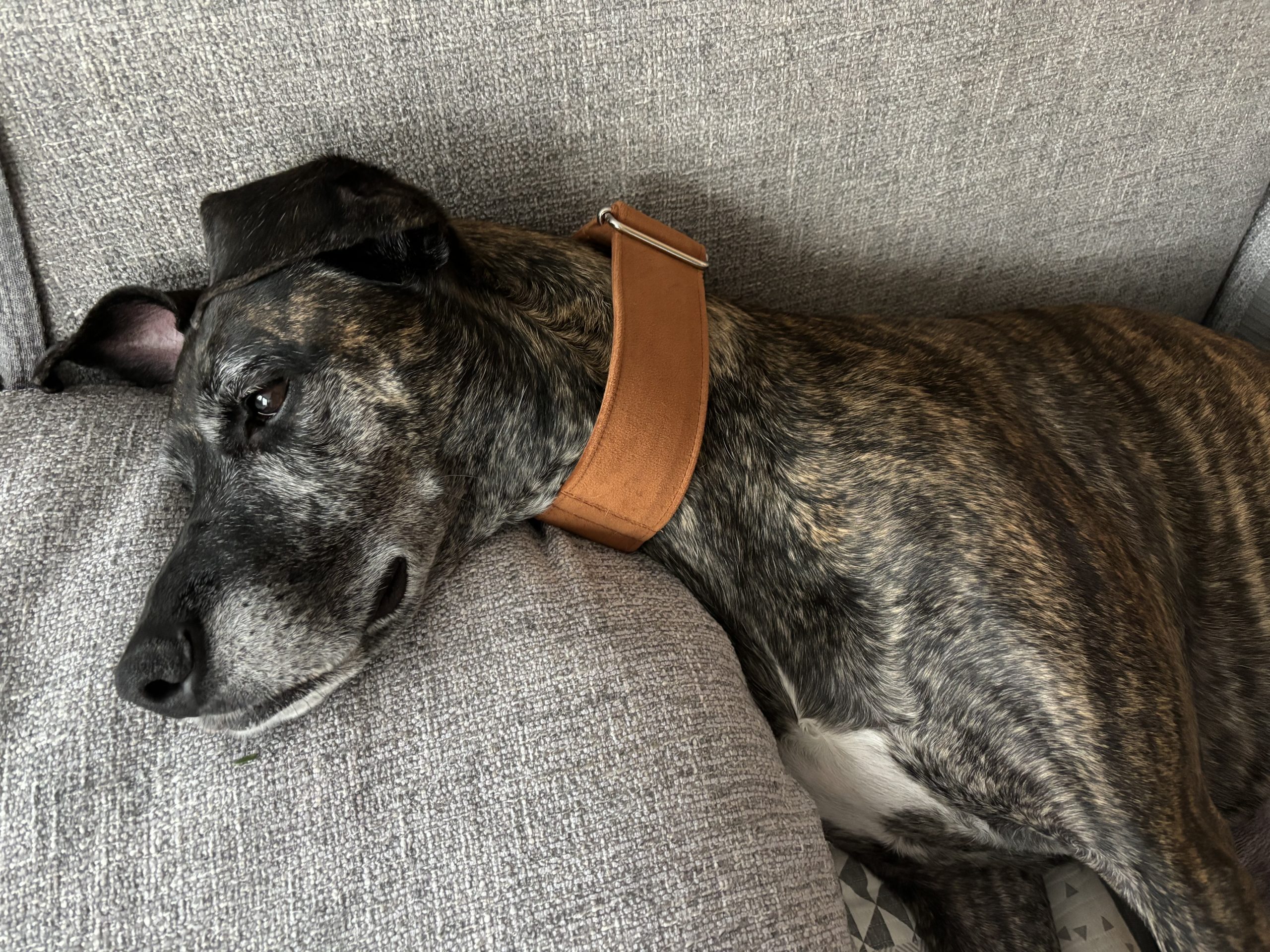
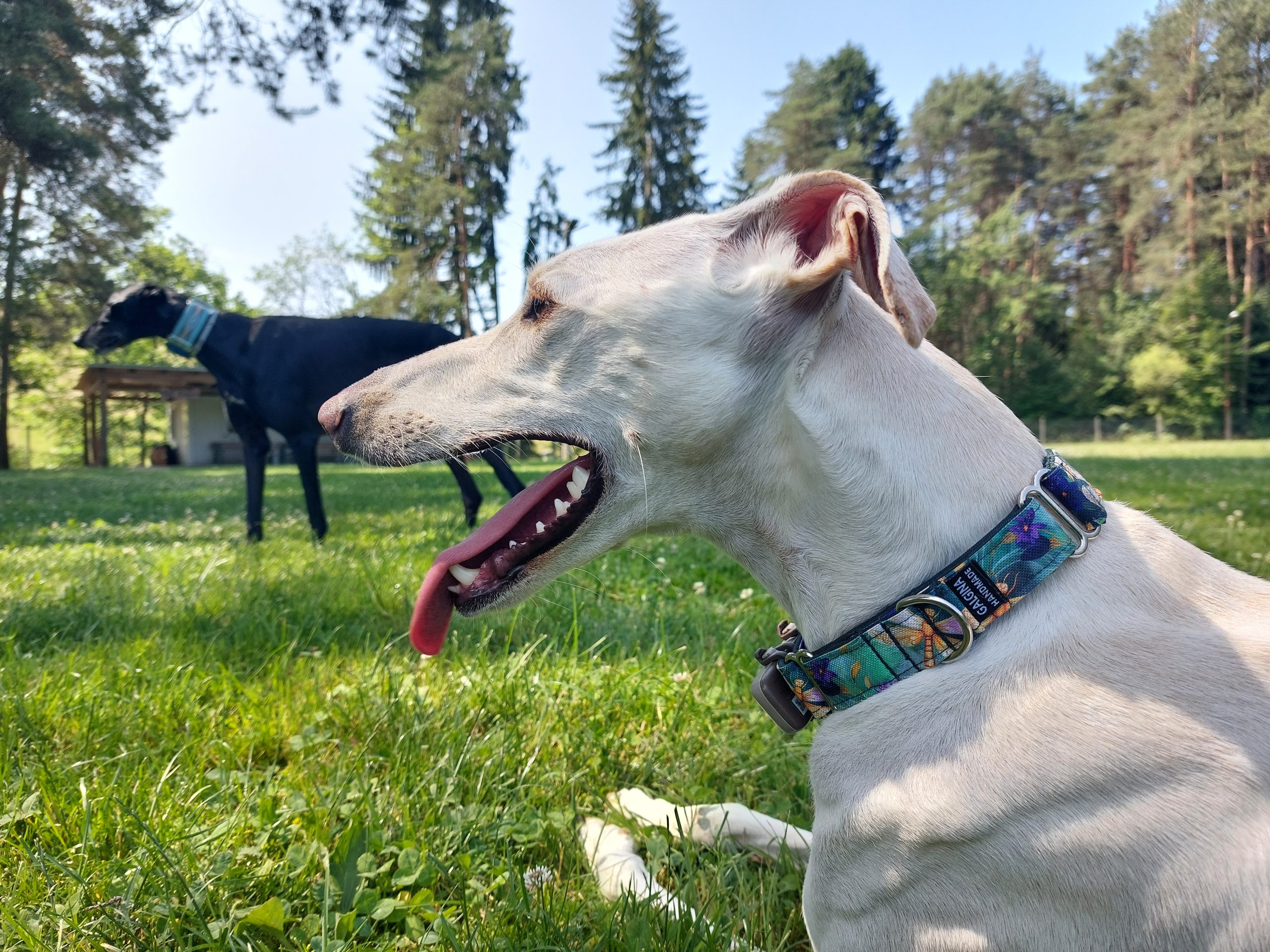
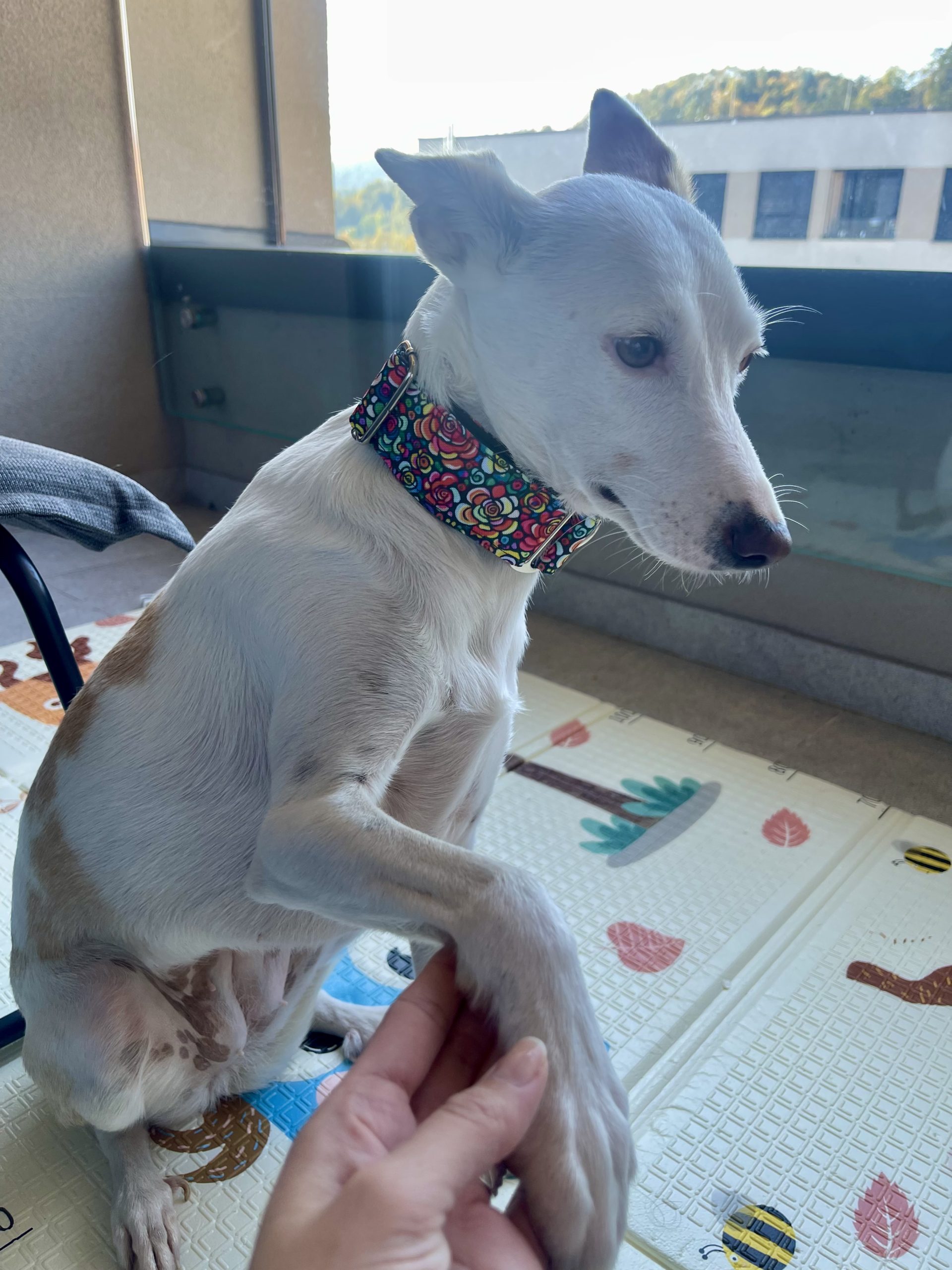
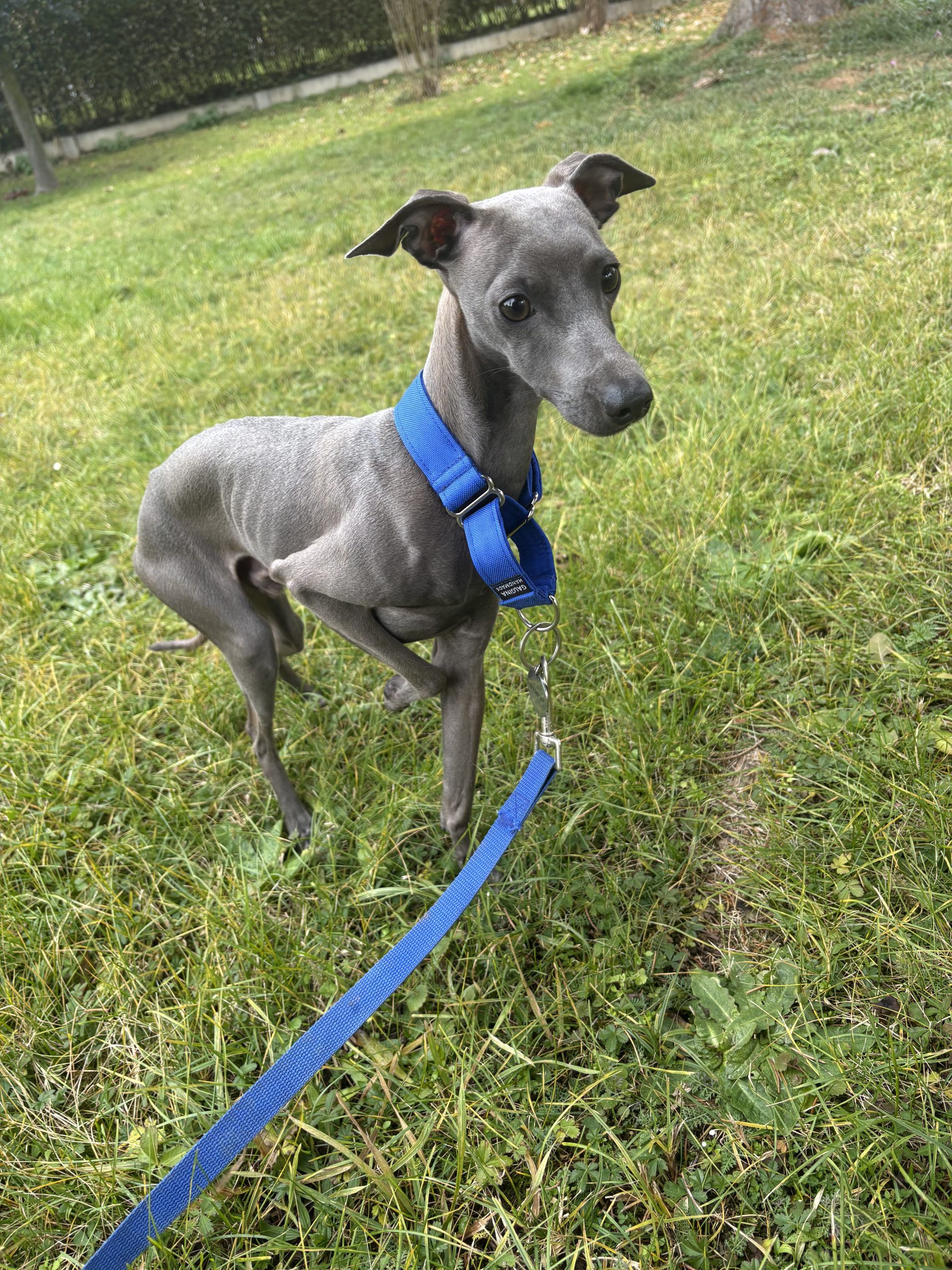
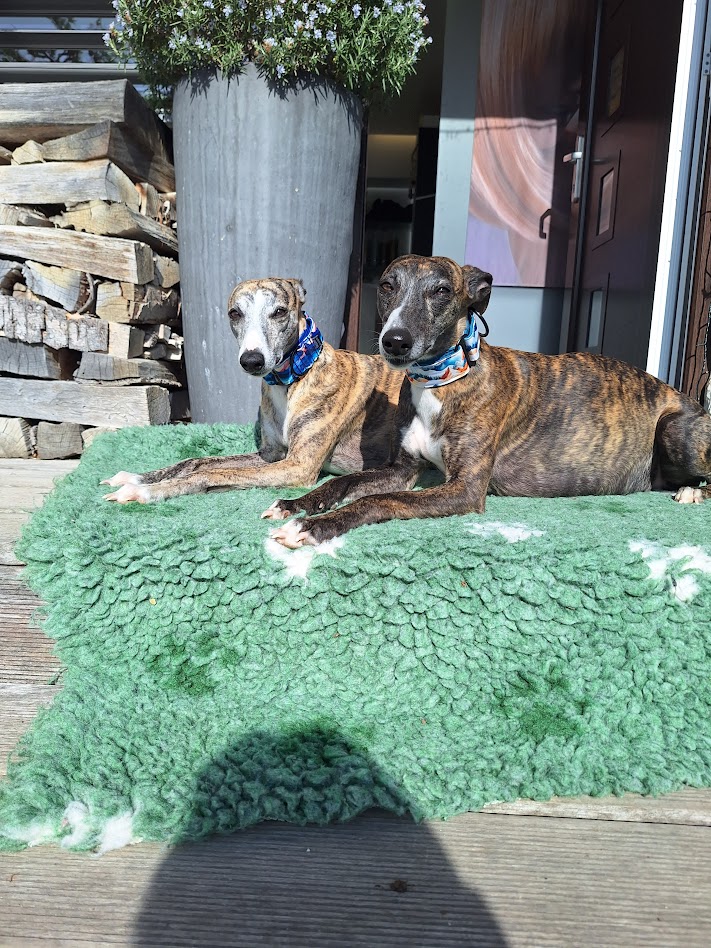

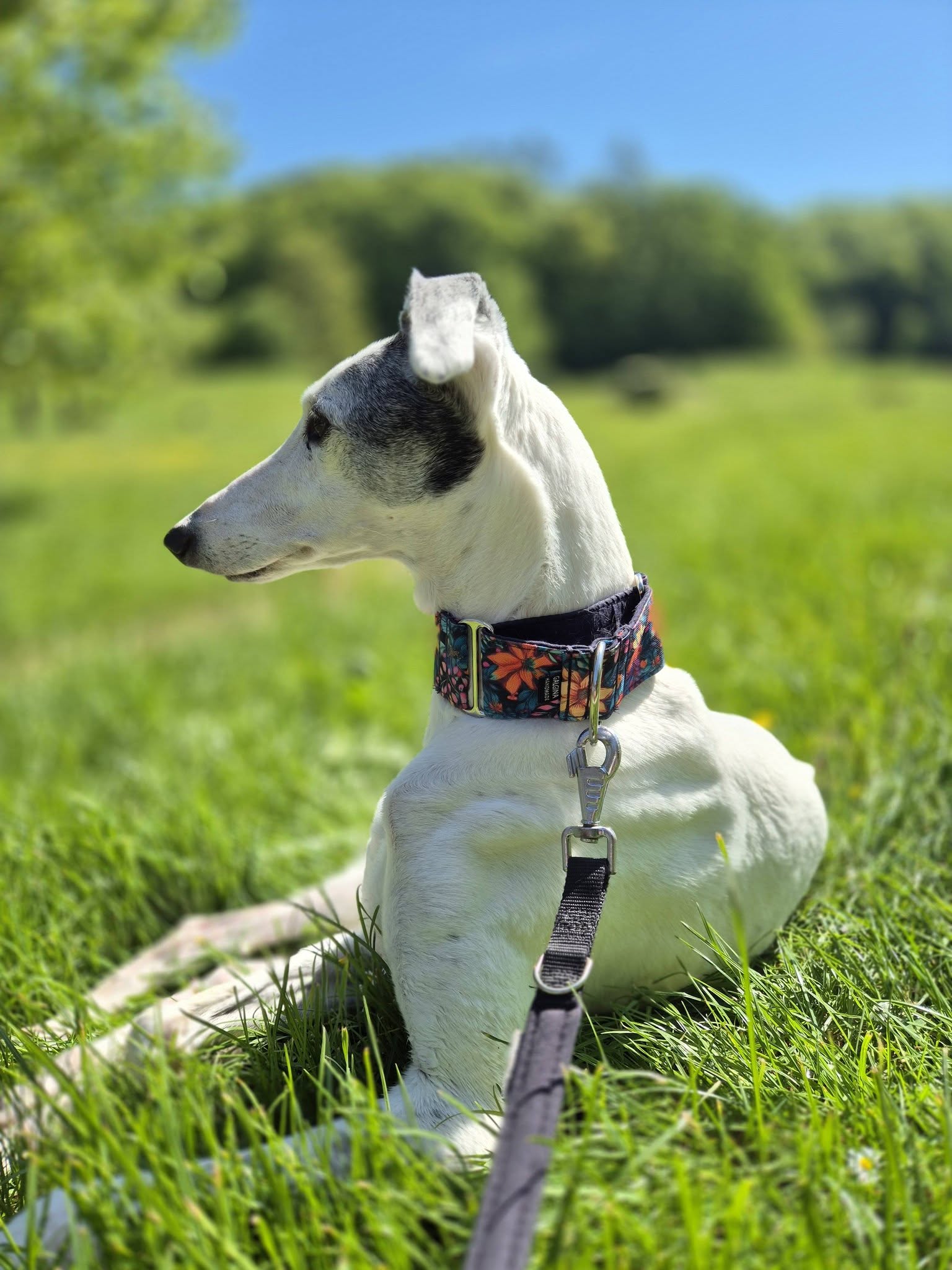
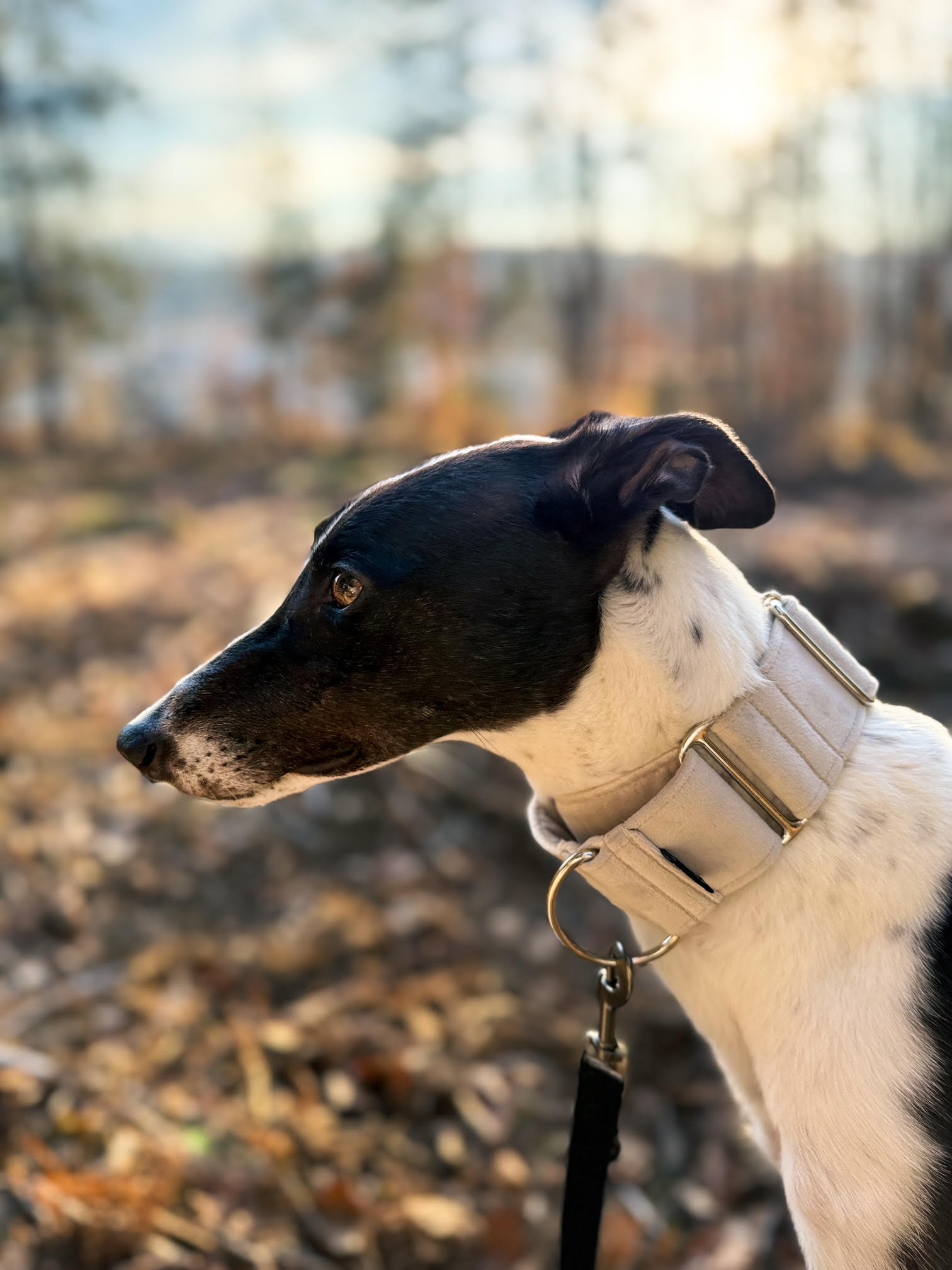
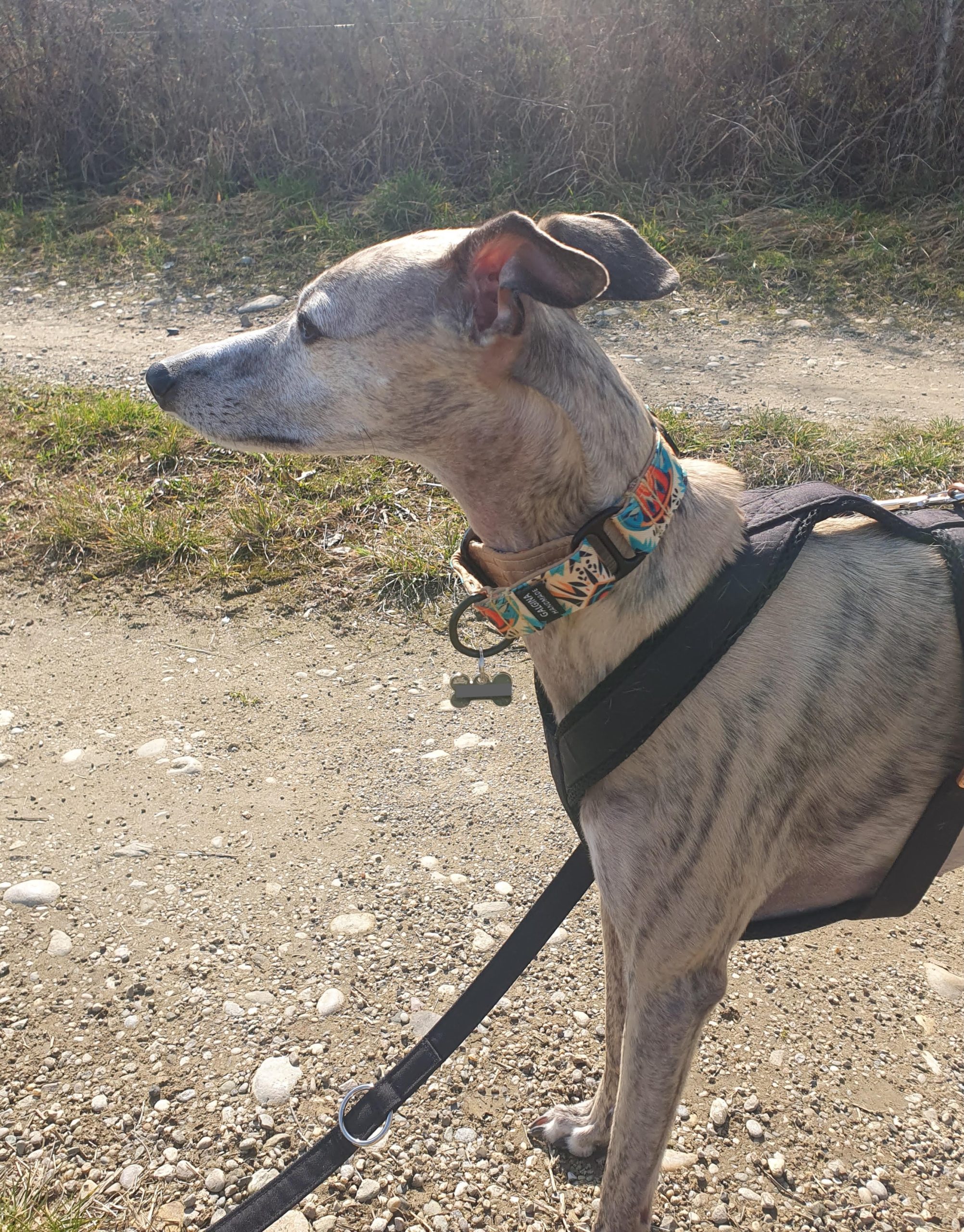
Details:
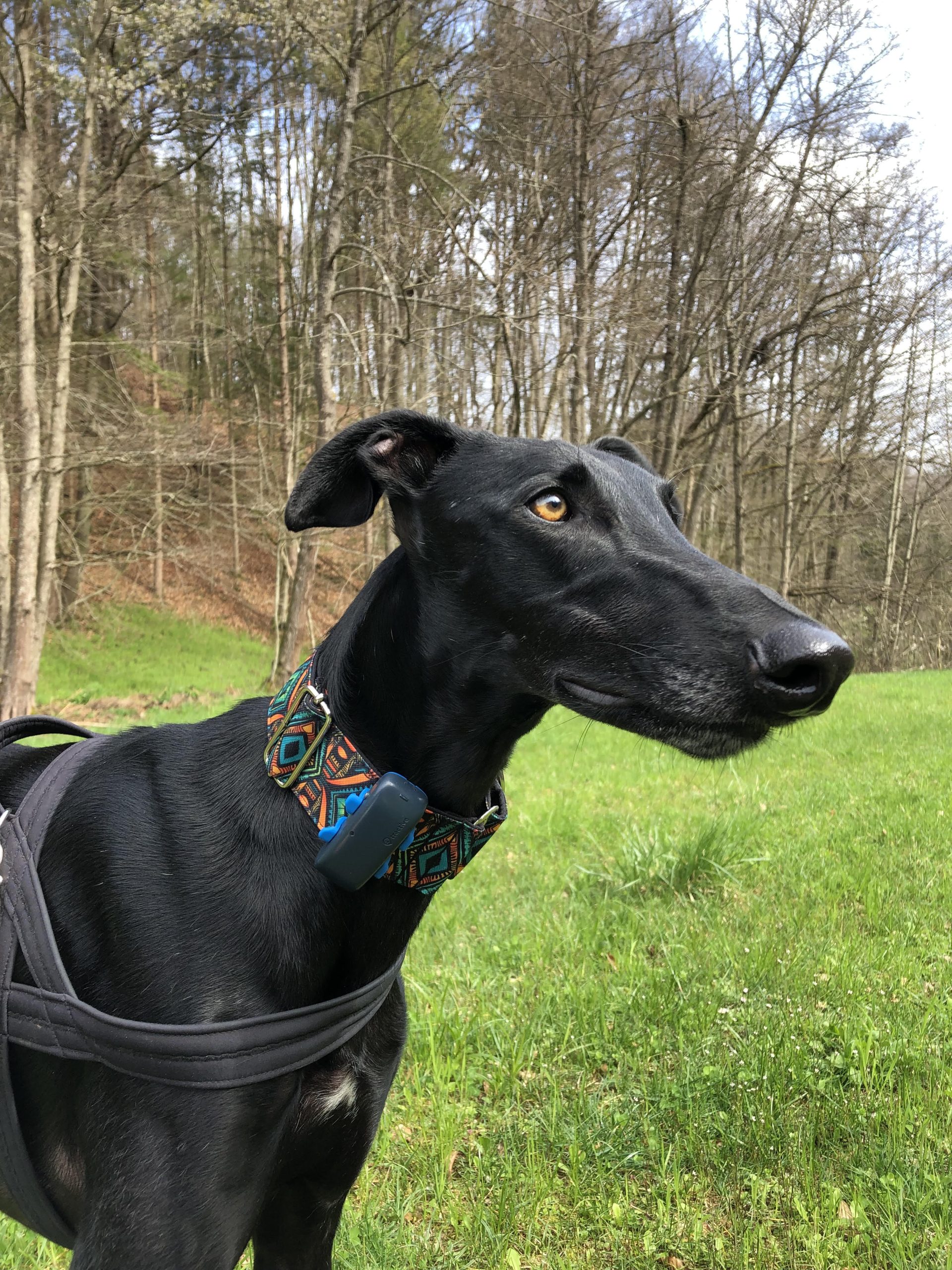
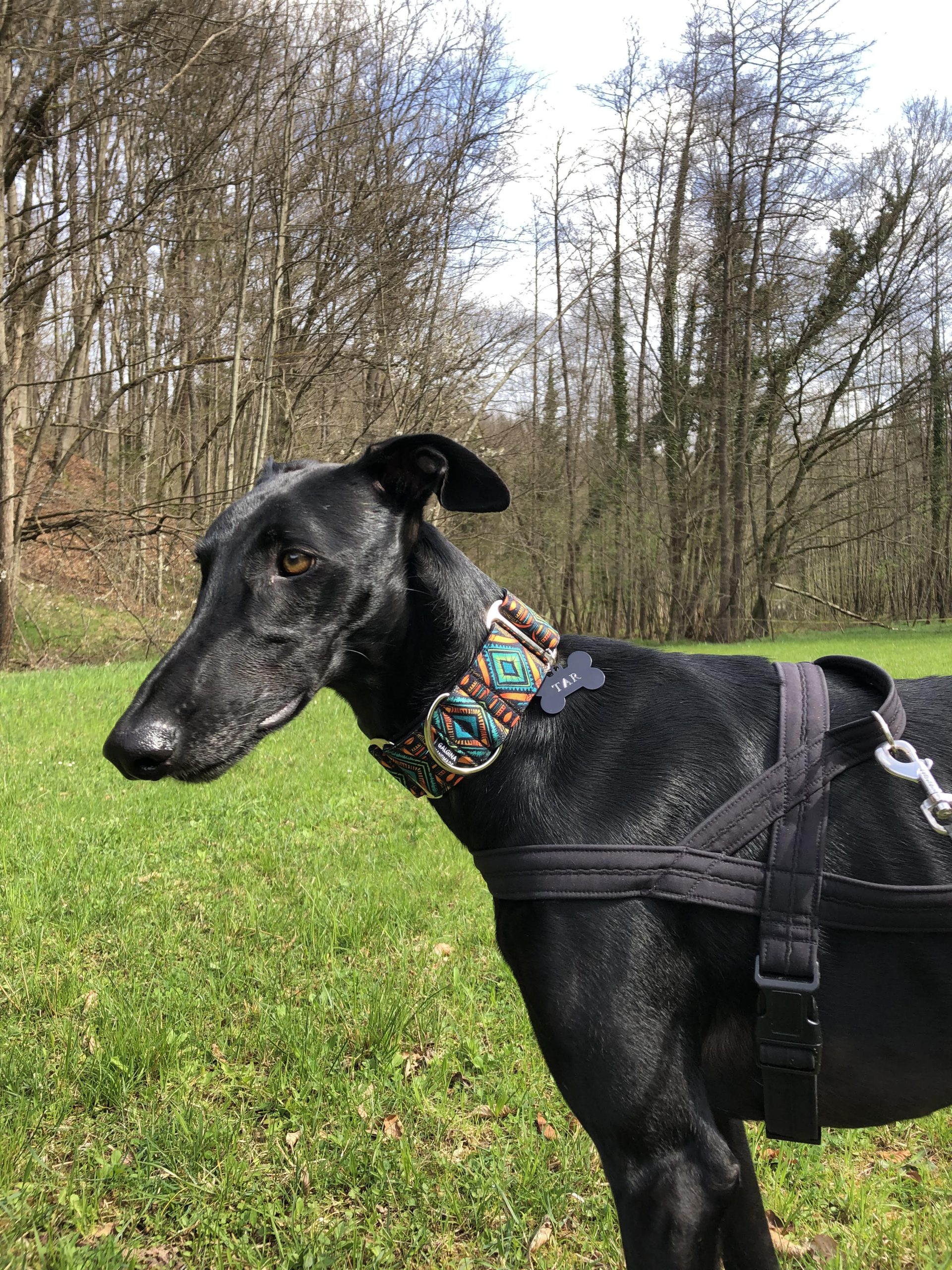
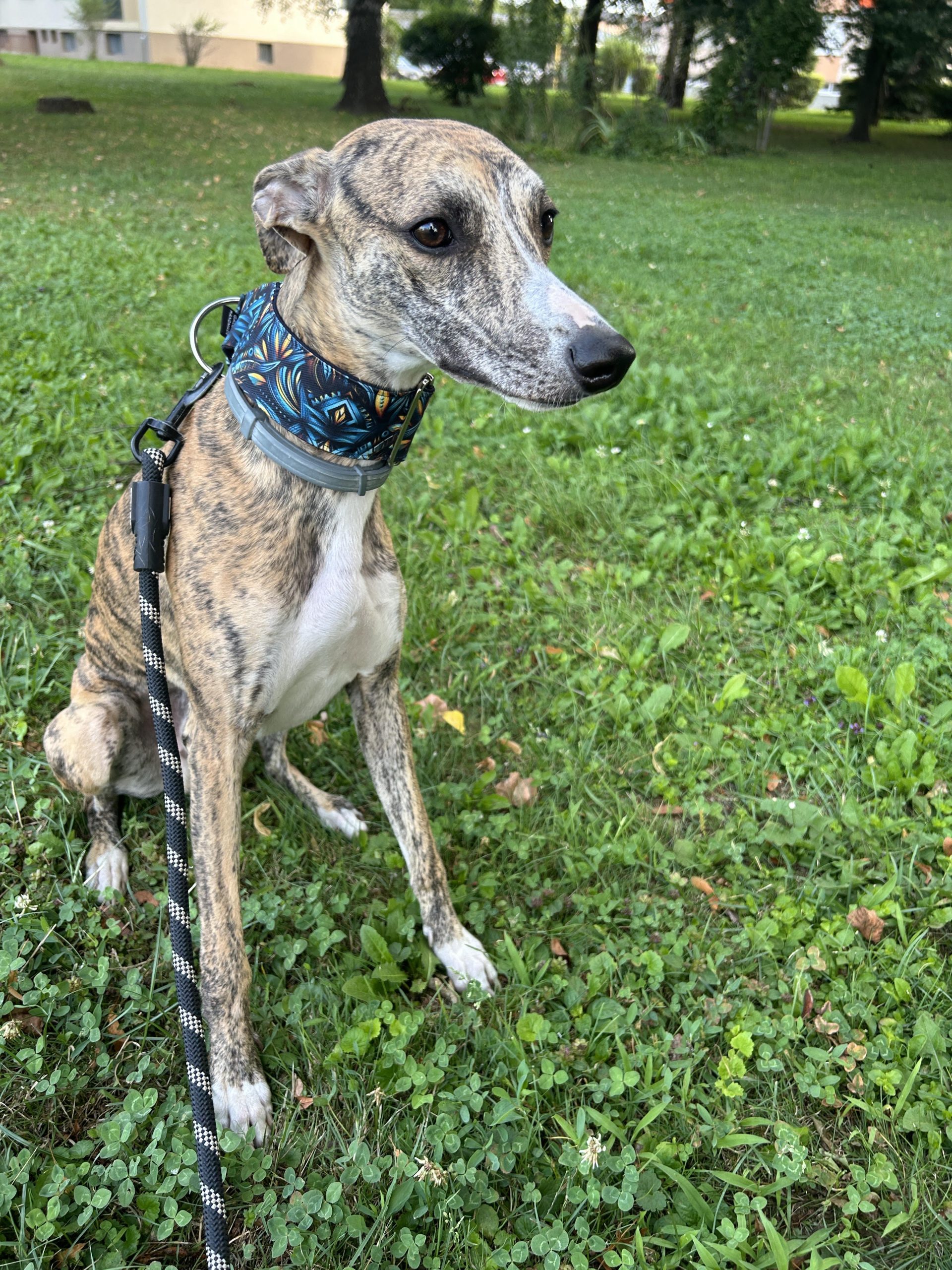
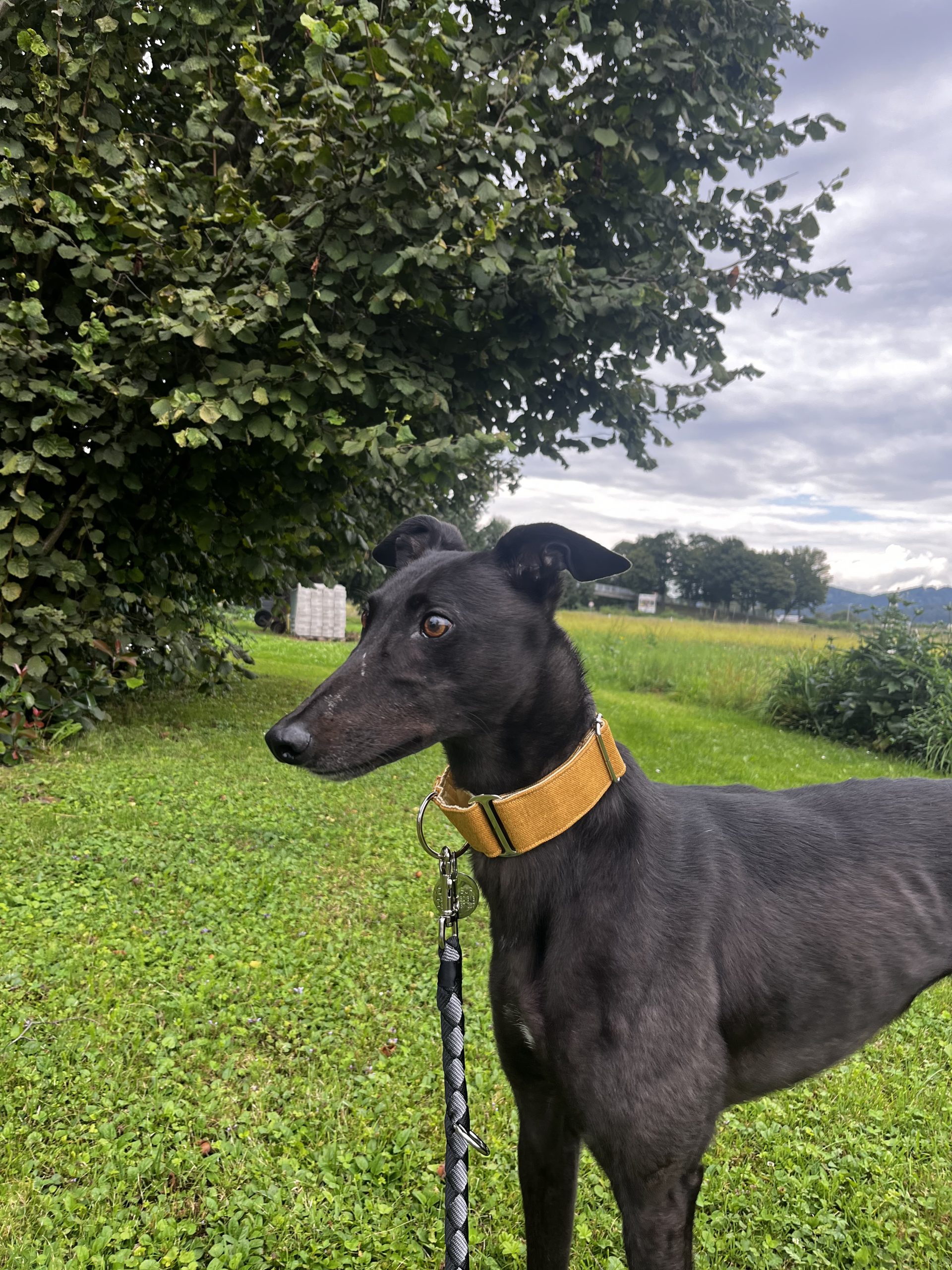
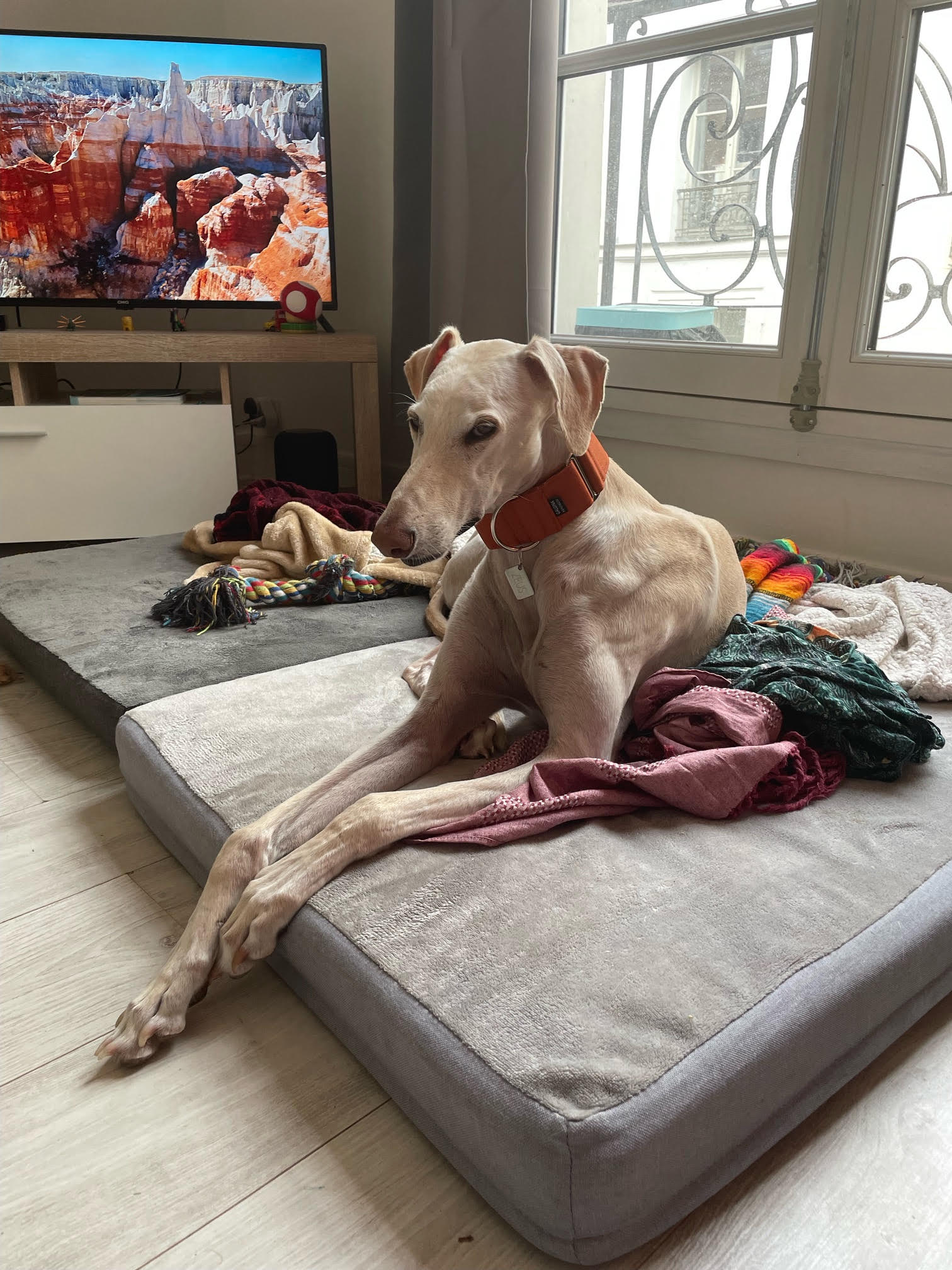
A martingale collar is a specialised walking collar designed to provide safety and comfort for dogs that can easily slip out of standard collars, a trait most commonly associated with sighthounds. In some languages, it is also referred to as a limited-slip collar, as its defining feature is its controlled, limited tightening action.
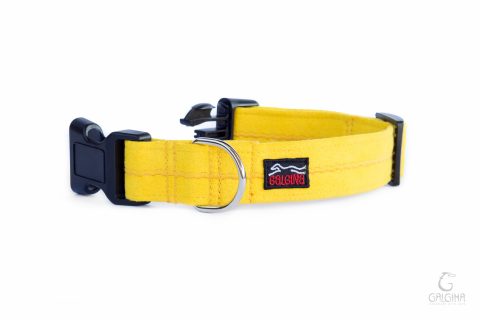
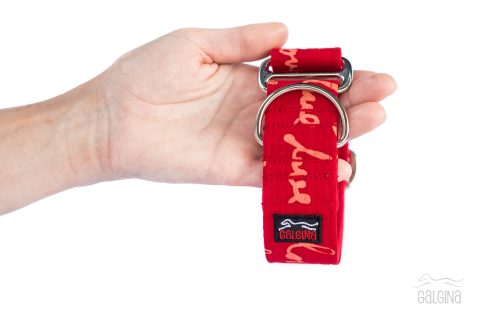
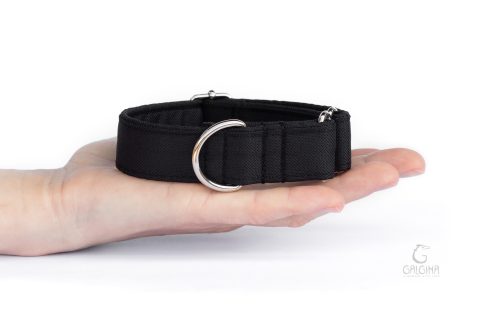
A martingale collar consists of two loops: a larger adjustable loop that sits around the main part of the dog’s neck, and a smaller control loop. When tension is applied to the leash, the control loop slides through two metal rings, temporarily reducing the collar’s circumference and preventing it from slipping over the dog’s head. Once the tension is released, the collar relaxes back to its preset size.
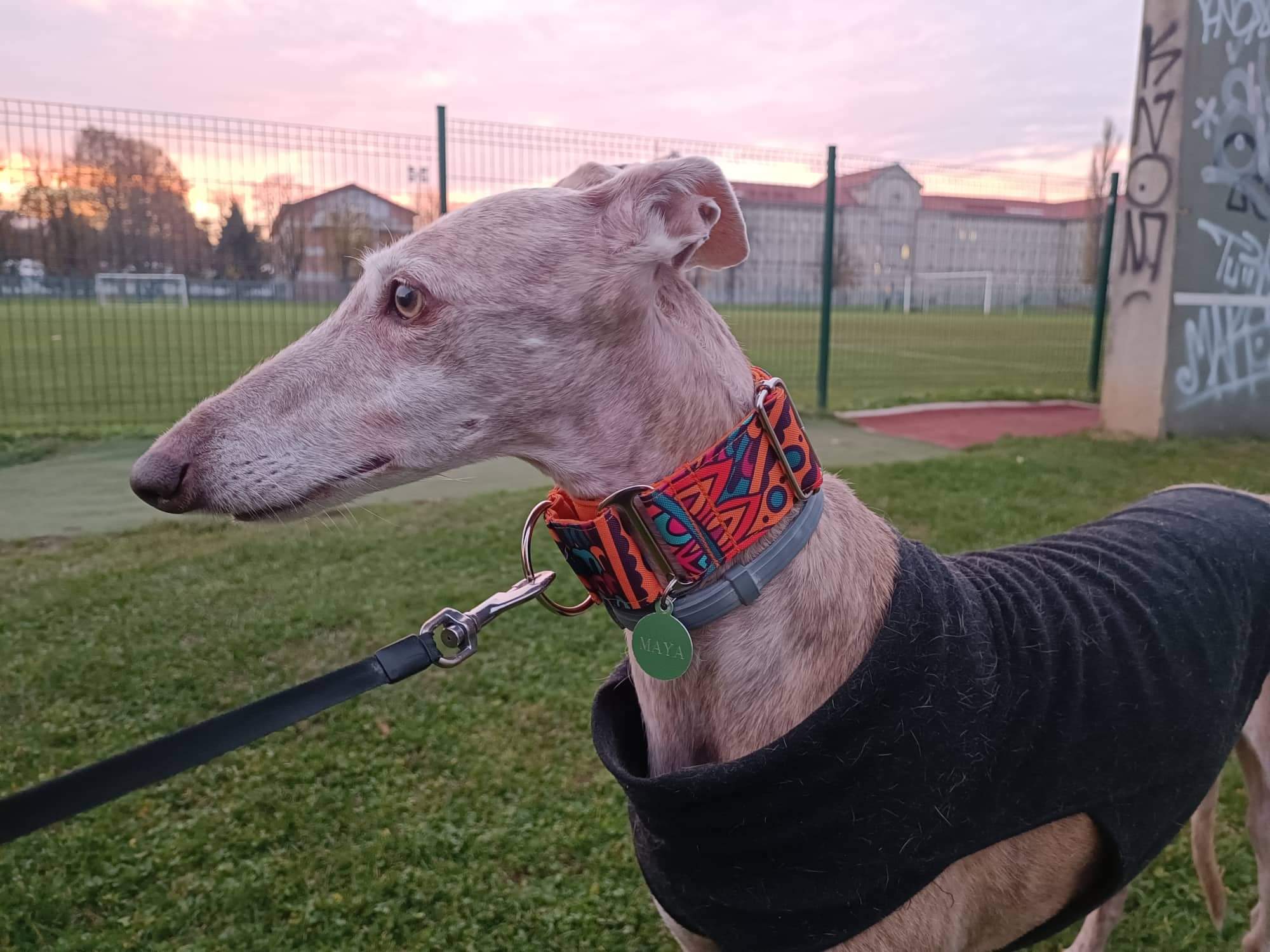
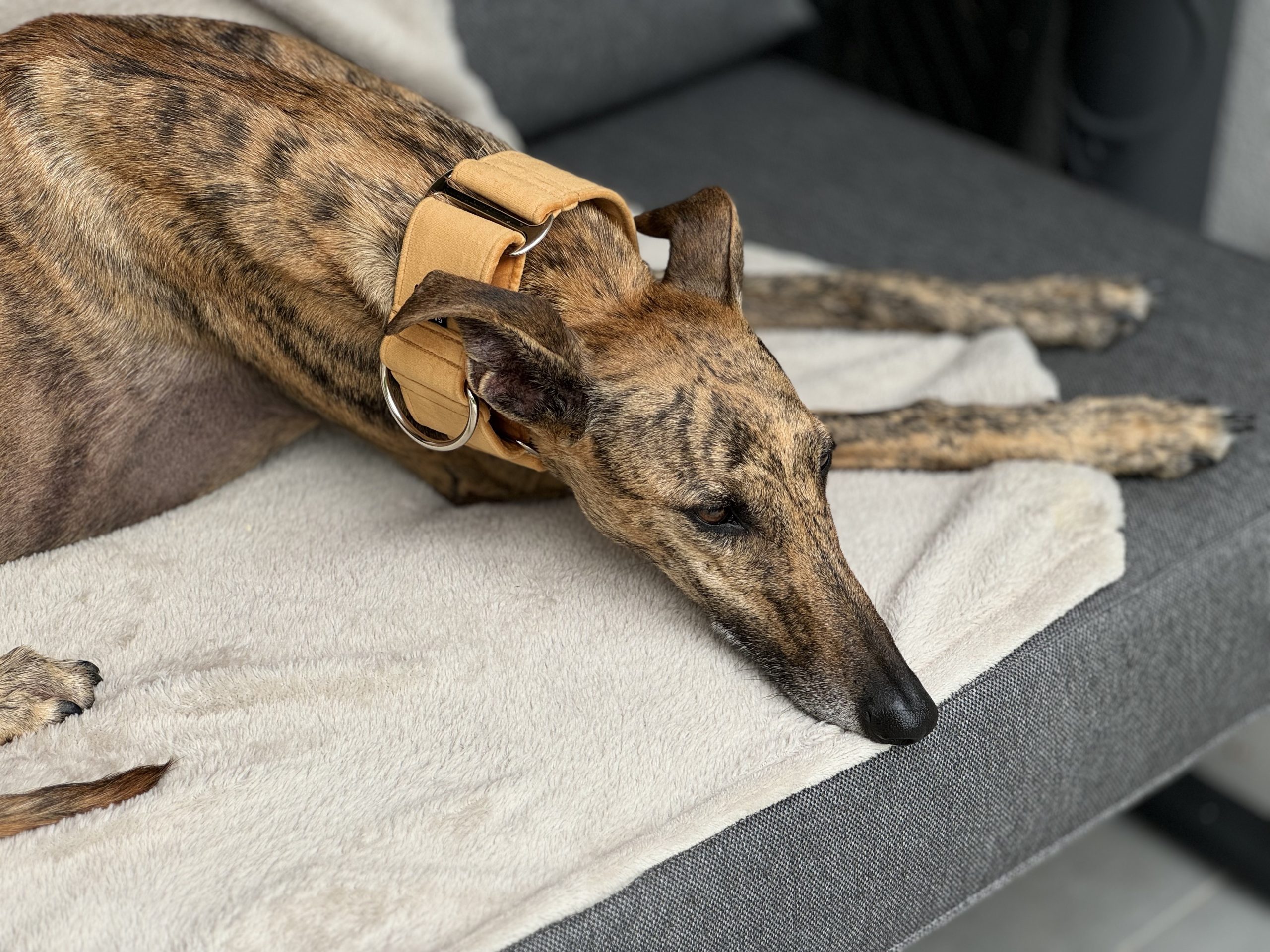
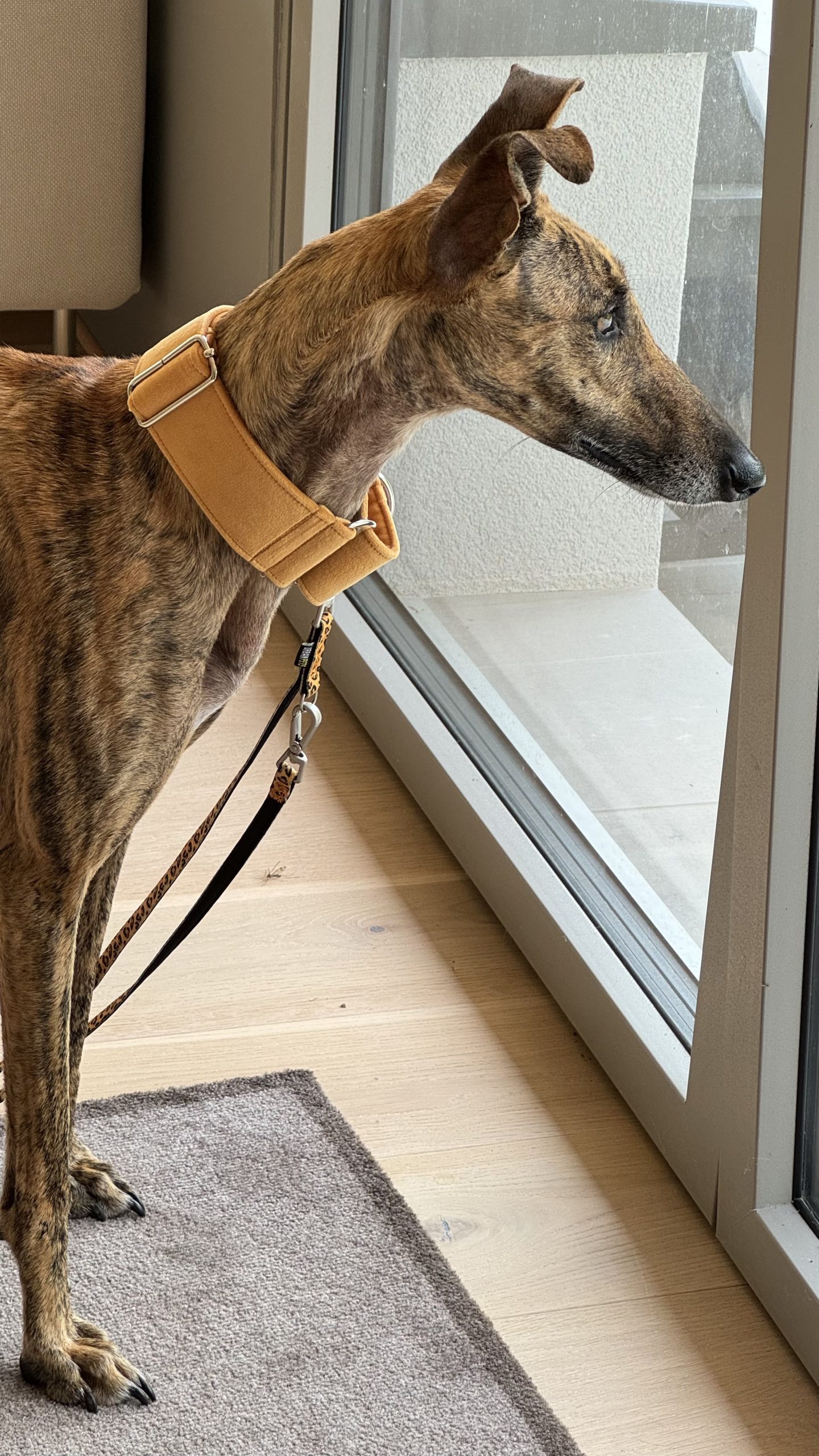
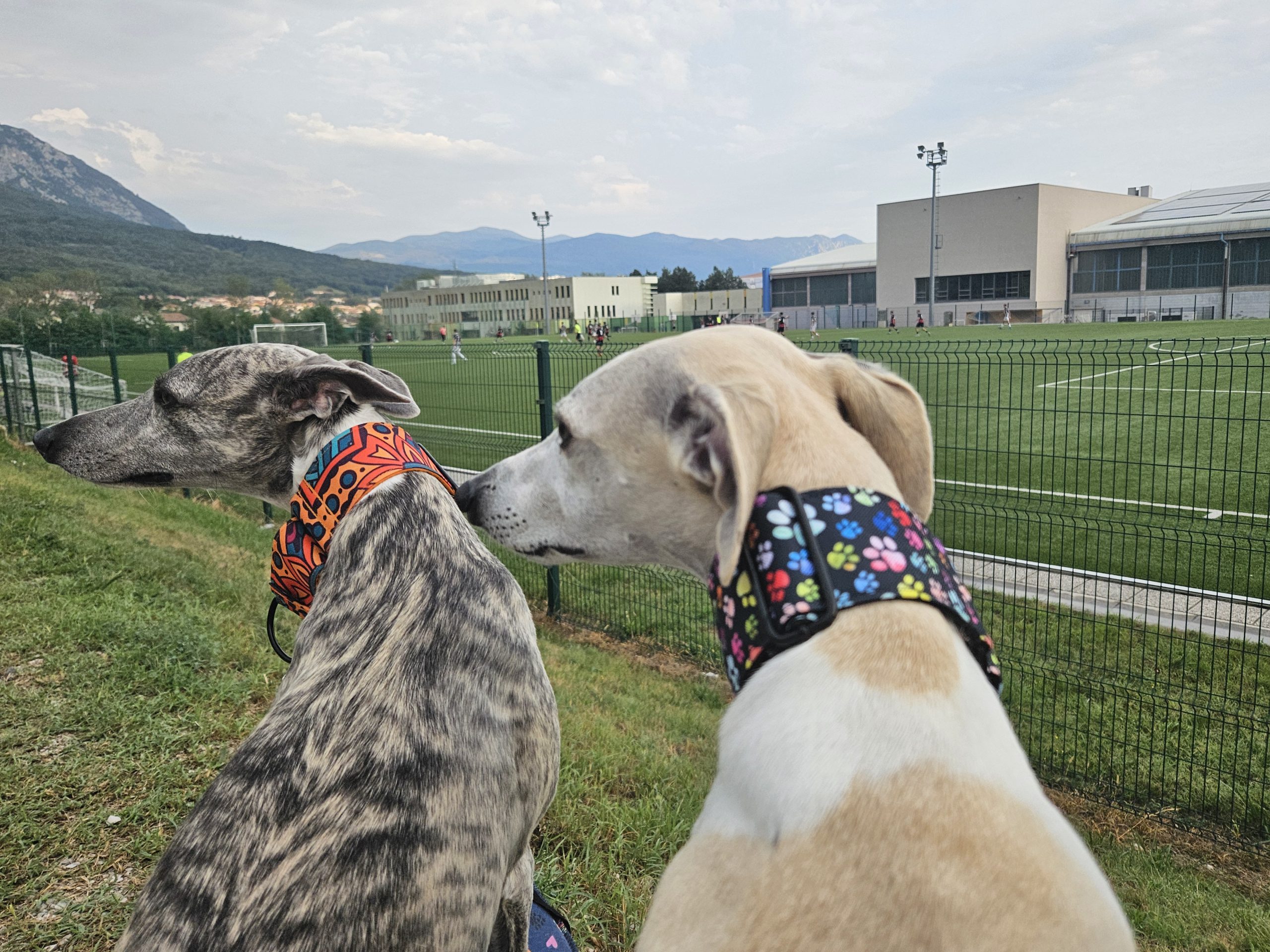
As mentioned above, martingale collars are primarily intended for sighthounds, which typically have very narrow heads and long, tapered necks that may be wider than the head itself. Due to this specific anatomy, standard collars cannot be fitted tightly enough to prevent escape reliably. Wider martingale collars distribute pressure more evenly, reducing the risk of injury and discomfort in dogs with long, sensitive necks.
Martingale collars are also suitable for other dogs with narrow heads, timid dogs, and dogs that tend to slip out of collars. Their primary purpose is to prevent escape in situations where a collar might otherwise come off unexpectedly. They are not intended for dogs that are still learning to walk on a leash, or for dogs that tend to pull on the leash frequently or constantly. They are also not suitable for aversive or controversial training methods, particularly those that aim at correcting leash pulling.
Martingale collars are available in a variety of designs, allowing you to choose an accessory that complements your dog’s appearance and personality. Each collar is made precisely to measure for the individual dog. The size is adjustable within a limited range to allow the collar to be put on and taken off comfortably.
Correct fitting
Only a properly fitted collar can perform its function safely and effectively. Please follow the instructions below carefully:
- Use the slider on the adjustable loop to enlarge the collar enough to slip it over the dog’s head.
- Position the collar at the middle of the dog’s neck.
- Tighten the collar using the slider until it fits snugly, leaving enough space to fit two fingers underneath.
- Before removing the collar, loosen it again so it can be slipped comfortably over the head.
- The fitting process must be repeated fully each time the collar is used.
The illustration below shows the opening through which the collar should be placed over the dog’s head. If you are unsure which opening is correct (for example, with a new collar or if it appears to sit oddly) fully extend the collar. This makes it easier to identify the largest opening, which is the one that should pass over the head.
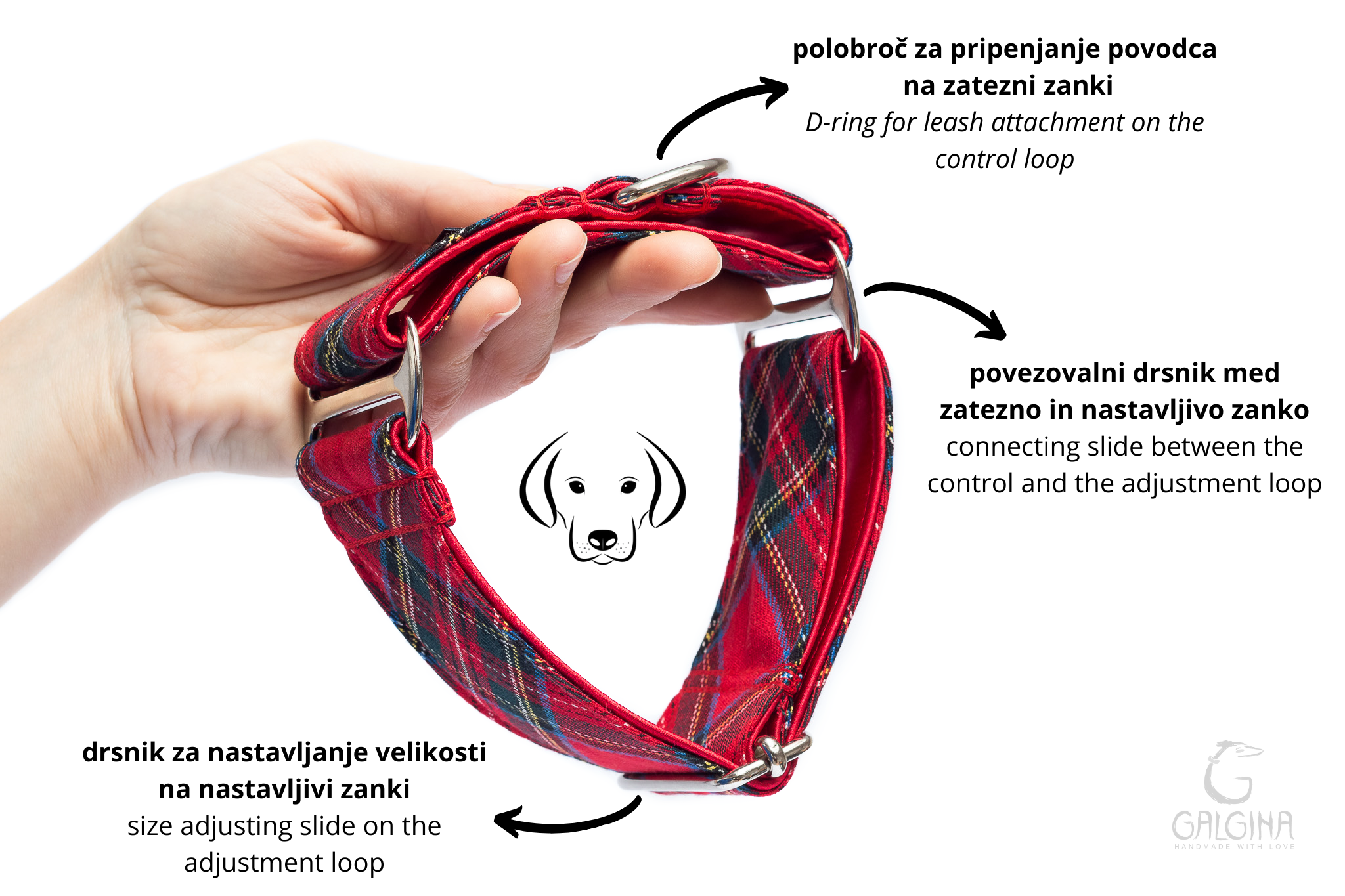
When worn correctly, the collar should fit the dog well. The two sliders through which the control loop runs should be positioned as far apart as possible, allowing the collar to tighten effectively if needed.
The collar is too loose if the control loop is already tightened (standing away from the neck), even when no tension is applied to the leash. If the sliders are close together or touching, the collar will not be able to tighten further in an emergency and may slip off.
A collar positioned directly behind the ears is not correctly fitted. This area contains sensitive bony structures and the throat beneath the jaw, where pressure can cause discomfort or pain.
Likewise, a collar positioned too low, near the shoulders, is incorrect. The neck circumference is widest where the neck meets the body, making the collar too loose in this position.
Safety warnings
A martingale collar is safe and effective only when used under the guardian’s direct supervision. It is intended solely for use during walks, with the leash held in your hands.
Never use a martingale collar:
- for temporary tethering.
Always hold the leash in your hands so you can feel and control any pulling force immediately.
- in combination with a retractable leash.
Sudden locking of a retractable leash can cause discomfort, pain, or, in more severe cases, injury.
- in combination with a tracking or long line leash.
Sudden tension or blocking of the leash can result in discomfort, pain, or injury.
- in situations where the dog is off-leash, unattended, or unsupervised (even in a home environment).
The tightening loop may catch on various objects, or the dog may slip its lower jaw, muzzle or paw into an improperly fitted (especially oversized) collar. Due to the tightening mechanism, there is a high risk that the dog will not be able to free itself, as the collar cannot be removed under tension.
Incorrect and uncontrolled use can lead to very dangerous situations, so never underestimate the safety warnings.
Options
Martingale collars are available in multiple widths. You can choose from:
- 2,5 cm
Suitable for neck sizes of 20 cm and above. It’s a common choice for Italian Greyhounds and other small dogs. In some cases, the tightening loop is made 2 mm narrower (while the adjustable loop remains 2,5 cm wide) to ensure ideal tightening and release properties.
- 3,8 cm
Suitable for neck sizes of 23 cm and above. This is the most popular choice for Whippets and is considered a neutral width (not too narrow, not too wide) for many other dogs too.
- 5 cm
Suitable for neck sizes of 30 cm and above. This is the most common width for large sighthound breeds and other large dogs.
Designs
You can choose from a wide range of materials and designs listed in the catalog. However, not all patterns are available in all widths or collar types due to differences in fabric properties. Details and limitations are explained in the description of each pattern.
Care
Ensure regular maintenance of the products to keep them clean and safe.
Ordering
You can place your order by email. Your message must include all the required information listed below. Unfortunately, we cannot process incomplete orders.
Required information for ordering a Martingale collar:
- collar type
- collar width
- collar design
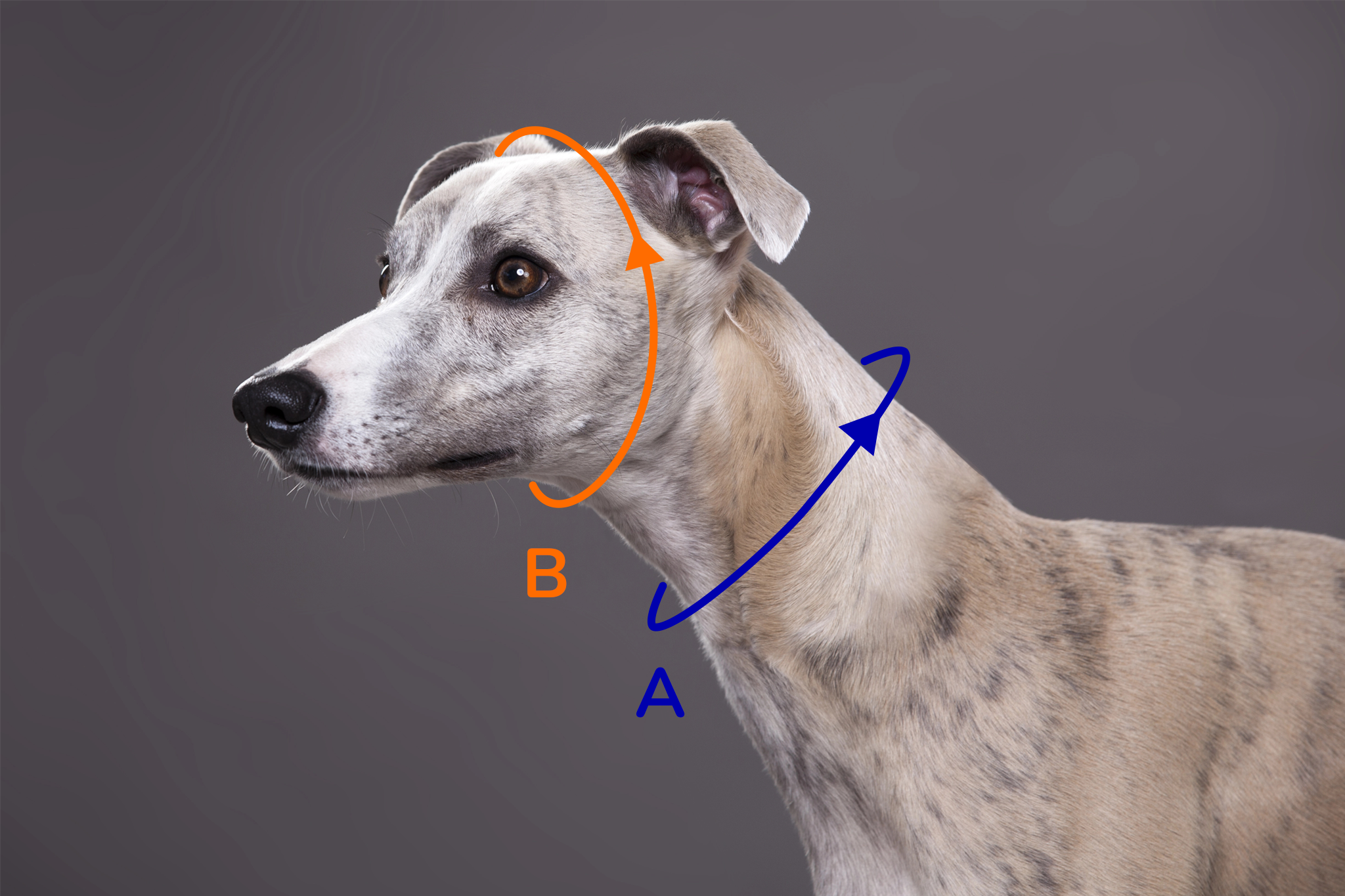
- dog’s neck circumference (A), measured at the middle of the neck
- dog’s head circumference (B), measured just in front of the ears
- breed and age if the dog is under 1 year old
- invoice and shipping details: first name, last name, address, postal code, city